Autism Supports on Cruise Lines
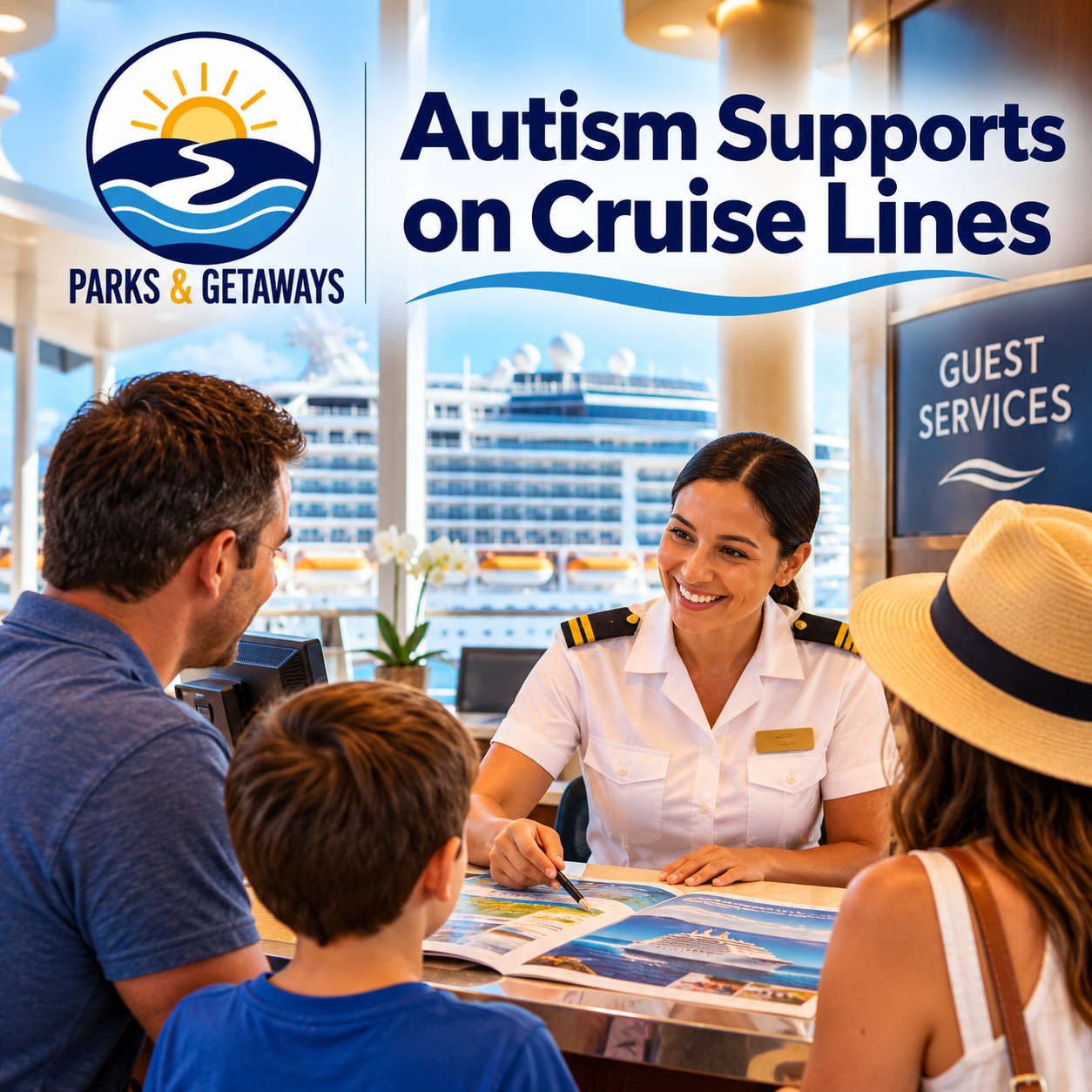
Cruise lines vary considerably in the supports they offer travelers with Autism. Some have formal Autism or sensory-inclusion programs, while others address Autism through their broader accessibility services. The type of assistance available can also differ by ship, sailing, port, and the age of the traveler.
That makes it important to research supports before you book, especially if a particular accommodation could affect whether the cruise works for your family. Contact the cruise line's accessibility department directly, explain your loved one's specific needs, and ask what can be arranged for your particular sailing. The information below reflects cruise-line policies and programs available as of September 2026. Because programs can change, always verify current accommodations directly with the cruise line before traveling.
Royal Caribbean
Royal Caribbean has one of the more established Autism-specific programs among the major cruise lines. It is certified by Autism on the Seas, and its youth staff receive Autism-awareness training developed by the organization. Royal Caribbean says Autism-friendly products and services are available across its cruises.
Depending on the program and ship, supports can include expedited check-in, boarding and departure; dietary accommodations; an Autism-friendly toy-lending program; social stories; sensory-friendly movies; and pagers or phones for parents whose children are participating in Adventure Ocean. Royal Caribbean can also group children in Adventure Ocean by ability rather than strictly by age when appropriate.
Its Autism-friendly movies are presented with lower lighting and volume, and guests are allowed to talk and move around during the film. Availability varies: Royal Caribbean says they are offered on all Oasis-class sailings and on other ships when an Autism group or at least five individuals with Autism are onboard.
Royal Caribbean also offers complimentary on-demand programming from The Autism Channel on many ships, including Quantum, Oasis, Freedom, Voyager and Radiance class ships. Royal also participates in select Autism on the Seas assisted sailings, which can provide a much higher level of hands-on support than the cruise line's standard accommodations.
Celebrity Cruise Line
Celebrity Cruises Autism-Friendly Services
Celebrity Cruises has also completed Autism-friendly certification through Autism on the Seas. Its standard Autism-friendly services include sensory-friendly films and toys, dietary menu options, priority check-in and boarding, and Autism-related training for youth staff.
For families considering Celebrity, it's worth asking specifically about the services that matter to your child rather than assuming every accommodation will automatically be provided. Ask about youth-program participation, sensory needs, dietary accommodations, communication, and how the ship handles waiting and transitions. Celebrity also participates in select Autism on the Seas assisted sailings, which can provide a much higher level of hands-on support than the cruise line's standard accommodations.
Carnival Cruise Line
Carnival has taken a somewhat different approach through its partnership with KultureCity, focusing heavily on sensory inclusion. In April 2026, Carnival announced that Celebration Key, its private destination on Grand Bahama, had become the first cruise destination to earn KultureCity Sensory Inclusive Certification. Carnival says its partnership with KultureCity has been in place fleetwide for six years and includes training for shipboard staff and shoreside call-center employees.
At Celebration Key, more than 400 guest-facing team members have received sensory-needs training. Complimentary sensory bags are available and contain noise-reducing headphones, fidget tools and glasses designed to filter bright or strobing light. The bags also include a discreet VIP lanyard that can signal to employees that a guest may need additional assistance, as well as a feelings thermometer that allows a nonspeaking guest to point to communicate how they are feeling. For a traveler whose primary challenges involve sensory regulation, these are supports worth asking Carnival about before sailing.
Disney Cruise Line
Disney Cruise Line Neurodivergent Guest Services
Disney Cruise Line does not frame its services around the same Autism certification model as Royal Caribbean or Celebrity. Instead, it provides a detailed set of recommendations and accommodations for neurodivergent guests and guests whose disabilities affect waiting or tolerating crowded environments.
Some of the most useful support actually begins before boarding. Disney advises families to consider choosing a later port arrival time because the first two hours of embarkation are typically the busiest. This can be a meaningful option for someone who struggles with crowds, long waits or highly stimulating environments. Disney also provides a complimentary 30-page My Disney Cruise activity booklet designed to help younger travelers understand what to expect, including arrival, embarkation and the mandatory assembly drill.
Disney's mandatory emergency drill requires participation, but guests do not have to bring or wear their life jackets to the assembly station. Families with additional concerns can contact Disney's Special Services department in advance. Disney also offers Family Movie Fun Time, which provides a more relaxed movie environment. Some lights remain on, the volume is reduced, and guests are welcome to talk, move around or leave their seats.
Character greetings have another useful accommodation. When a disability affects a guest's ability to wait in line, another family member can wait while the guest waits elsewhere and then reunite with the party when it is their turn. Disney provides additional assistance for a single parent or guardian who cannot use that arrangement.
Disney also publishes information about when its youth spaces tend to be busiest including mornings on sea days and the final evening and encourages families to tell youth counselors about individual needs and concerns.
At the end of the cruise, families can choose among different debarkation approaches. One option allows guests to remain onboard until many other passengers have left, which may help someone who finds the typical debarkation crowds difficult.
Norwegian Cruise Line
Norwegian Cruise Line Accessibility Services
Norwegian Cruise Line takes an advance-planning approach through its dedicated Access Desk. NCL specifically encourages guests with cognitive, intellectual and developmental disabilities—including Autism—to contact the Access Desk before their cruise. Its Accessibility Coordinators document requests and communicate them to ship staff and onboard Access Officers.
NCL lists boarding and disembarkation assistance among the accommodations it may provide upon request. For most accessibility needs, it asks guests to provide at least 45 days' advance notice; some services require more time. This is a good example of why families shouldn't wait until they arrive at the cruise terminal to discuss accommodations. If crowds, waiting, communication, safety procedures, or youth programs are potential challenges, contact the Access Desk while you're still planning the trip.
MSC Cruises
MSC Cruises Accessibility & Medical Requests
MSC handles accommodations through a formal Accessibility & Medical Request Form. MSC asks guests to provide accessibility and medical requests at the time of booking and no later than 30 days before sailing. This makes advance planning particularly important if you are relying on an accommodation.
MSC's published accessibility information is broader than Autism alone, covering mobility and other disability-related needs. Families traveling with Autism should therefore be specific when completing the form or speaking with the cruise line. Rather than writing only "Autism," explain what your loved one actually needs for example, difficulty waiting in crowded environments, communication support, dietary accommodations, or another specific concern.
Princess Cruises
Princess Cruises Accessibility at Sea
Princess primarily manages these needs through its broader accessibility system rather than a separate Autism-specific program. Families can use the Princess app to communicate accessibility and dietary requirements. When registering for youth and teen programs, parents can also provide information about allergies, medical conditions and special needs that may help staff support their child. Princess notes that youth staff cannot provide one-to-one supervision or administer medication. Dietary requests and food allergies can also be entered through the app in advance of the cruise. For a traveler with Autism, the key is to provide useful information about support needs, not just the diagnosis.
Holland America Line
Holland America Accessibility Services
Holland America similarly approaches Autism within its broader disability and accessibility services. Guests with accessibility needs are encouraged to contact the Guest Accessibility Department and submit a Special Requirements Information (SRI) Form. Holland America recommends submitting it when booking or at least 45 days before sailing when possible so there is time to prepare requested accommodations. Again, specificity matters. Describe the accommodations or supports your loved one needs instead of relying on the diagnosis alone to communicate those needs.
Autism on the Seas
Autism on the Seas deserves its own section because it is not a cruise line. It is an independent organization that works with cruise lines to provide supported cruise vacations for children, teens and adults with Autism and other developmental disabilities. Its Staff Assisted Cruises can add a level of support beyond what a cruise line normally provides to an individual passenger.
That distinction can be important. Booking a regular cruise on an Autism-friendly cruise line means you're using the accommodations and programs normally offered by that cruise line. Booking an Autism on the Seas Staff Assisted Cruise means an additional team travels on that particular sailing to provide and coordinate specialized assistance, activities, respite and other services.
Autism on the Seas says its assisted cruises generally operate at a ratio of approximately one staff member for every two guests with special needs. Staff are selected based partly on information families provide about the children, teens and adults traveling on that particular cruise so the organization can match staffing experience and skills to the group's needs.
The program can include specialized respite sessions, private activities, assistance navigating cruise-line services and periodic individualized support. Each assisted cruise also has a group leader who coordinates with cruise-line personnel and acts as a concierge for participating families. This option may be particularly worth exploring for families who want more hands-on assistance than standard cruise-line accommodations provide, including families traveling with older children, teens or adults who may no longer fit neatly into traditional children's programming.
Autism on the Seas currently works alongside personnel and programs from multiple cruise lines, including Royal Caribbean, Celebrity, Carnival and Norwegian.
Questions to Ask Before Booking
Don't limit your call to "What do you offer for guests with Autism?" That question is so broad that the answer may not tell you whether the cruise will actually work for your loved one.
Instead, ask about the parts of cruising that matter to your family:
Can you provide assistance with embarkation or long lines?
What sensory supports are available on our specific ship?
Are there quieter activities or sensory-friendly performances?
How does the youth program accommodate children with Autism?
Can ability rather than chronological age be considered for activities?
Is one-to-one supervision available? If not, what level of support is provided?
What happens if my loved one cannot tolerate the standard safety drill?
Can dietary or selective-eating needs be accommodated?
Who should we contact if wandering or elopement is a concern?
Are there accommodations during debarkation?
What information or forms should we submit before sailing?
How far in advance do requests need to be made?
Most importantly, verify the support on your particular ship and sailing. An accommodation available on one cruise line—or even one ship—shouldn't automatically be assumed to be available everywhere.
Finding the Right Level of Support
Cruise lines have made meaningful progress in accessibility, but their approaches are different. Royal Caribbean and Celebrity have established Autism-specific programs. Carnival has developed extensive sensory-inclusion supports through KultureCity. Disney provides detailed practical accommodations for neurodivergent guests. Norwegian, MSC, Princess and Holland America rely more heavily on advance accessibility planning and individualized requests. The most useful question isn't necessarily "Which cruise line is best for Autism?" It is "Which cruise line can provide the supports my loved one needs?" Start with those needs, research the specific ship and sailing, contact accessibility services before booking when possible, and get important accommodations documented. That gives you a much clearer picture of what the cruise will actually look like for your family.