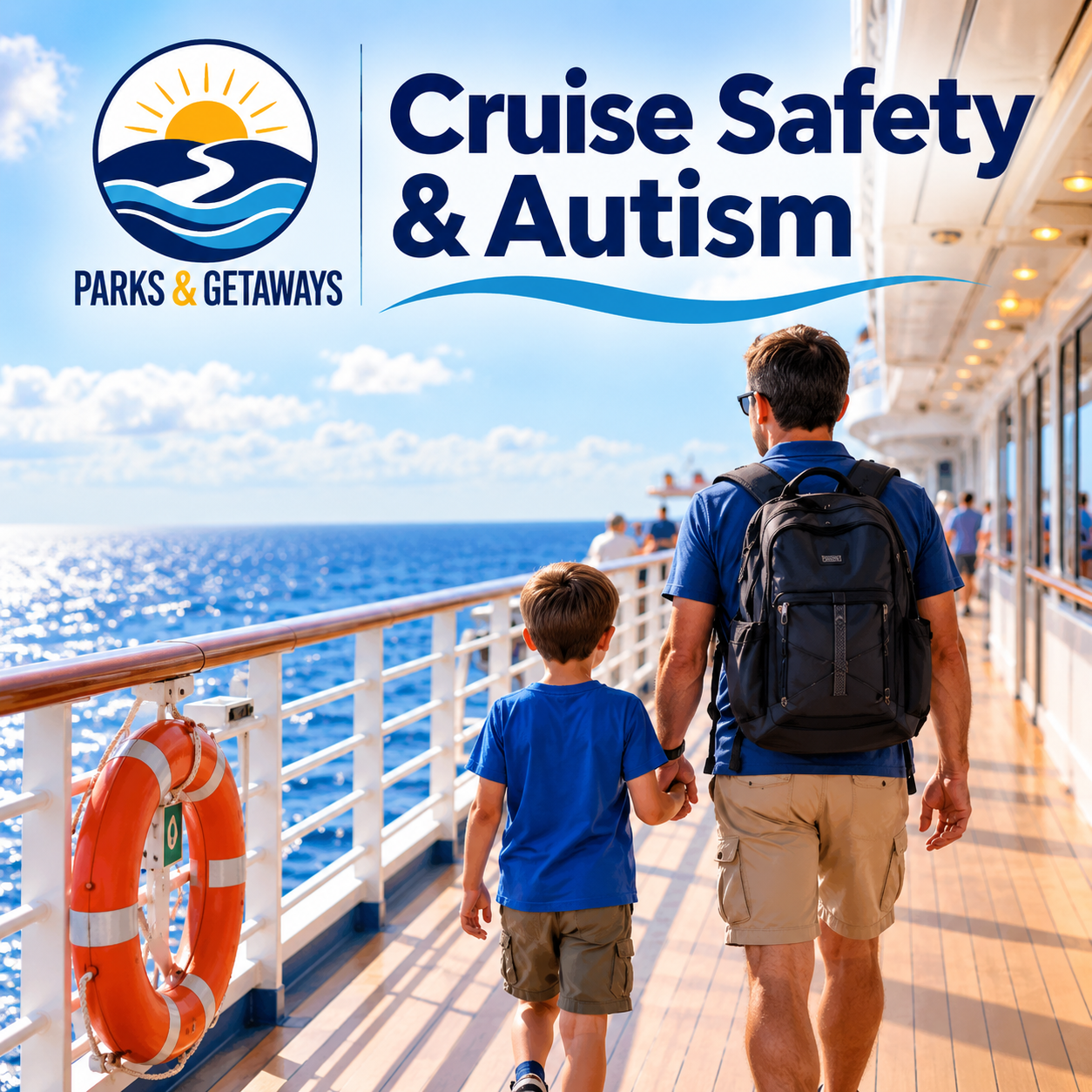
Cruise Safety & Autism
A cruise can offer a unique sense of freedom for families. You unpack once, have activities and dining nearby, and travel to multiple destinations without repeatedly changing hotels. But a cruise ship is also a large, unfamiliar environment surrounded by water, and that creates safety considerations families should think through before sailing.
For a traveler with Autism, cruise safety planning may include wandering and elopement, water safety, identification, communication, supervision, and cabin security. The goal isn't to approach a cruise with fear. It is to identify the areas where your loved one may need additional support and put those supports in place before the trip.
Start With Your Loved One's Individual Safety Needs
Cruise safety planning should be individualized. Think about the safety concerns you already manage at home and in the community and consider how they could look in a cruise environment.
Ask yourself:
Does my loved one have a history of wandering or elopement?
Are they drawn to water?
Can they independently state their name and contact information?
Would they approach a staff member for help if separated?
Can they recognize our cabin or find their way back to it?
Do they understand boundaries around pools, railings, and restricted areas?
Can they safely open doors independently?
How do they respond in crowded or unfamiliar environments?
You don't need to create a plan for every possible situation. Focus on the risks that are relevant to your loved one.
Wandering and Elopement on a Cruise Ship
A cruise ship may feel contained, but it is still a very large environment. There can be multiple decks, long hallways, staircases, elevators, restaurants, pools, entertainment venues, shops, and thousands of passengers. For a person who wanders or elopes, this can create new challenges. Before your trip, decide what your family's supervision plan will look like. This is especially important during high-traffic times such as embarkation, meals, shows, pool time, port days, and getting on and off the ship.
If several adults are traveling together, be clear about who is responsible for supervision rather than assuming someone else is watching. A simple handoff "I've got him" or "You're with her now" can prevent confusion. The same principle applies when older children, teens, or adults are given more independence onboard. Base that independence on the individual's safety skills rather than age alone.
Identification Is Important
If your loved one became separated from you, would someone know how to help them? Consider having your loved one wear or carry identification throughout the cruise. A medical ID bracelet can include basic information such as their name, Autism diagnosis, and a parent's or caregiver's phone number. Learn more about travel identification.
You can also carry an emergency fact sheet (download a free copy) with a recent photo, communication information, safety concerns, and other details that could help cruise staff respond if your loved one went missing. If your loved one uses a communication device, make sure it remains accessible. Don't leave an AAC device or other essential communication support in the cabin simply because you're staying on the ship.
Have a Separation Plan
Before sailing, decide what you will do if your loved one becomes separated from you. Once onboard, identify where to go for assistance and ask staff what the cruise line recommends if a passenger goes missing. If wandering is a significant concern, consider contacting the cruise line's accessibility department before sailing so you understand its procedures. Keep a recent photo of your loved one on your phone. A photo taken that morning can be particularly useful because it shows exactly what they are wearing that day.
For someone who can follow a safety plan independently, establish a simple rule about what to do if separated. Depending on the person's abilities, that might mean staying in one place, approaching a uniformed crew member, or going to a predetermined location. Practice the plan before the trip rather than introducing it for the first time onboard.
Pay Attention to Cabin Safety
Your stateroom will become your home base during the cruise, so include it in your safety assessment. When you first enter the cabin, look at the door and determine how easily your loved one could open it independently. This is particularly important if wandering at night is a concern.
If you've booked a balcony cabin, assess the balcony immediately. Look at the locking mechanism, door, railing, furniture placement, and anything that could potentially be climbed. For some families, a balcony provides a wonderful quiet space away from busy public areas. For others, the additional safety concern isn't worth it. An oceanview or interior cabin may be a better choice when wandering, climbing, impulsivity, or limited danger awareness are significant concerns.
For more on cabin selection, see Choosing the Right Cruise Cabin and room safety modifications.
Water Safety Doesn't Stop at the Pool

Water is part of the cruise environment. In addition to pools and splash areas onboard, port days may include beaches, pools, snorkeling, boating, or other water activities. Families of individuals who are drawn to water should account for these environments in their supervision plan.
Set clear expectations about when and with whom your loved one can access pools and other water areas. If your loved one uses a life jacket or other flotation device, determine what is appropriate for the activity and practice using it before the trip when possible.
Visual supports or a social story can also reinforce rules such as:
I wait for an adult before going to the pool.
I stay with my adult near the water.
I wear my life jacket when required.
Don't assume that a pool or activity is safe simply because a lifeguard or cruise employee is present. Continue the level of supervision your loved one needs.
Prepare for Crowded Areas
Some of the highest-risk moments for separation happen when everyone is moving at once.
Embarkation and disembarkation can involve crowds, lines, luggage, security procedures, and multiple transitions. Elevators can become particularly crowded around meals, shows, and port arrival times. Pool decks, buffets, theaters, and atriums can also become very busy.
Consider what will make these situations easier for your loved one. You might wait for a less crowded elevator, use stairs when appropriate, leave an activity before the crowd exits, or choose a quieter dining time.
If holding hands, walking beside an adult, or another strategy is part of your usual community safety plan, continue using it onboard.
Port Days Require a Different Safety Plan
Your safety plan changes when you leave the ship. At a port, you're moving from a relatively contained ship into an unfamiliar community. Depending on the destination, you may encounter traffic, crowds, unfamiliar transportation, beaches, boats, or excursions. Bring identification and essential communication supports with you. Make sure everyone knows when and where you need to return to the ship.
If your loved one is prone to wandering, don't assume a structured excursion eliminates that risk. Continue the same supervision strategies you would use in any unfamiliar community. It can also help to show your loved one what the port day will look like beforehand:
Leave ship → Go on excursion → Return to port → Security → Get back on ship
Knowing that the ship is part of the plan again can make the transition easier to understand.
Include Safety in Your Cruise Preparation
Safety preparation doesn't have to feel frightening. Include important safety expectations alongside all the other parts of your cruise preparation. If you're creating a social story or visual schedule, show your loved one what it looks like to walk with the family, wait for an adult before entering the pool, stay together when leaving the ship, and return to the cabin.
Practice relevant skills at home when possible. These might include:
Responding to "stop" or "come here"
Staying with a trusted adult
Carrying or wearing identification
Giving identifying information
Approaching a safe adult for help
Following water-safety rules
Waiting during transitions
Using a communication device to request help
The middle of a busy cruise ship isn't the ideal place to introduce a brand-new safety skill.
Talk With the Cruise Line Before You Sail
If your loved one has significant safety needs, contact the cruise line's accessibility or disability services department before the trip. Explain the specific support need rather than simply saying your loved one has Autism. For example, tell them if your loved one has a history of wandering, has limited verbal communication, requires additional support during emergency procedures, or has difficulty waiting in crowded environments. Ask what assistance or accommodations may be available and what the cruise line recommends families do in an emergency.
For more information, see Autism Supports on Cruise Lines.
Create Layers of Safety
No single strategy should carry your entire safety plan. Identification doesn't replace supervision. A locked balcony door doesn't address wandering in the hallway. Knowing what to do if someone becomes separated doesn't eliminate the need to try to prevent the separation in the first place.
Instead, think in layers:
Supervision + Identification + Communication + Environmental Safety + Preparation + Emergency Planning
The right combination will look different for every traveler. Cruising can provide families with an opportunity to explore new destinations while returning to the same familiar space each day. Thinking through safety before you sail allows you to spend less time figuring things out in the moment—and more time experiencing the trip together.