Planning a Flight? Start Here.
Explore key topics to help you prepare for a smoother travel experience.

Before You Fly
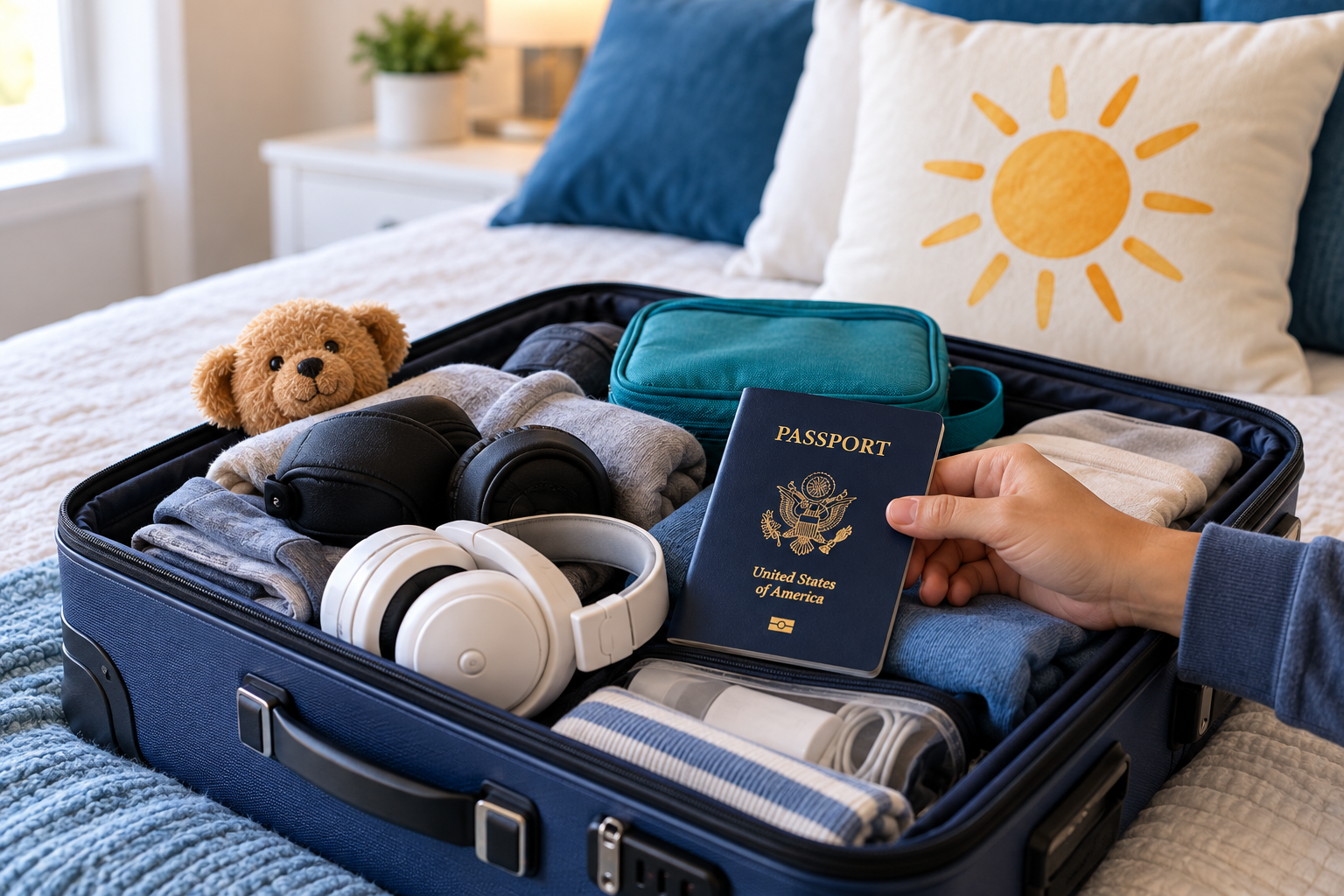
Planning starts long before you arrive at the airport. Consider your traveler’s routine, sensory needs, communication, comfort with transitions and what will make the travel day more manageable. Think about the number of connections, flight length, seating, transportation to the airport, and accessibility needs.
Airline Assistance
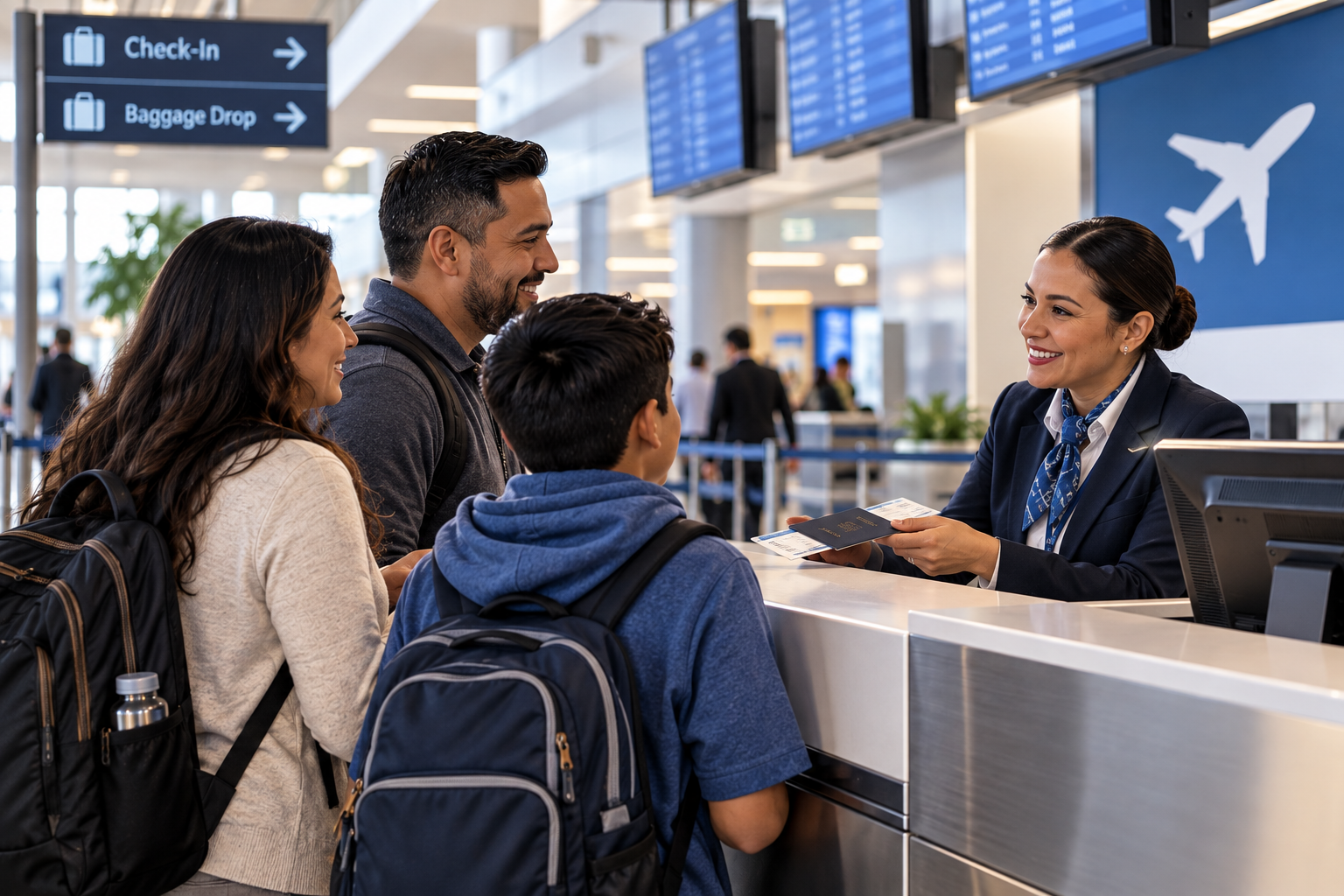
Each airline offers different types of assistance for travelers with disabilities, so it is important to check with your airline before you travel. Depending on the airline and your traveler's needs, assistance may be available with check-in, navigating the airport, boarding, connections, or other parts of the travel experience. Airlines also use Special Service Request (SSR) codes to identify certain assistance needs within a passenger's reservation. Understanding these codes can help you communicate your traveler's needs and confirm that requested assistance has been added to the reservation.

Airport Security and Support Programs
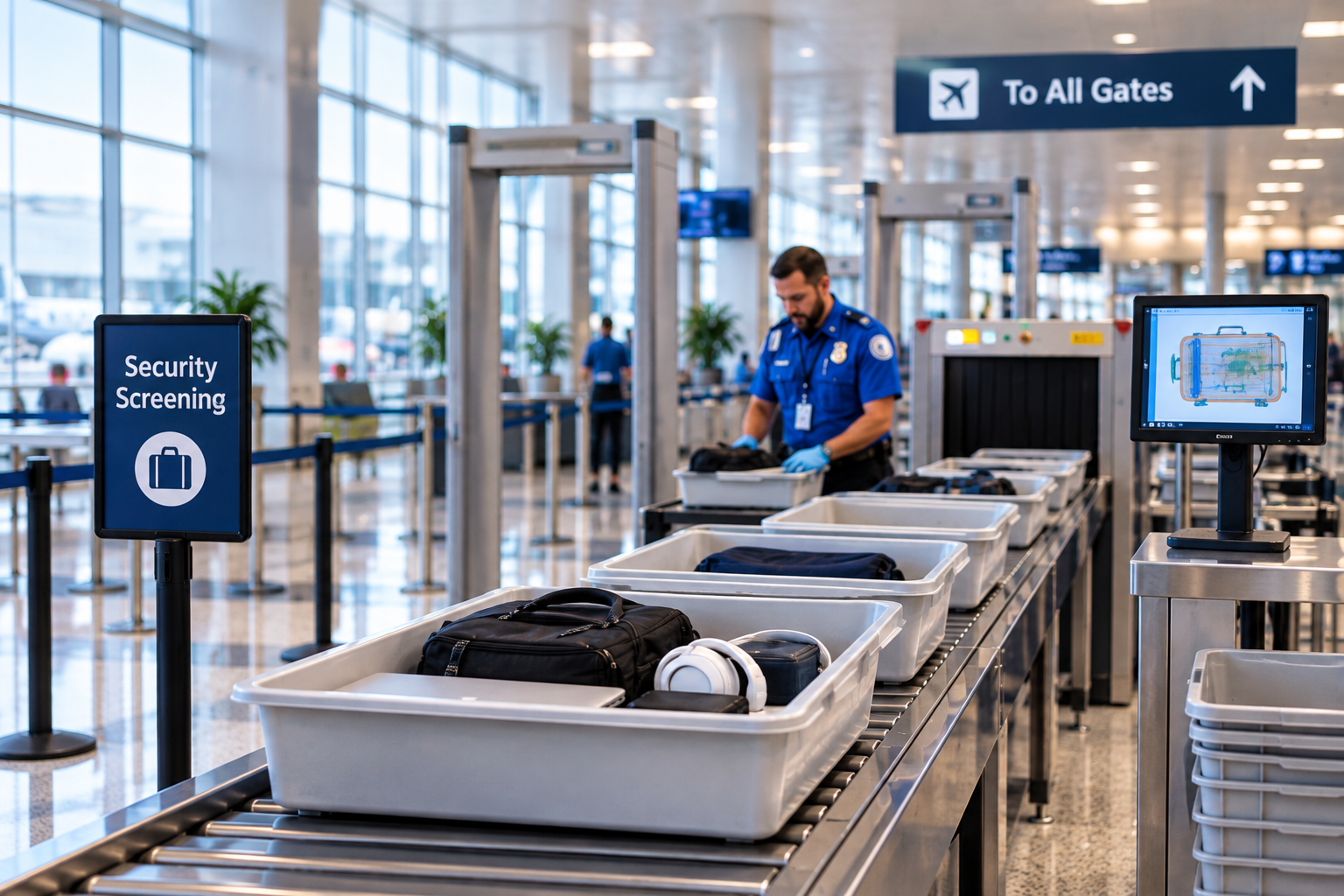
Airports can be busy and unfamiliar environments. Knowing what support is available before you travel can help you decide what may be useful for your traveler. Programs and resources to know about include TSA Cares, which provides assistance during the security screening process; the Hidden Disabilities Sunflower, a voluntary way to indicate that someone has a non-visible disability and may benefit from additional time, understanding, or support; and Airline Special Service Request (SSR) codes, which can be added to a reservation to identify certain assistance needs.
Navigating & Waiting at the Airport
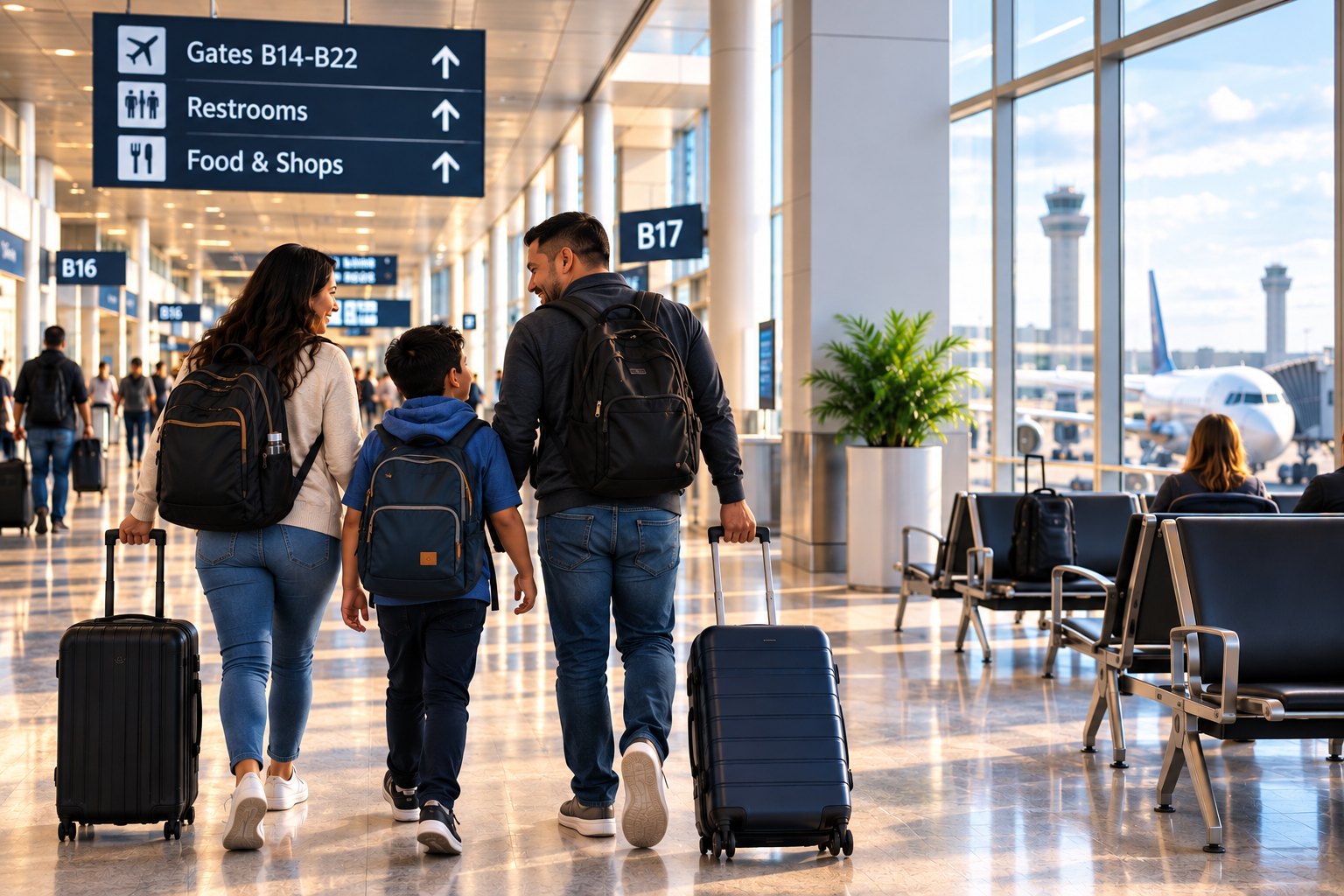
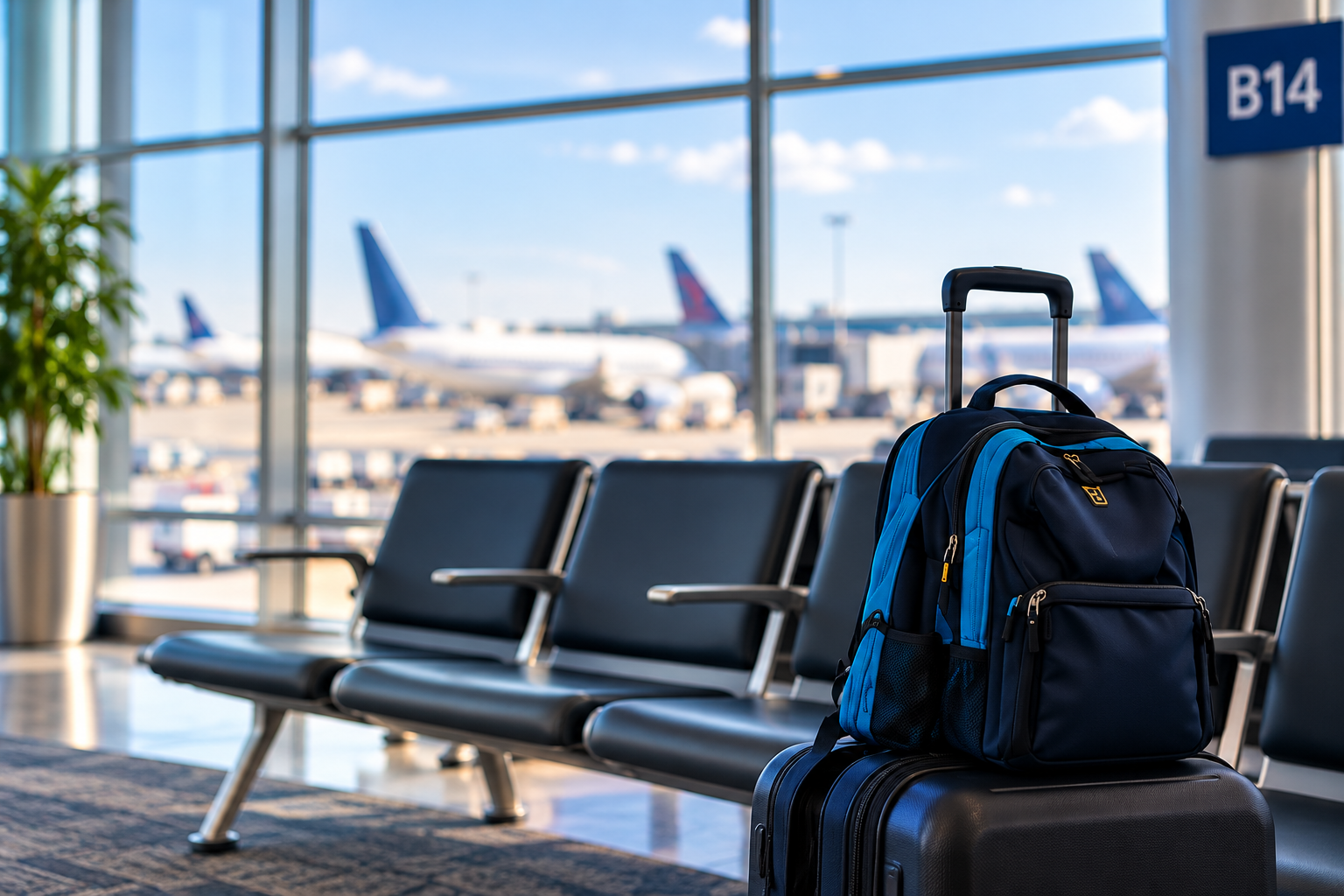
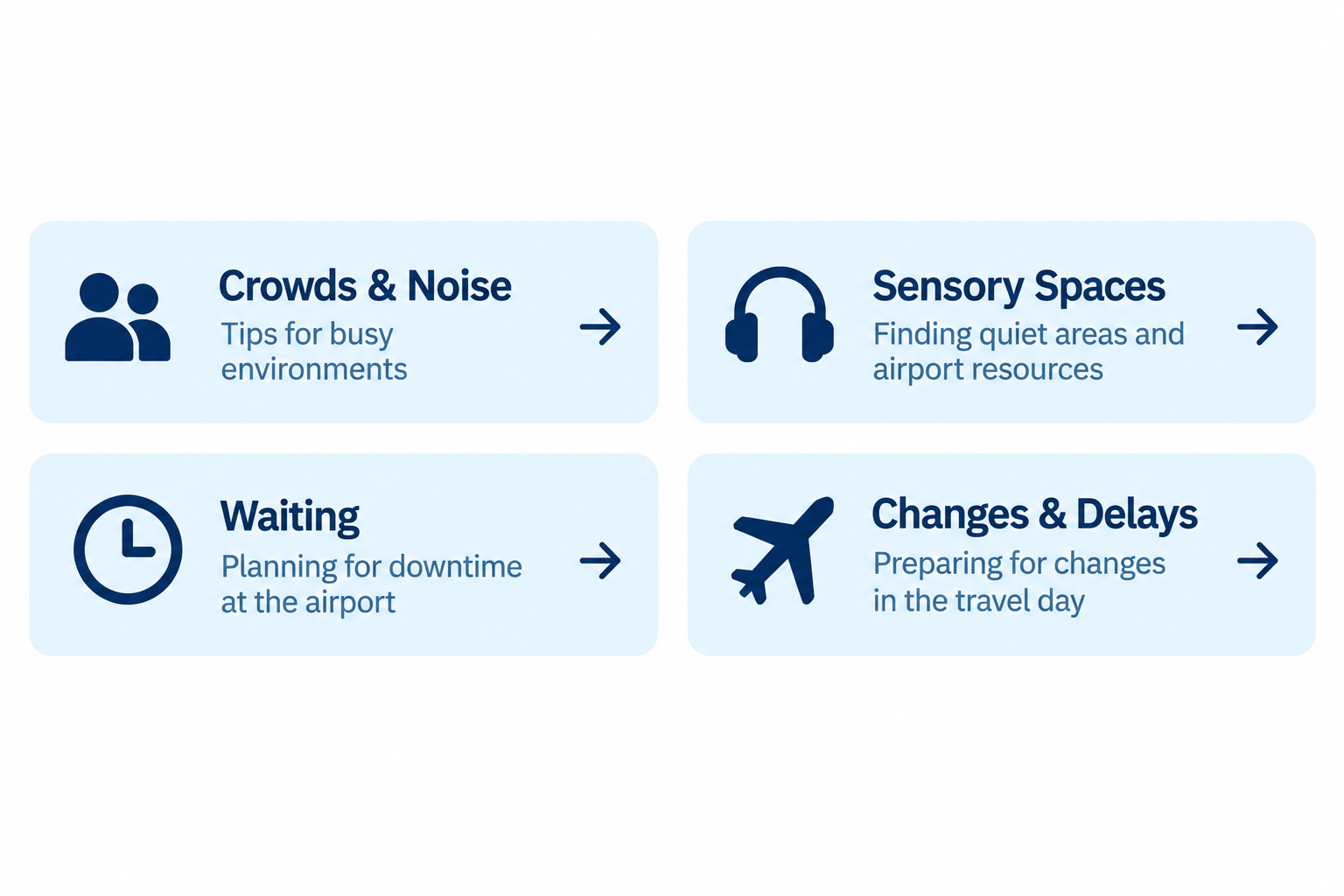
Airports can mean crowds, noise, long periods of waiting, and unexpected changes. Before your trip, take some time to think about how each of these may affect your traveler. Many airports also offer sensory rooms, quiet areas, or other spaces that may be helpful during your time in the terminal.
Boarding & During the Flight
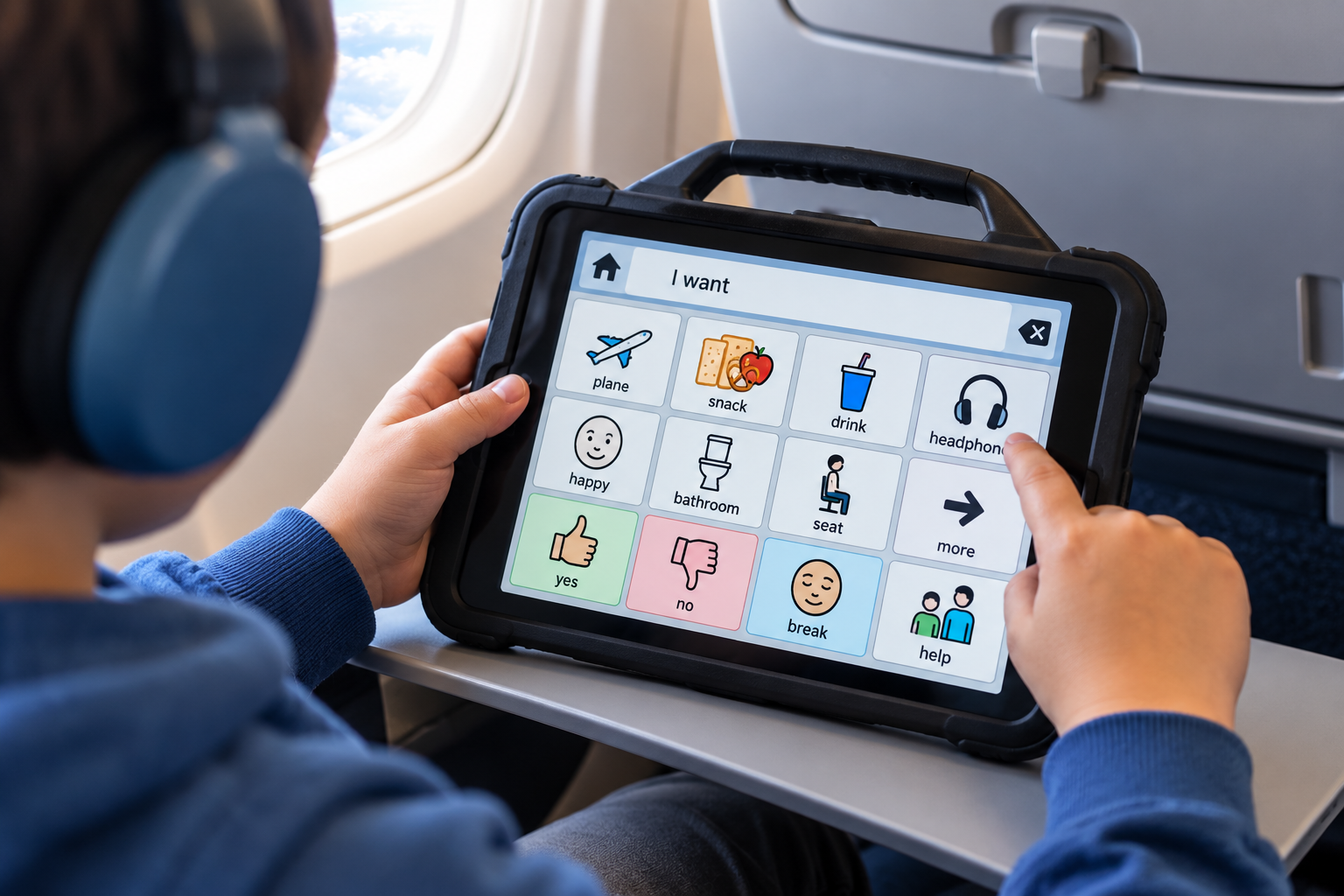
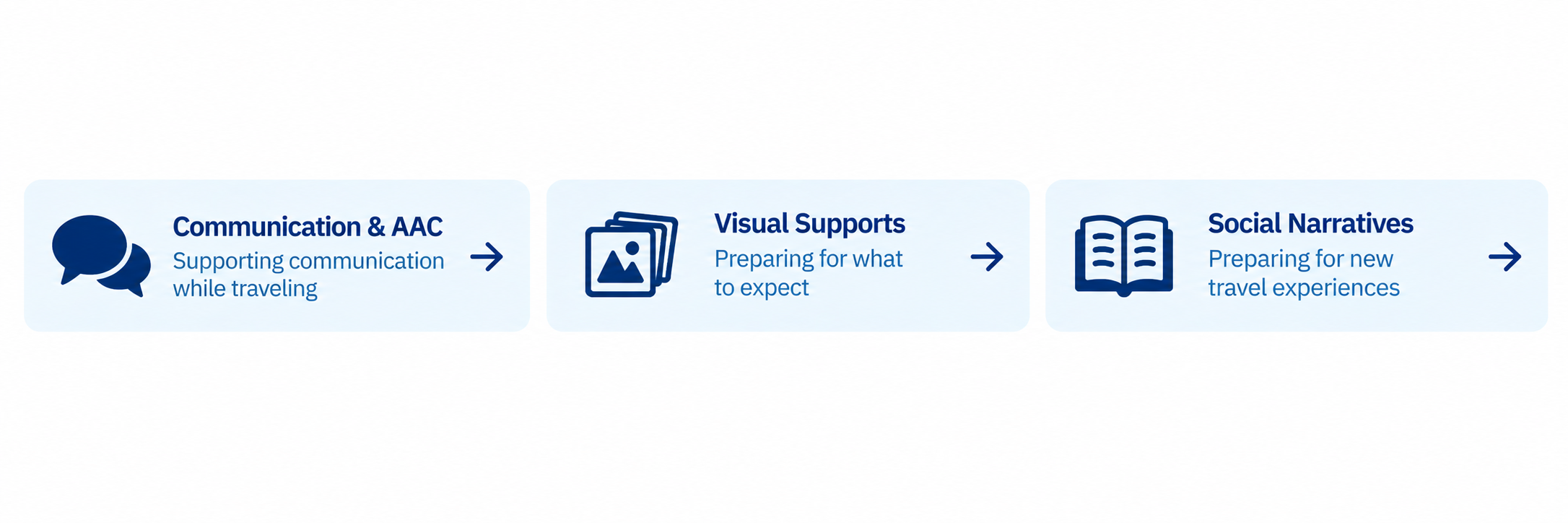
Travel can involve unfamiliar routines, new environments, and many interactions along the way. Planning for your traveler’s communication needs can make it easier to understand what is happening, express needs, make choices, and ask for help. Visual schedules, social narratives, AAC, communication cards, and other familiar supports can be used throughout the travel day.
Communication & Visuals
Airports can mean crowds, noise, long periods of waiting, and unexpected changes. Before your trip, take some time to think about how each of these may affect your traveler. Many airports also offer sensory rooms, quiet areas, or other spaces that may be helpful during your time in the terminal.