Travel Emergency Plan
Emergencies can happen anywhere, but being away from home can make responding more complicated. You may be in an unfamiliar city, staying in a hotel or vacation rental, visiting a crowded attraction, traveling through an airport, or spending time somewhere you do not know the closest hospital, police department, or other emergency resources. For a person with Autism, an emergency may also involve communication differences, sensory needs, wandering or elopement, medical needs, or difficulty understanding what is happening.
A travel emergency plan gives your family a clear starting point. The goal is not to prepare for every possible situation. It is to make sure you have the information, supplies, contacts, and response plan you are most likely to need if something goes wrong.
Create Your Plan Before You Travel
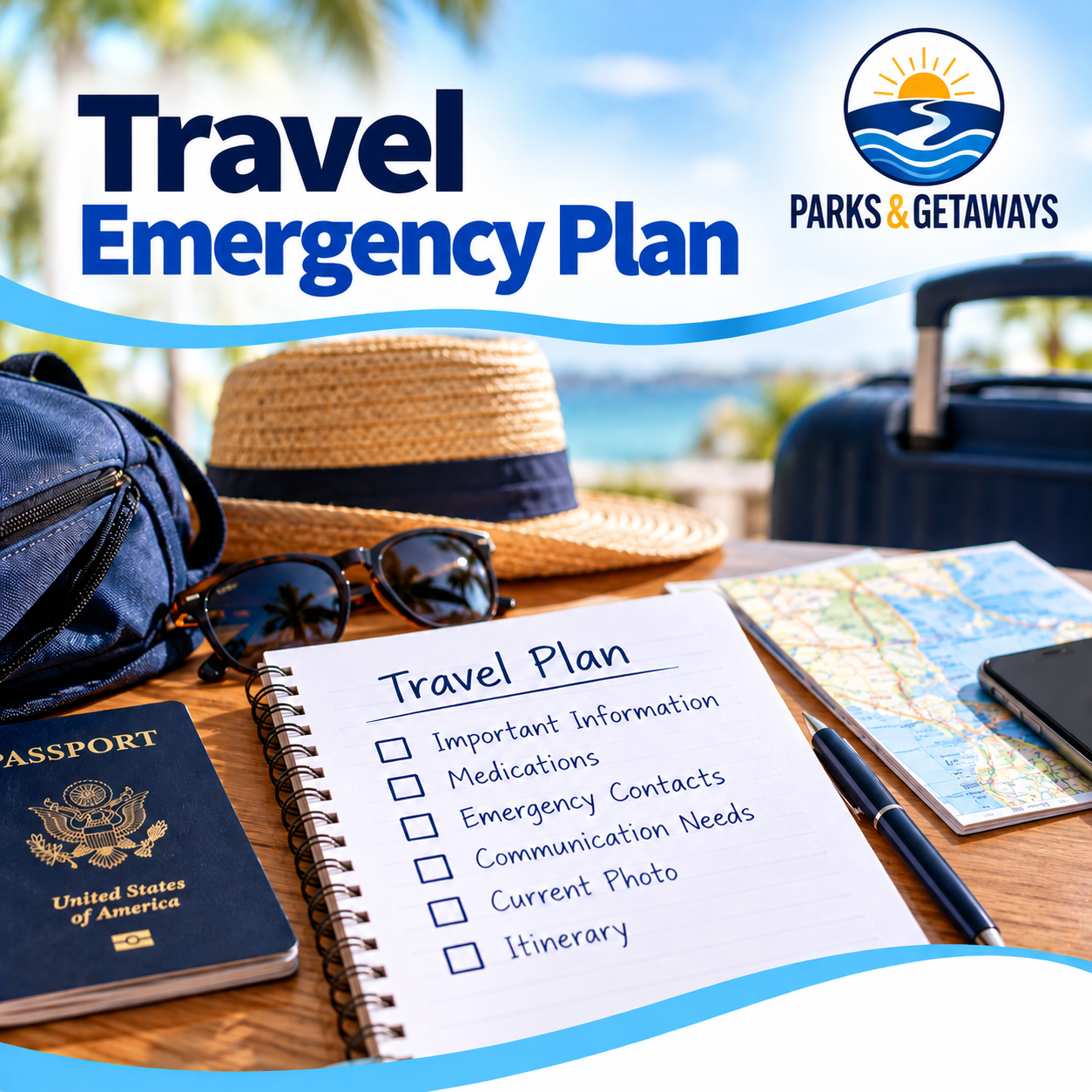
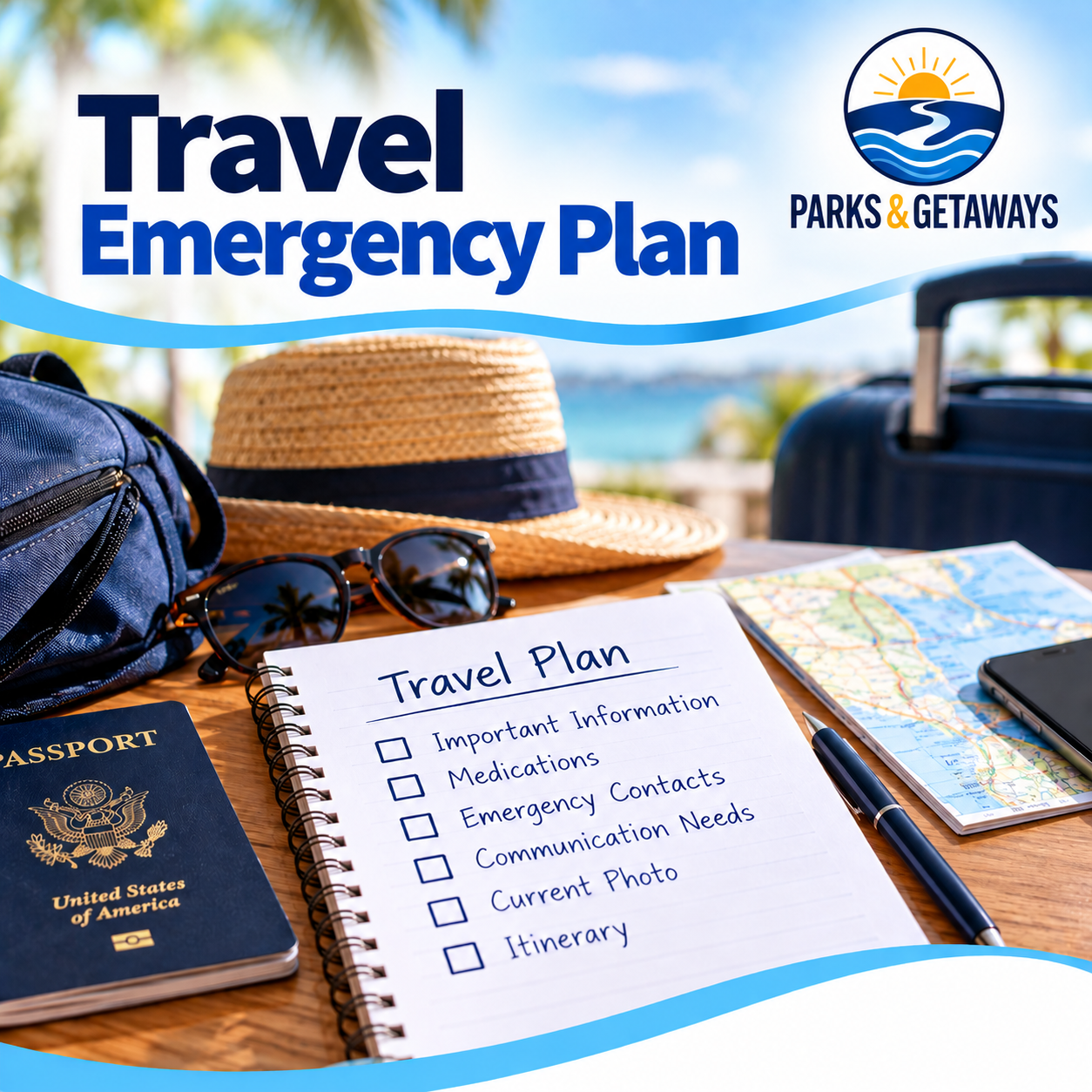
Start planning before you leave home. Think about your loved one's individual needs and the situations that would be most difficult to manage away from familiar supports. Your plan should answer some basic questions: What information would someone need to help my loved one? Who would we contact in an emergency? What would we do if we became separated? Where would we go for medical care? What supplies or medications could we not easily replace?
You do not need a complicated binder. A concise plan that is accessible on your phone and backed up with a printed copy may be much more useful during an actual emergency. Make sure every adult traveling with you knows where the information is stored.
Create an Emergency Information Sheet
An Emergency Information Sheet can put the most important information about your loved one in one place. Keep it concise enough that a first responder, medical professional, security officer, or other person can quickly understand what they need to know.
Consider including:
Full name and date of birth
Current photograph
Autism diagnosis
Parent or caregiver names and phone numbers
Secondary emergency contact
Communication method
Important medical conditions
Allergies
Current medications
Behavioral or sensory considerations that could affect an emergency response
Wandering or elopement risk
Attraction to water, traffic, trains, or other specific hazards
Best ways to approach and communicate with the person
Strategies that help the person remain calm
Anything the person may do when frightened, overwhelmed, or in pain
Focus on information that could change how someone responds to or assists your loved one.
Keep a copy on your phone so it is immediately available. A printed copy in your carry-on or travel bag provides backup if your phone is lost, damaged, or out of power.
Keep a Current Photo
Take a current full-body photograph before leaving for your trip and consider taking another each morning before heading out. A daily photograph shows exactly what your loved one is wearing that day. If they become separated from you, you can immediately show hotel staff, attraction security, police, or other responders the photograph rather than trying to remember clothing details during a stressful situation. This takes only a few seconds and can become part of your normal morning travel routine.
Have Identification in Place
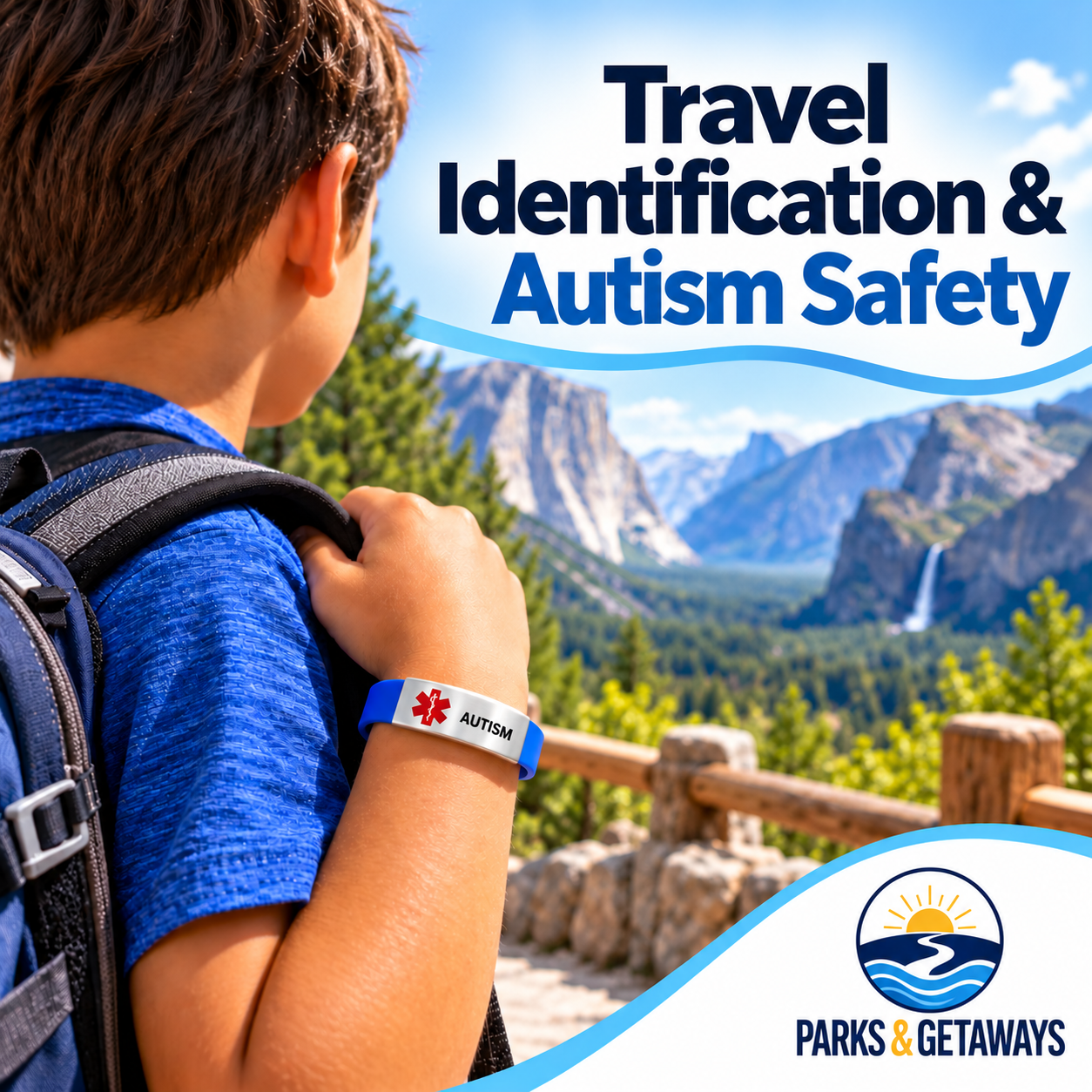
Consider how someone would identify your loved one and contact you if you became separated. Depending on the person's needs, options might include a medical ID bracelet, shoe tag, wallet card, temporary identification band, temporary ID tattoo, information stored on a phone, or identification securely attached to clothing or belongings.
For someone at higher risk of wandering or elopement, consider having identification on the person, rather than relying exclusively on a backpack or other item that could be left behind. For more options and guidance about what information to include, see our Travel Identification & Autism Safety article.
Pack Medications With Emergencies in Mind
Keep essential medications with you rather than in checked luggage whenever possible. This is especially important when flying because checked bags can be delayed, misdirected, or inaccessible for long periods. Bring enough medication for the planned trip and consider what you would do if travel were unexpectedly extended. Keep medications in their original labeled containers when appropriate and bring any documentation you may need.
Create a medication list containing the medication name, dosage, schedule, prescribing provider, pharmacy information, and any other essential instructions. Keep that list with your emergency information.
Pack an Emergency Supply Kit
Think beyond what your loved one needs during an ordinary day. Ask what you would want available if your flight were canceled, transportation were delayed, you were stuck somewhere longer than expected, or you suddenly needed to spend several hours in an unfamiliar environment. Depending on your loved one's needs, an emergency travel kit might contain preferred snacks, water when permitted, communication supports, AAC charging equipment, portable chargers, headphones or hearing protection, sensory items, comfort objects, backup clothing, wipes or personal-care supplies, and essential medical supplies.
If there is an item your loved one relies on heavily, consider bringing a backup when practical. Keep essential items accessible. A favorite regulation tool buried inside checked luggage cannot help during an airport delay.
Plan for Communication
An emergency can make communication more difficult. A person who communicates well in familiar circumstances may communicate differently when frightened, overwhelmed, sick, injured, or surrounded by unfamiliar people.
Think about how your loved one can communicate basic needs such as:
I need help.
I am hurt.
I need a break.
I need my parent/caregiver.
Yes.
No.
Stop.
If your loved one uses AAC, make sure the device is charged and emergency vocabulary is easy to locate. Bring the charger and consider a portable power bank. For someone who uses visual communication, bring a small communication board or emergency communication card as a backup.
Know Your Destination
Before traveling, spend a few minutes learning about the area where you will be staying. Identify the closest appropriate emergency department or hospital and know how emergency services are contacted at your destination, particularly when traveling internationally.
Also look at the area surrounding your hotel or vacation rental. Note nearby bodies of water, major roads, train tracks, wooded areas, construction sites, or other locations that could create additional risk if your loved one wanders. You don't need to research every possible emergency service in the area. Focus on the resources and hazards most relevant to your family's needs.
Make a Plan for Wandering or Separation
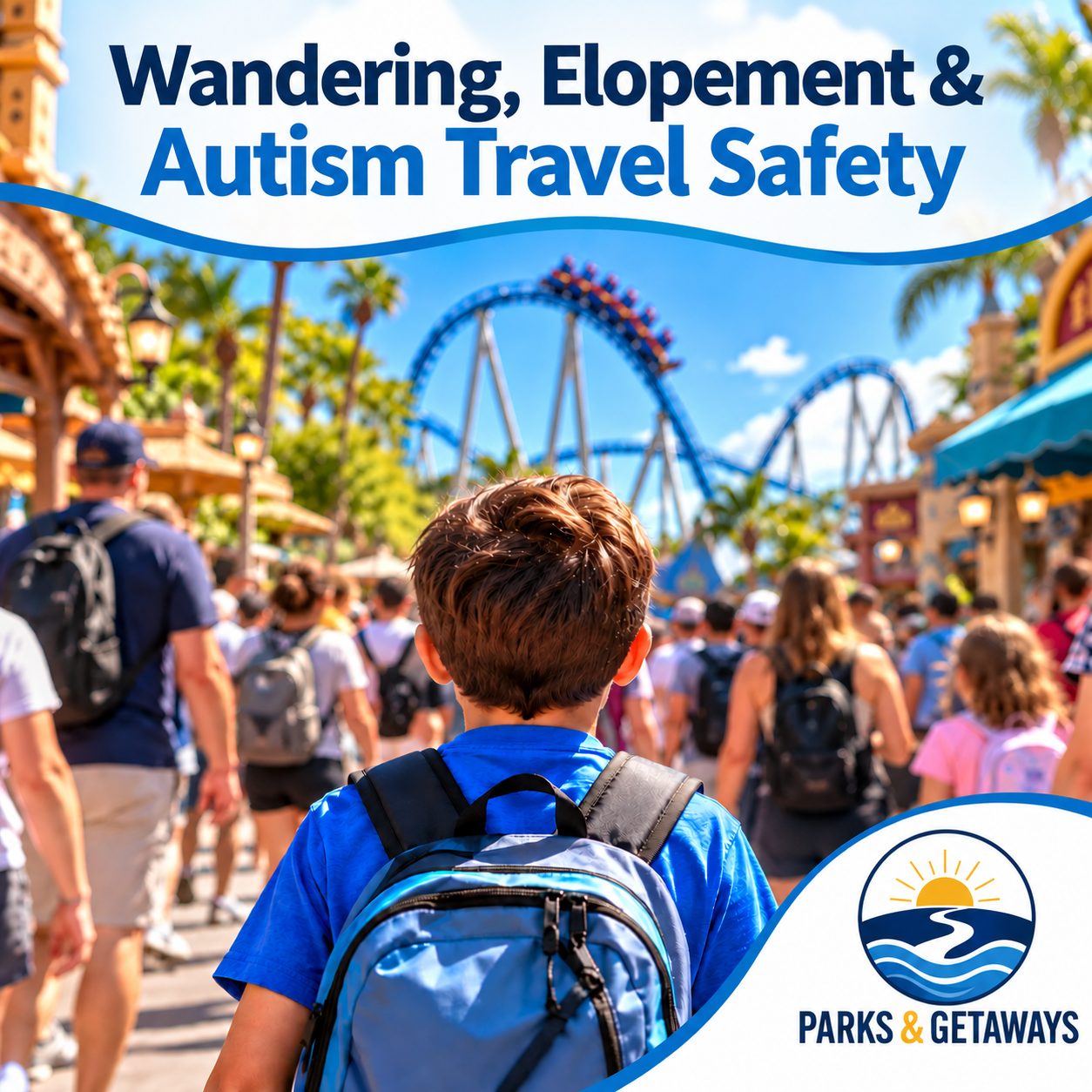
If your loved one has a history of wandering, elopement, or becoming separated, create a specific response plan before it happens. Decide which adult will call for help, who will search immediate areas, who will check water and other high-risk locations, who will remain at the last known location, and who will supervise other children or family members.
Write down likely destinations. If your loved one tends to seek water, elevators, transportation, playgrounds, favorite characters, food, or another preferred location, responders should know that information. When visiting a large theme park, resort, cruise ship, museum, zoo, or other attraction, identify where security or guest services is located and how to contact them. For more detailed wandering prevention and response strategies, see Wandering, Elopement & Autism Travel Safety.
Have a Family Separation Plan
A separation plan can also be useful for family members who can independently follow one. Choose a recognizable meeting location at large destinations. Avoid vague locations such as "the entrance." Instead, choose something specific: a particular guest-services desk, information booth, landmark, or other permanent location.
Make sure everyone knows what to do if separated. Depending on age and ability, that might mean staying where they are, going to the designated meeting point, approaching an identified employee, showing an ID card, or calling a caregiver. Practice the plan before your trip when appropriate.
Prepare for Medical Emergencies
If your loved one has significant medical needs, consider what information an unfamiliar emergency department would need. Have a concise medical history available, along with medication and allergy information, insurance information, provider contact information, and any important instructions specific to the person.
It can also be helpful to document how your loved one communicates pain and what distress may look like for them. If they do not reliably describe where something hurts or how severe it is, make that clear to medical providers. Include sensory or communication accommodations that can make medical care easier when possible.
Plan for Travel Disruptions
Not every emergency involves police, fire, or medical care. A canceled flight, missed connection, vehicle breakdown, evacuation, severe weather event, or unexpected overnight stay can become a significant situation for someone who depends on routine, familiar foods, medications, communication devices, or specific supports.
Ask yourself:
Could we comfortably manage an unexpected 12–24 hours with what we have with us?
You do not need to pack for every possibility, but essential medications, chargers, communication supports, a change of clothes, critical personal-care supplies, and a few familiar foods or comfort items can make an unexpected disruption much easier to manage. This is particularly important when flying. Keep the items you cannot easily replace in your carry-on rather than checked luggage.
Know the Emergency Procedures Where You're Staying
Hotels, resorts, cruise ships, campgrounds, and vacation rentals each present different emergency considerations. At a hotel, locate the nearest emergency exit when you arrive. Do not assume you will be able to follow signs easily during a stressful situation. At a vacation rental, identify all exterior exits and determine whether doors, pools, balconies, or nearby hazards require additional safeguards. On a cruise, locate your muster station and make sure everyone traveling with you understands what would happen during an emergency announcement or evacuation. If your loved one would have difficulty responding to alarms, crowds, instructions, stairs, or an evacuation, think through how you would support them before an emergency occurs.
Share the Plan With Everyone Traveling
A plan is only useful if the people traveling with you know it exists. Before the trip, tell other adults where emergency information, medications, identification, and important supplies are located. Make sure they know your loved one's most significant safety risks and communication needs.
This becomes particularly important when adults divide responsibilities. One person should not be the only person who knows the plan. If you become sick, injured, or separated yourself, another adult should be able to step in.
Keep Digital and Printed Copies
Your phone is convenient, but it should not be your only source of important information. What happens if you loose your phone or the battery dies. Keep essential information digitally and consider having a small printed backup containing emergency contacts, medical and medication information, lodging details, and your loved one's Emergency Information Sheet. If traveling internationally, include the address and phone number of your accommodations in a format you can show someone even if you cannot communicate easily in the local language.
Do a Five-Minute Check Before Leaving Each Day
Emergency preparation does not have to become another complicated part of vacation. Before leaving your accommodations each morning, do a quick check: Identification on. Current photo taken. Medications packed. Phone and AAC charged. Tracking device checked, if used. Emergency information accessible. Necessary sensory and communication supports packed. Adults know who is supervising. Download the free checklist.
Then consider where you're going that day. A beach requires a different safety plan than a museum. A theme park requires different preparation than a quiet sightseeing day. Adjust the plan to the environment.
The Goal Is to Know What You Will Do
A travel emergency plan should not make families feel as though they need to anticipate everything that could possibly go wrong. The purpose is exactly the opposite: make a few important decisions before an emergency so you don't have to make all of them during one. Have critical information accessible. Keep essential supplies with you. Know your loved one's highest risks. Decide who will do what. Know where to turn for help. Then go enjoy the trip knowing that if something unexpected happens, you already have a place to start.
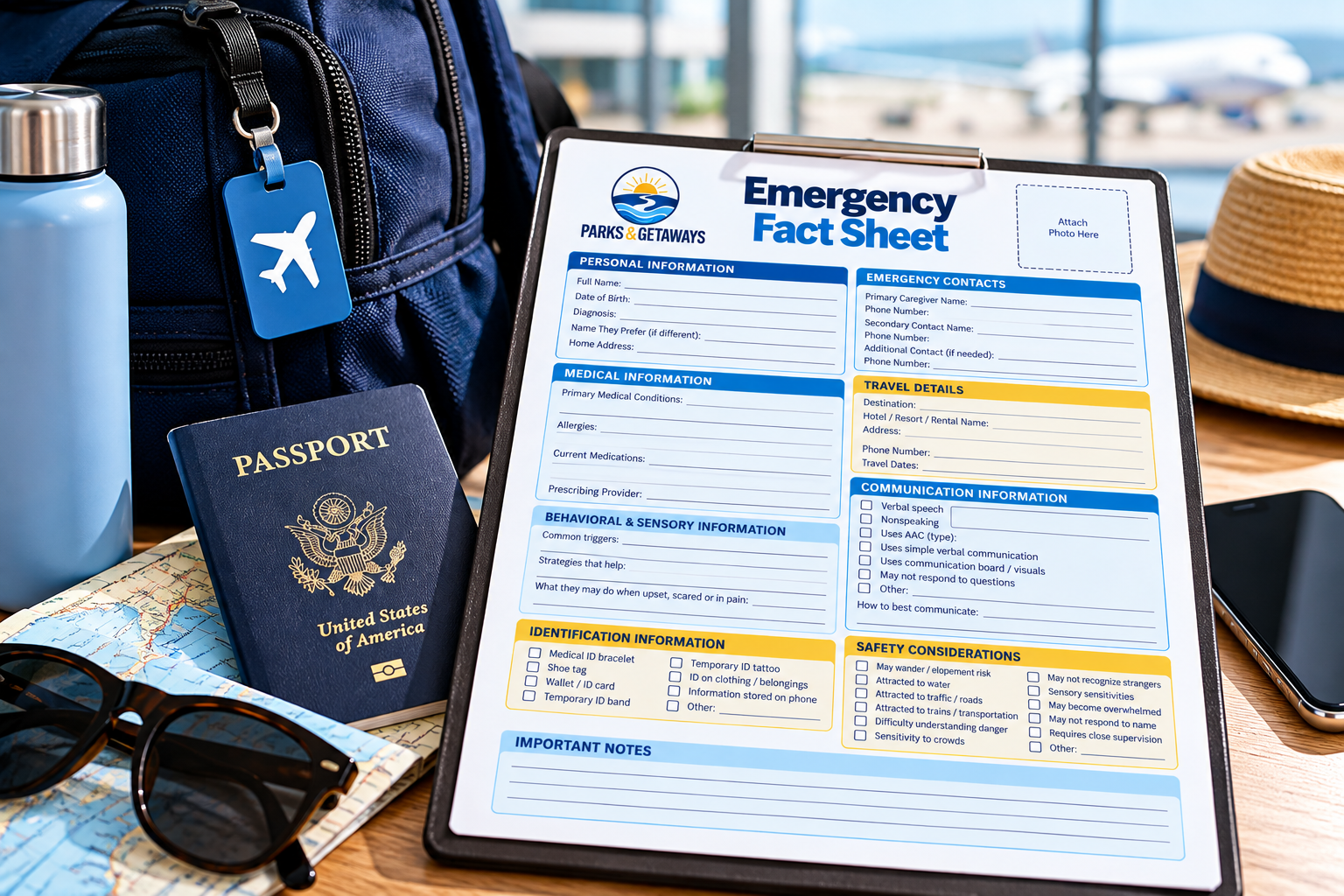
Download the Free Emergency Fact Sheet
Download our free Emergency Fact Sheet to keep your loved one’s essential contact, medical, communication, sensory, identification, and safety information in one easy-to-access place. Complete it before your trip, add a current photo, and keep a copy with your travel documents so it is ready if an emergency occurs.