
Blog Articles
Whether you're planning your first big adventure or your fiftieth family getaway, this is the place to find all the tools you need for a smooth, memorable trip. From expert planning tips and packing guides to destination deep-dives and insider advice, we're here to help make travel easier, more inclusive, and way more fun.
Explore helpful articles filled with tips and strategies —and use the search bar to find your favorite destinations or topics, like Walt Disney World, cruises, or Autism travel tips.

Flying & Autism
Cruise
Travel Safety & Autism
Disney Parks


Food Allergy Friendly Travel


All Articles
Cruise Embarkation Day & Autism
Embarkation day is exciting, you've arrived at the port, the ship is right in front of you, and your vacation is finally beginning. But for a traveler with Autism, it can also be one of the most demanding days of the cruise.
There may be luggage drop-off, security, check-in, identification checks, waiting, crowds, unfamiliar people, boarding the ship, finding your way around, and completing the required safety process. Your stateroom may not be available when you first board, which means you could be navigating the ship with your carry-on bags while thousands of other passengers are doing the same thing.
Preparing for these transitions ahead of time can make the beginning of your cruise much more predictable.
Preparing for a Cruise & Autism
A cruise can offer a great combination of adventure and predictability. Your family can visit new destinations while returning to the same stateroom each night, eating in familiar locations, and developing a routine onboard. But before that routine becomes familiar, there are a lot of new experiences to navigate.
For a traveler with Autism, preparing for those unfamiliar parts of cruising can make the experience more predictable. Social stories, visual schedules, video modeling, and practicing specific skills before the trip can help your loved one understand what to expect—from arriving at the cruise terminal to returning home. The goal isn't to prepare for every possible moment. Focus on the parts of the cruise that will be new, different, or potentially challenging for your loved one.
Autism Supports on Cruise Lines
Cruise lines vary considerably in the supports they offer travelers with Autism. Some have formal Autism or sensory-inclusion programs, while others address Autism through their broader accessibility services. The type of assistance available can also differ by ship, sailing, port, and the age of the traveler.
That makes it important to research supports before you book, especially if a particular accommodation could affect whether the cruise works for your family. Contact the cruise line's accessibility department directly, explain your loved one's specific needs, and ask what can be arranged for your particular sailing. The information below reflects cruise-line policies and programs available as of September 2026. Because programs can change, always verify current accommodations directly with the cruise line before traveling.
Cruise Safety & Autism
A cruise can offer a unique sense of freedom for families. You unpack once, have activities and dining nearby, and travel to multiple destinations without repeatedly changing hotels. But a cruise ship is also a large, unfamiliar environment surrounded by water, and that creates safety considerations families should think through before sailing.
For a traveler with Autism, cruise safety planning may include wandering and elopement, water safety, identification, communication, supervision, and cabin security. The goal isn't to approach a cruise with fear. It is to identify the areas where your loved one may need additional support and put those supports in place before the trip.
Choosing the Right Cruise Cabin for a Traveler With Autism
Your cruise cabin is more than a place to sleep. For a traveler with Autism, it can become an important home base throughout the vacation, a familiar, predictable space to return to when the rest of the ship feels busy or overwhelming. That makes choosing a cabin an important part of planning your cruise. Location, noise, lighting, balcony access, space, and proximity to busy areas can all affect the experience. The cabin with the best view or the most space isn't necessarily the cabin that will work best for your family. Before booking, think about how your loved one responds to noise, unfamiliar environments, crowds, sleep changes, and safety concerns.
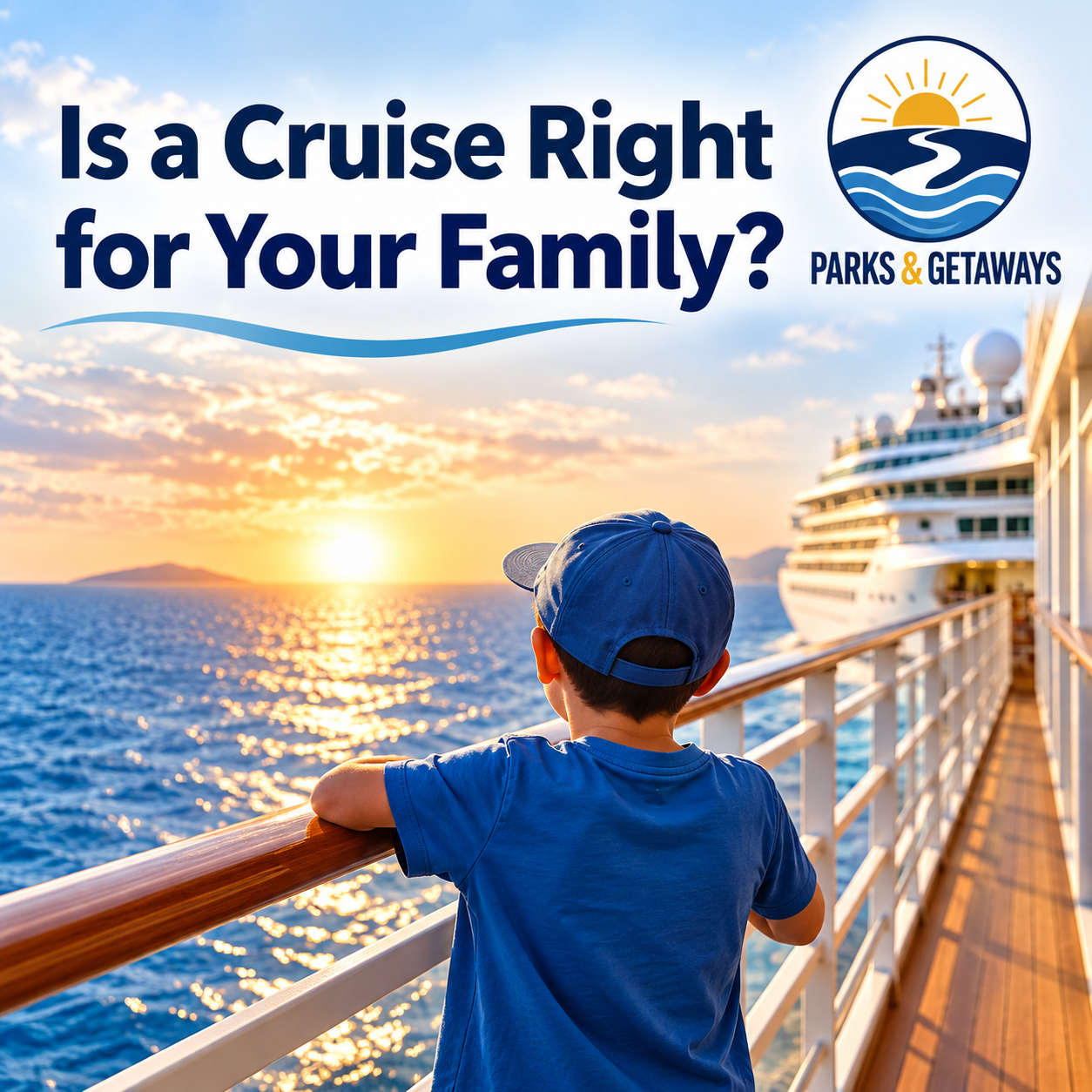
Is a Cruise Right for Your Family?
Cruises can be a great vacation option for families traveling with a loved one with Autism. They offer something that can be difficult to find on many other vacations: the opportunity to visit multiple destinations while keeping the same room, many of the same routines, and a familiar place to return to each day.
But cruising is also a very specific type of travel. Ships can be large, crowded, noisy, and highly stimulating. There are unfamiliar routines, required activities, busy dining spaces, and transitions on port days. Before booking, it is worth thinking beyond the destinations and asking a more important question: Does the cruise experience match the needs of your loved one and your family?
There isn't one answer that works for everyone. Understanding both the advantages and the potential challenges can help you decide.
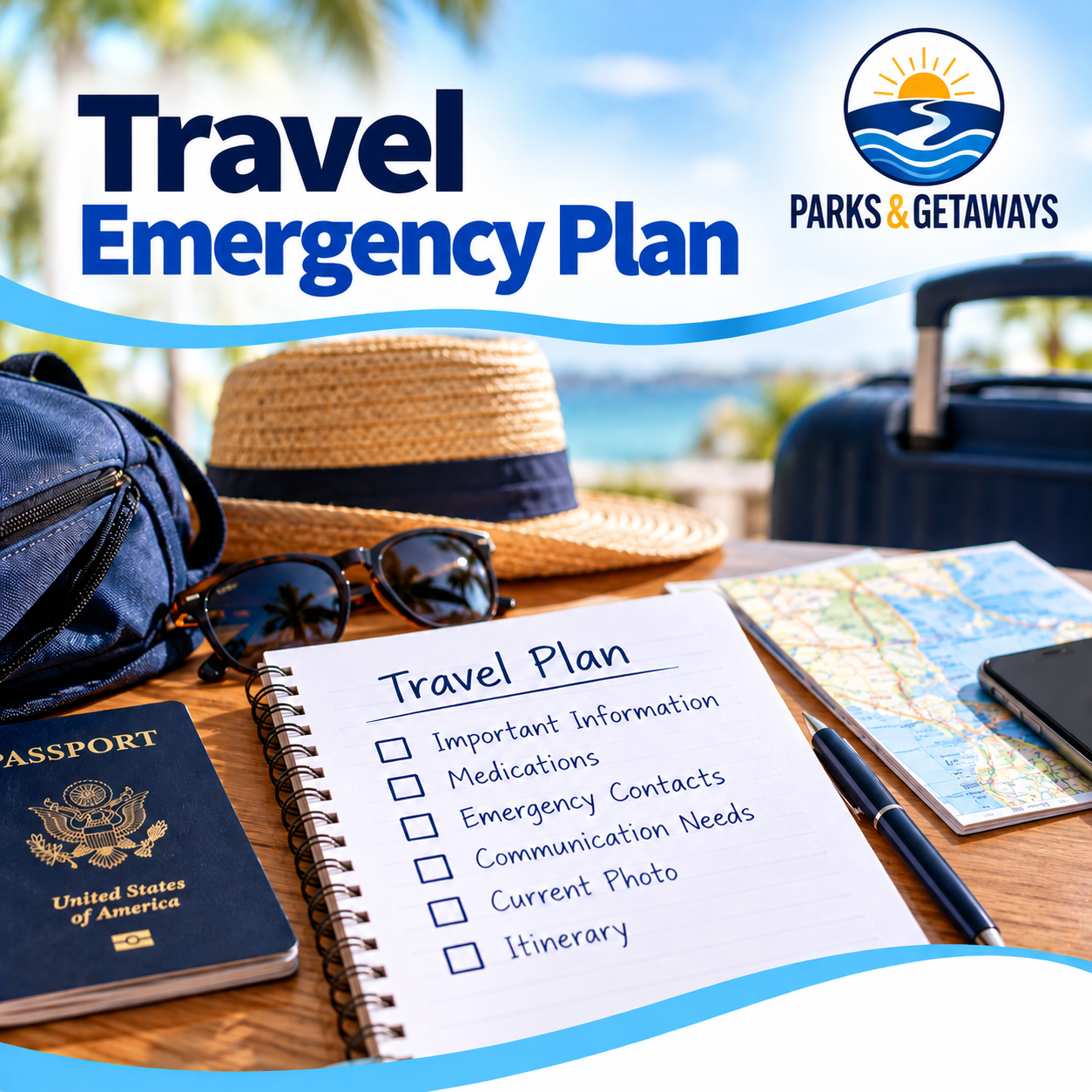
Travel Emergency Plan
Emergencies can happen anywhere, but being away from home can make responding more complicated. You may be in an unfamiliar city, staying in a hotel or vacation rental, visiting a crowded attraction, traveling through an airport, or spending time somewhere you do not know the closest hospital, police department, or other emergency resources. For a person with Autism, an emergency may also involve communication differences, sensory needs, wandering or elopement, medical needs, or difficulty understanding what is happening.
A travel emergency plan gives your family a clear starting point. The goal is not to prepare for every possible situation. It is to make sure you have the information, supplies, contacts, and response plan you are most likely to need if something goes wrong.
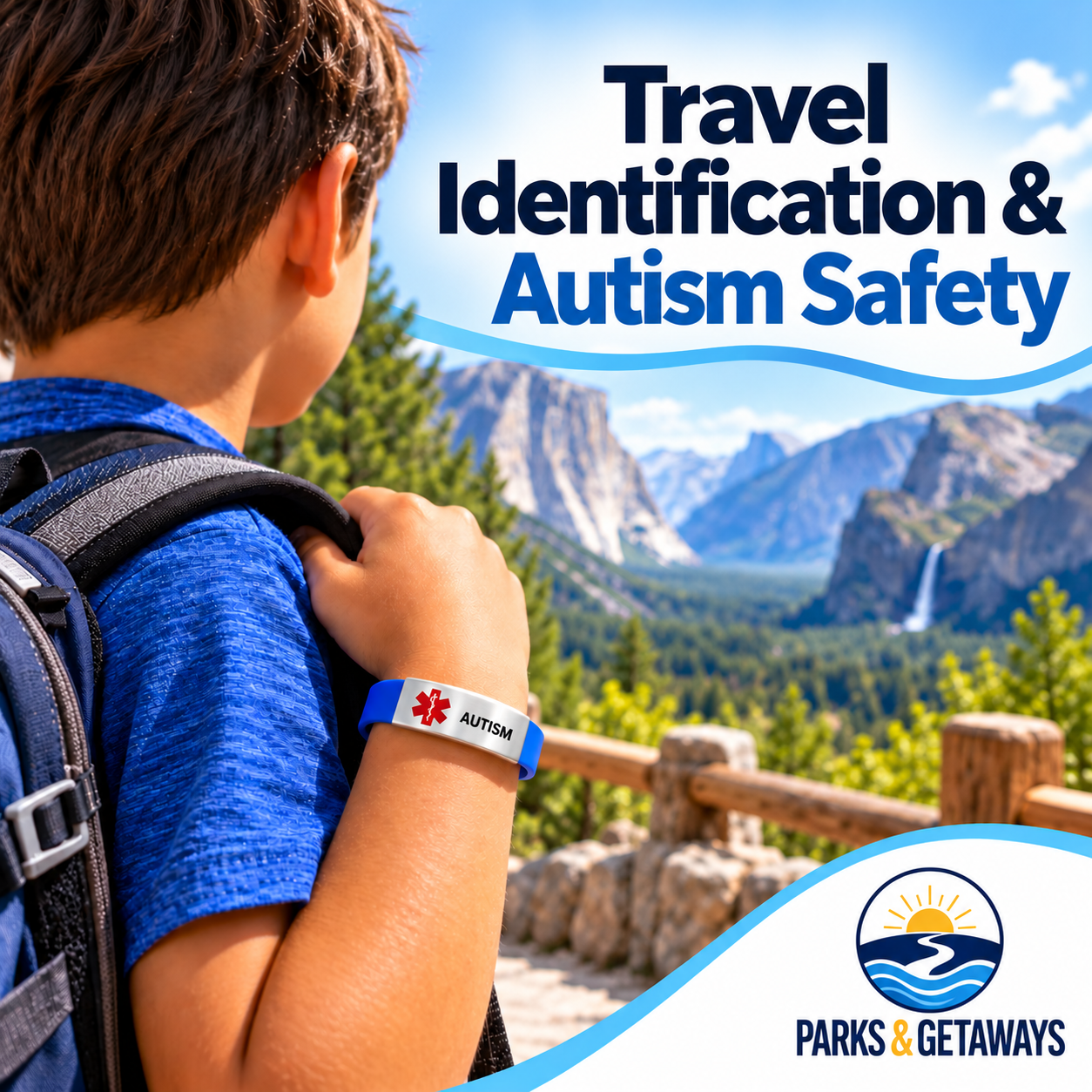
Travel Identification & Autism Safety
When traveling with a person with Autism who may wander, become separated, or have difficulty communicating personal information, identification can be an important part of the safety plan. In an unfamiliar environment, your loved one may not be able to provide their name, caregiver's phone number, hotel information, or other details particularly if they are frightened, overwhelmed, or unable to communicate verbally.
Travel identification does not have to look the same for everyone. Medical ID bracelets, shoe tags, wallet cards, temporary identification bands, temporary tattoos, information stored on a phone, and identification securely attached to clothing or belongings can all be options. The goal is to choose a form of identification your loved one will tolerate, that is likely to stay with them, and that provides someone with enough information to help reunite them with you.
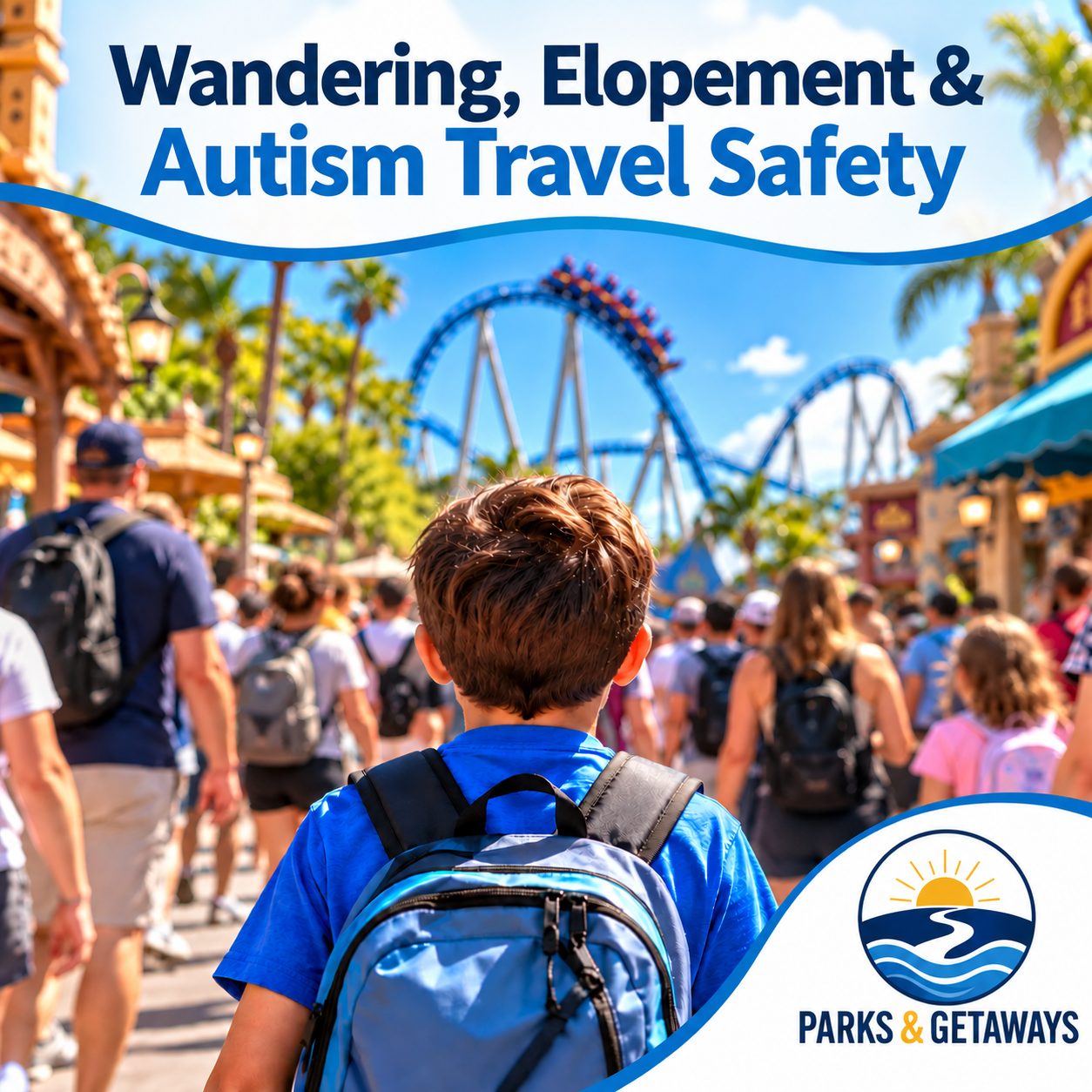
Wandering, Elopement & Autism Travel Safety
Travel brings new experiences, but it also means unfamiliar environments, changes in routine, crowded spaces, and places that may be difficult to navigate. For a person with Autism who wanders, elopes, or may become separated from their family or caregiver, these changes can create additional safety concerns. Airports, hotels, theme parks, beaches, cruise ships, vacation rentals, and busy city streets all present different risks.
Planning for wandering and elopement while traveling is not about avoiding travel. It is about anticipating what could happen, building safety skills before the trip, putting layers of protection in place, and having a clear plan if separation occurs. No single strategy can prevent every incident, so the strongest approach combines preparation, supervision, identification, technology when appropriate, and an emergency response plan.

Water Safety & Travel
Water can be one of the best parts of a vacation, from swimming in a hotel pool to spending a week at the lake or visiting the beach. For individuals with Autism, water may also create additional safety risks, particularly for those who are drawn to water, have a history of wandering or elopement, or do not consistently recognize danger.
Water safety should begin before the vacation starts. Where you stay, the skills you practice, the rules you establish, and the layers of protection you put in place can all reduce risk while still allowing your loved one to enjoy the water.
Hotel Room and Vacation Rental Safety & Autism
A hotel room or vacation rental becomes your home base when you travel. For a person with Autism, however, it is also a completely new environment—with unfamiliar doors, windows, hallways, balconies, pools, stairs, and exits.
Taking time to think about safety before you book and again when you arrive can make a significant difference. The goal isn't to eliminate every possible risk. It is to identify the risks that matter for your loved one and make practical changes so everyone can enjoy the trip.
Airline Assistance for Travelers with Autism
Flying can involve a lot of unpredictability: crowded terminals, long waits, changing gates, boarding announcements, unfamiliar routines, and sensory experiences that are difficult to fully prepare for. For some individuals with Autism, those parts of air travel can be more challenging than the flight itself.
Airlines offer a variety of disability-related supports that can make the experience more manageable. Depending on the airline and the individual's needs, assistance may include help navigating the airport, preboarding, support during connections, seating accommodations, and additional assistance communicating with airline employees.
Tips for Choosing the Hotel and Room
Choosing a hotel is about more than finding the best price or picking a property close to the attractions you plan to visit. When traveling with someone with Autism, the hotel itself, and the specific room you stay in, can have a significant impact on the trip.
Think about how your traveler sleeps, eats, handles noise, manages transitions, and responds to unfamiliar environments. Consider safety needs, especially if wandering or elopement is a concern. Then look at the hotel through that lens.
A hotel that works perfectly for one family may be a poor fit for another. The goal is not to find an "Autism-friendly" hotel. It is to find a hotel and room that work for your traveler's individual needs and your family's routines.
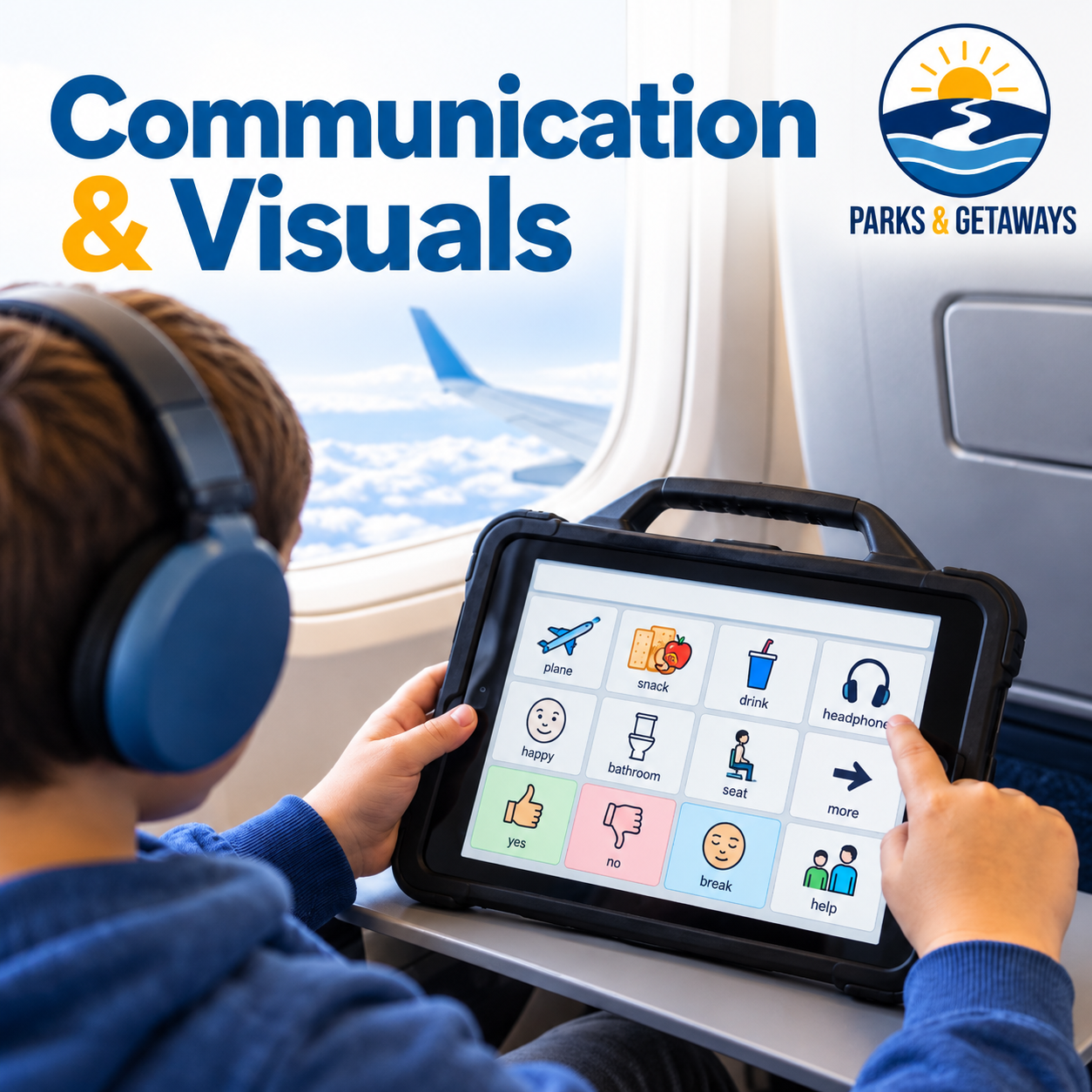
Communication & Visuals: Supporting Communication Throughout Air Travel
Travel involves a lot of communication. From checking in and going through security to finding a gate, boarding the plane, ordering food, using the restroom, and responding to unexpected changes, travelers are constantly receiving information and being expected to communicate with others.
For a traveler with Autism, those communication demands can become more difficult in an unfamiliar or overwhelming environment.
A person who communicates very effectively at home may communicate differently when they are tired, anxious, overwhelmed, or experiencing sensory overload. A traveler who usually speaks may have difficulty finding words in a busy airport. Someone who uses AAC may need additional travel-specific vocabulary. Another traveler may understand spoken language but need visual information to make an unfamiliar experience easier to process.
Communication supports should be part of your travel planning from the beginning. The goal is not to introduce an entirely new communication system for vacation. Whenever possible, start with the tools and strategies your traveler already knows and adapt them for travel.
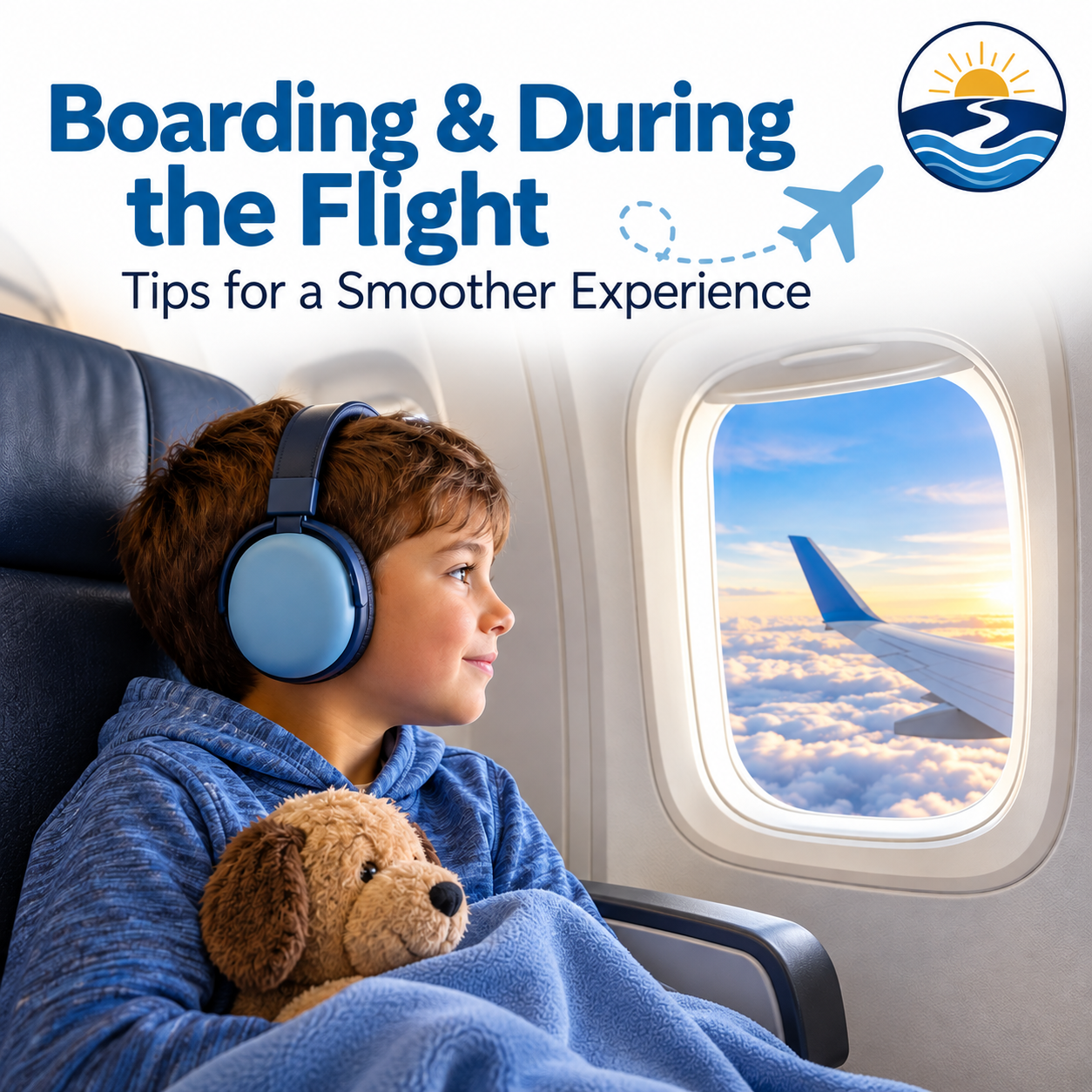
Autism Travel: Tips for Boarding & During the Flights
Boarding the plane and the flight itself can bring a completely different set of challenges than navigating the airport. There are unfamiliar sounds, close seating, changes in air pressure, periods when passengers must remain seated, new expectations, and very little control over what is happening around you. Preparation can make a significant difference.
Before traveling, think about the parts of flying that may be difficult for your traveler. Waiting may be the biggest challenge for one person, while another may struggle with noise, changes in routine, sitting for long periods, or not knowing what will happen next. There is no single "best" way to fly. The goal is to understand your traveler's needs and plan the experience around them as much as possible.
U.S. Airport Autism & Sensory Resource Directory
Air travel can involve a lot of uncertainty: unfamiliar spaces, crowds, security screening, waiting, announcements, changes in plans, and the sensory experience of being in an airport and on an airplane. For a person with Autism, those parts of travel may require additional preparation and support.
The good news is that airports across the United States are offering more resources for travelers with Autism, developmental disabilities, sensory needs, and other non-visible disabilities. The challenge is that every airport is different.
One airport may have a dedicated sensory room, social story, practice flight program, and trained assistance staff. Another may participate in the Hidden Disabilities Sunflower program but offer few other Autism-specific resources. Smaller airports may have very limited formal programming but can still provide accommodations or assistance when contacted in advance.
That is why we created the Parks & Getaways U.S. Airport Autism & Sensory Resource Directory.
Our directory includes 100 airports across all 50 states and is designed to help families quickly identify resources that may be available at their departure, connecting, and destination airports.
Tips for Choosing the Right Vacation Rental
Vacation rentals can be a great option for families traveling with Autism. Having separate bedrooms, a kitchen, laundry, more room to spread out, and a private space to return to at the end of the day can make a real difference for some travelers.
But vacation rentals also require a different kind of planning than hotels. Two rentals that look very similar online can be completely different once you arrive. The layout, neighborhood, noise, locks, stairs, pool access, distance from attractions, and even the amount of natural light can affect whether the property works for your family.
The goal isn't simply to find a beautiful rental. It's to find one that works for your traveler and the way your family travels.

Hotels vs. Vacation Rentals: Which Is Right for Your Family?
Where you stay can have a big impact on your trip. For families traveling with Autism, choosing accommodations may involve more than comparing price, star ratings, and whether there is a pool.
Think about what daily life will actually look like once you arrive. How much space does your traveler need? Is having a separate bedroom important? Will you need to prepare meals? Does your traveler do better with predictable hotel environments or with the privacy of a house or condo? How important is location? What about noise, safety, accessibility, laundry, transportation, or maintaining familiar routines?
Hotels and vacation rentals can both work well. They simply offer different advantages. The best place to stay is the one that works for your traveler, your family, and this particular trip.
Navigating & Waiting at the Airport & Autism
Getting through security can feel like a major milestone on travel day. Once you are on the other side, the pace usually changes. There may be an hour, or several hours, before you actually board the plane.
That waiting time deserves its own plan.
Airport terminals can be busy and unpredictable. There may be crowds, overlapping announcements, televisions, bright lights, rolling luggage, food smells, people moving in every direction, and long stretches where there is simply nothing to do. For a traveler with Autism, those factors can make the time between security and boarding just as important to plan for as the security checkpoint itself.
The goal isn't necessarily to find a perfectly quiet airport experience. Instead, think ahead about where you will wait, what your traveler will need, and how you will respond if the plan changes.
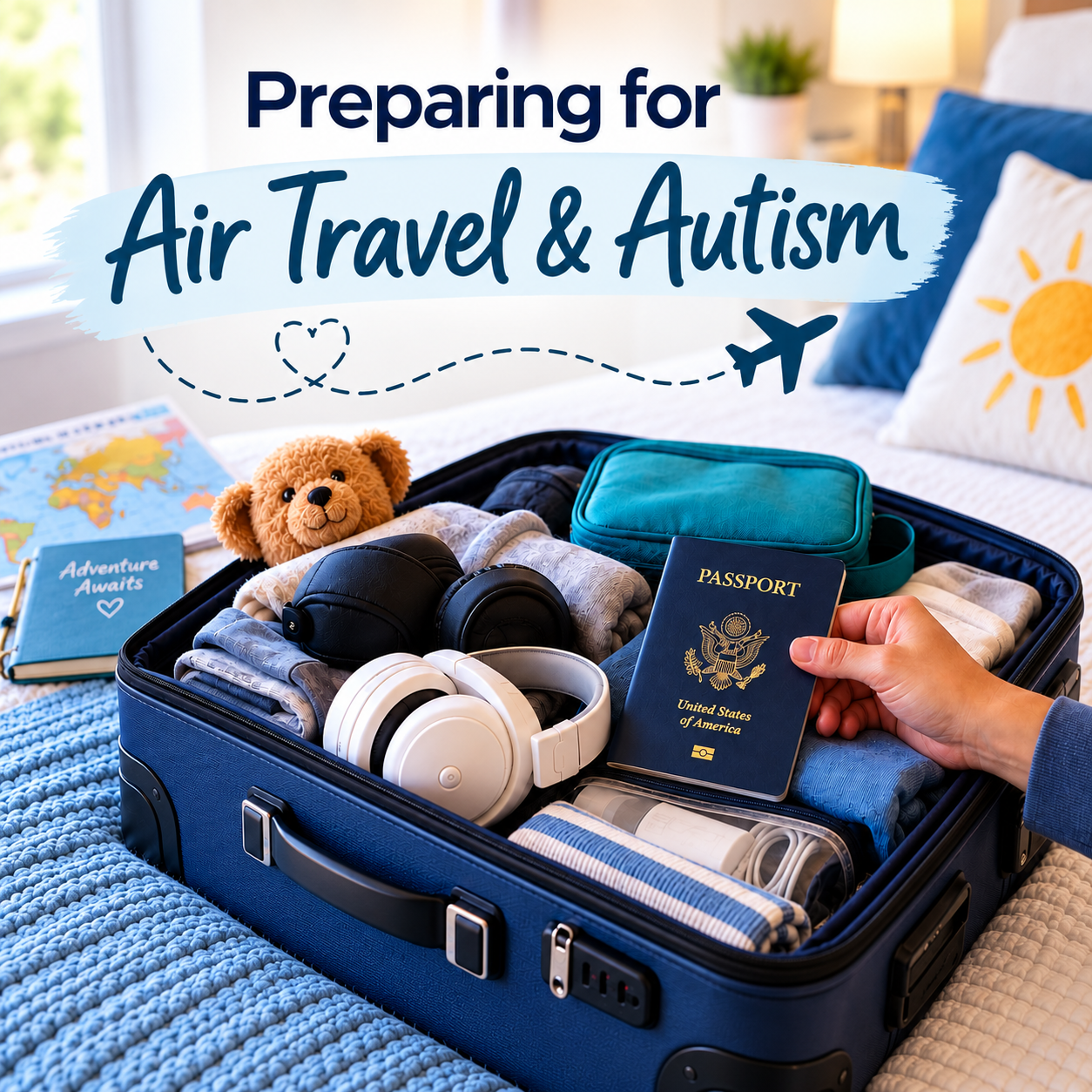
Preparing for Air Travel & Autism
A successful travel day often starts well before you arrive at the airport. For a traveler with Autism, preparation may include choosing a flight that works with their routine, thinking about how long they will be traveling, selecting the right seats, becoming familiar with the airport and flight experience, and identifying skills that may be helpful before the trip.
There isn’t one flight, seat, schedule, or preparation strategy that works for every traveler. The goal is to think about the individual person and make travel decisions around their needs, preferences, communication, sensory considerations, and existing supports.