Water Safety & Travel
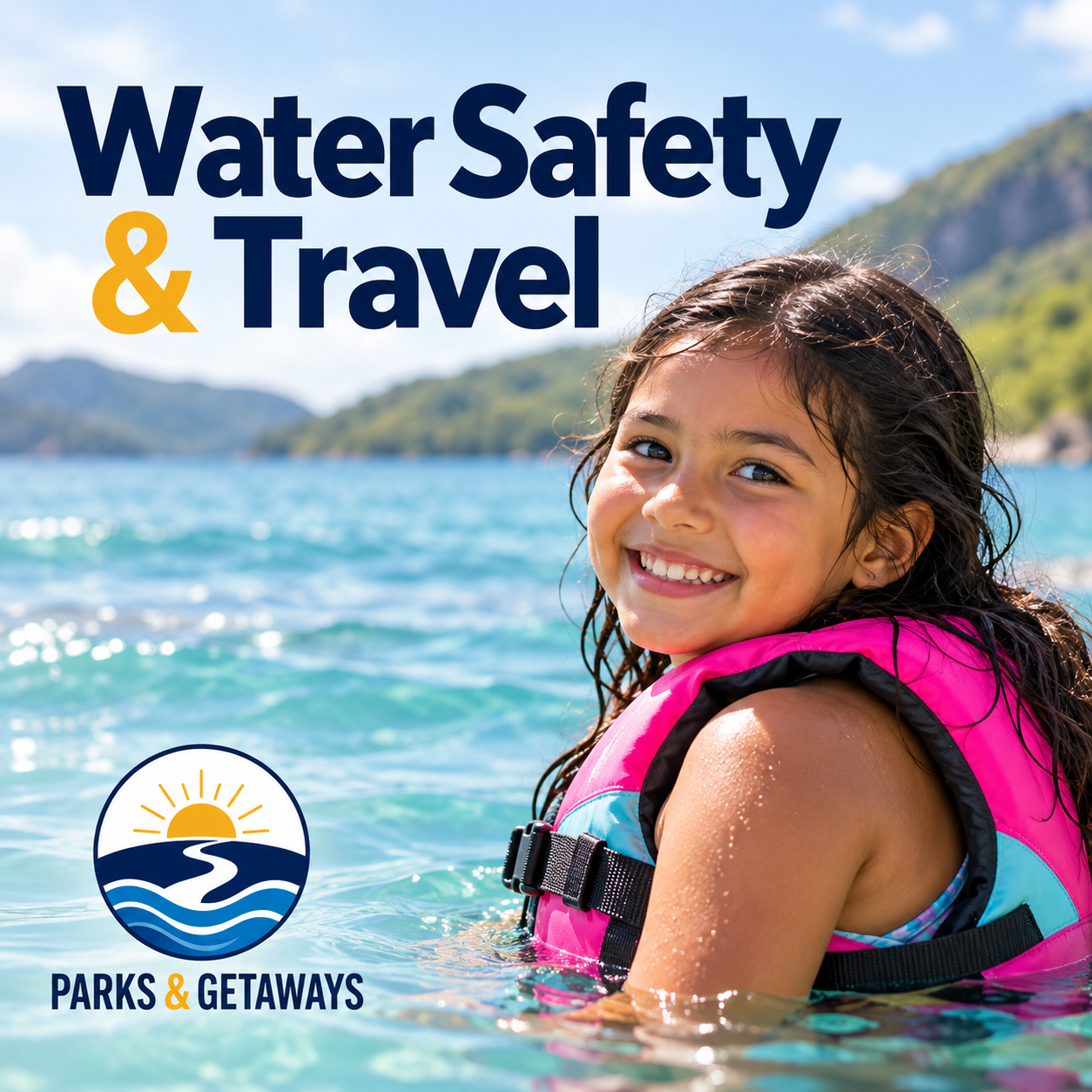
Water can be one of the best parts of a vacation, from swimming in a hotel pool to spending a week at the lake or visiting the beach. For individuals with Autism, water may also create additional safety risks, particularly for those who are drawn to water, have a history of wandering or elopement, or do not consistently recognize danger.
Water safety should begin before the vacation starts. Where you stay, the skills you practice, the rules you establish, and the layers of protection you put in place can all reduce risk while still allowing your loved one to enjoy the water.
Build Water Safety Skills Before Your Vacation
If your trip will involve water, start preparing well before you leave. Swimming lessons are an important layer of protection. If possible, look for instruction that matches your loved one's learning and communication needs. Lessons can focus not only on swimming but also on practical safety skills such as getting to the side of a pool, exiting the water, floating, and responding to safety directions.
Swimming lessons can save lives, but knowing how to swim does not eliminate drowning risk. A strong swimmer can still encounter unexpected depth, waves, currents, cold water, fatigue, or other hazards. Some individuals may also overestimate their abilities or have difficulty recognizing when a situation has become dangerous.
Before your trip, establish simple and consistent rules around water. For example:
You must have an adult with you before going near the water.
Ask an adult before entering the pool.
Life jacket first, then lake.
Wait for an adult before opening the pool gate.
When the adult says swimming is finished, we get out of the water.
Practice these expectations before vacation rather than introducing them for the first time when an exciting pool or beach is directly in front of you.
Consider Water Safety When Choosing Where You Stay
One of the most important water-safety decisions may happen before you ever leave home: choosing where you stay. Think about your loved one's individual risk around water. If they are strongly attracted to water or have a history of wandering or elopement, a beachfront house, lakeside cottage, or vacation rental with an unsecured backyard pool may not be the best option.
In some situations, a hotel where the guest-room door opens into an interior hallway may provide another layer of separation from water compared with a room that opens directly onto a pool deck, beach, lake, or outdoor area. Look carefully at photographs and maps of the property before booking. Don't just look at the room, look at the entire property. Is the pool fenced? Does it appear to have a self-closing gate? Does the hotel have rooms that open directly onto the pool area? Is the vacation rental directly on a lake or canal? Could someone walk from the house to the water without encountering a locked door or fence?
If you have questions, call the hotel or property manager before booking. You can also ask whether it is possible to request a room away from the pool, beach, lake, or other water features.
For more considerations when selecting accommodations, see our article on Choosing the Right Hotel or Vacation Rental and Hotel and Rental Safety and Autism.
Look Beyond Pools and Beaches
When families think about water safety while traveling, swimming pools and beaches usually come to mind first. But water can be found throughout hotels, resorts, vacation rentals, campgrounds, and other destinations. Look for ponds, rivers, canals, fountains, decorative water features, retention ponds, drainage areas, hot tubs, splash areas, docks, streams, and other accessible water.
This is especially important for someone who seeks water or has a history of wandering or elopement. A resort may have a fenced swimming pool but an unfenced decorative pond. A vacation rental may not have a pool but could back up to a canal or lake. Also consider the routes you will regularly use—you may need to pass a fountain, pond, pool, or other water feature every time you leave your room.
Before booking, look beyond the main listing photos. Review property maps, additional photographs, and satellite views when helpful, and contact the hotel or host if you have questions. Once you arrive, look at the environment again and identify any water hazards so you can adjust supervision, establish boundaries, and incorporate them into your travel safety plan.
Use Layers of Water Safety
Water safety should never depend on one strategy. Instead, think in terms of multiple layers of protection. The specific layers will depend on the individual, their skills and support needs, and the environment you are visiting. These may include pre-planning, environmental safety modifications, active adult supervision, water-safety skills, and appropriate life jackets.
Start by considering what you can put in place before the trip. You might choose a hotel room away from the pool, select a vacation rental without direct access to water, practice water-safety rules, or bring portable door alarms. Once you arrive, additional layers might include securing exits, maintaining active supervision, and establishing clear rules such as always having an adult present before approaching or entering the water.
No single layer should provide a false sense of security. A person may know how to swim but still need supervision. A pool may be fenced, but a gate could be left open. A door alarm may provide an alert, but it doesn't replace securing the door. The purpose of layering safety strategies is to have another safeguard in place if one layer fails.
Prevent Unsupervised Access to Water
Once you're on vacation, preventing unsupervised access to water becomes one of the most important parts of your safety plan. As soon as you arrive, look at the environment from a safety perspective. Identify exits and determine whether any door provides access to a pool, beach, lake, pond, canal, or other water.
Don't assume an unfamiliar door or lock will provide enough protection simply because it is difficult for your loved one to operate the first time. People learn new environments quickly. Depending on your loved one's needs and your accommodations, additional temporary safeguards such as portable door alarms may provide another layer of protection.
For more information about securing accommodations, see our Hotel & Vacation Rental Safety & Autism article.
Have a Clear Adult Supervision Schedule
When several adults are traveling together, it can be easy for everyone to assume someone else is watching. Avoid relying on general statements such as, "We're all keeping an eye on them." Instead, decide exactly who is responsible for supervision at a given time, particularly when you're around water.
You might divide responsibility by activity or time period and make clear verbal handoffs:
"I have supervision now."
"You're taking over while I make lunch."
"I have pool supervision until 2:00."
The goal is to eliminate confusion and ensure that there is always an adult who knows they are responsible for maintaining eyes-on supervision. This is particularly important during busy or distracting times, checking into a hotel, unloading a car, preparing meals at a rental house, packing for the beach, socializing with other families, or transitioning back inside after swimming.
Use the Right Life Jacket
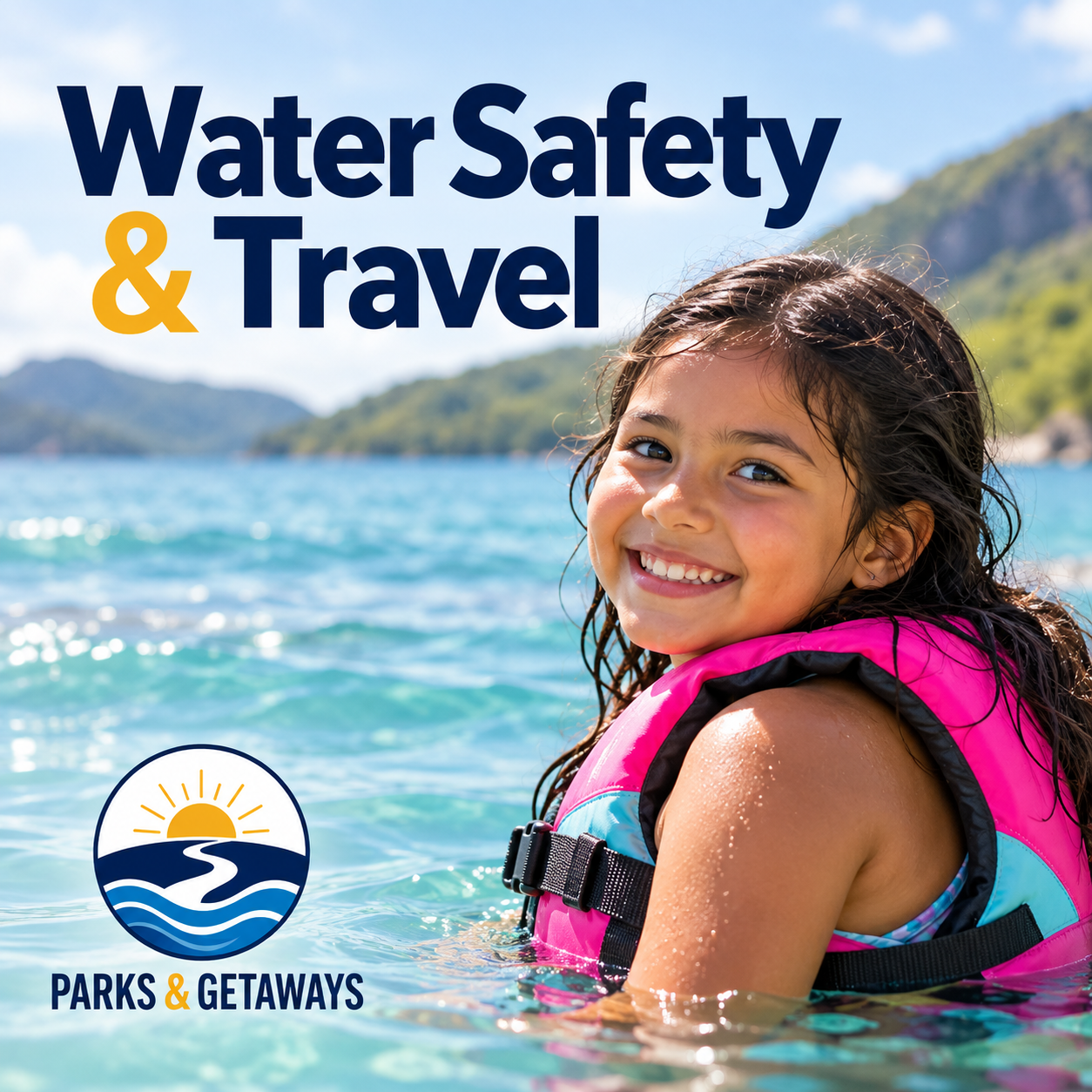
Life jackets can provide another important layer of protection, but they need to be appropriate for the person and activity. Use a properly fitted, U.S. Coast Guard-approved life jacket when appropriate. Inflatable pool toys, swim rings, water wings, and other recreational flotation devices are not substitutes for a life jacket. You can also make putting on the life jacket part of the routine rather than something that has to be negotiated each time.
For example:
Before we walk down to the lake, the life jacket goes on.
That means the life jacket is already in place before the person reaches the dock or shoreline, not something you are trying to put on once they are standing beside the water. If your loved one is unfamiliar with wearing a life jacket or has sensory sensitivities, practice wearing it before your trip. Practice wearing the life jacket before the vacation to ensure they feel comfortable wearing it and will tolerate keeping it on.
Prepare for Beaches and Lakes
Beaches and lakes present different challenges from pools. There may not be a fence or clearly defined boundary between the recreational area and the water. Beaches can include waves, currents, tides, drop-offs, changing conditions, and crowded shorelines. Lakes can have docks, uneven bottoms, sudden changes in depth, vegetation, murky water, and areas without lifeguards.
Establish your family's water rules before arriving. Think about where you set up your belongings as well. If your loved one is likely to run toward the water, setting up directly at the water's edge gives an adult very little time to respond. Choosing a location farther back may create an additional buffer. At a lake house, consider when the life jacket should go on. For someone at higher risk, the rule might be that the life jacket is put on before leaving the house or entering the area around the lake or dock, rather than only when getting into a boat.
Hotel and Resort Pools
Hotel and resort pools can create unique safety challenges because they may be highly visible and easily accessible throughout your stay. Before booking, look at property photos and maps to determine where the pool is located, whether it is completely fenced, and how guests enter the pool area. If water is a particular safety concern for your loved one, consider requesting a room away from the pool and avoiding rooms with patios or doors that provide direct access to the pool area.
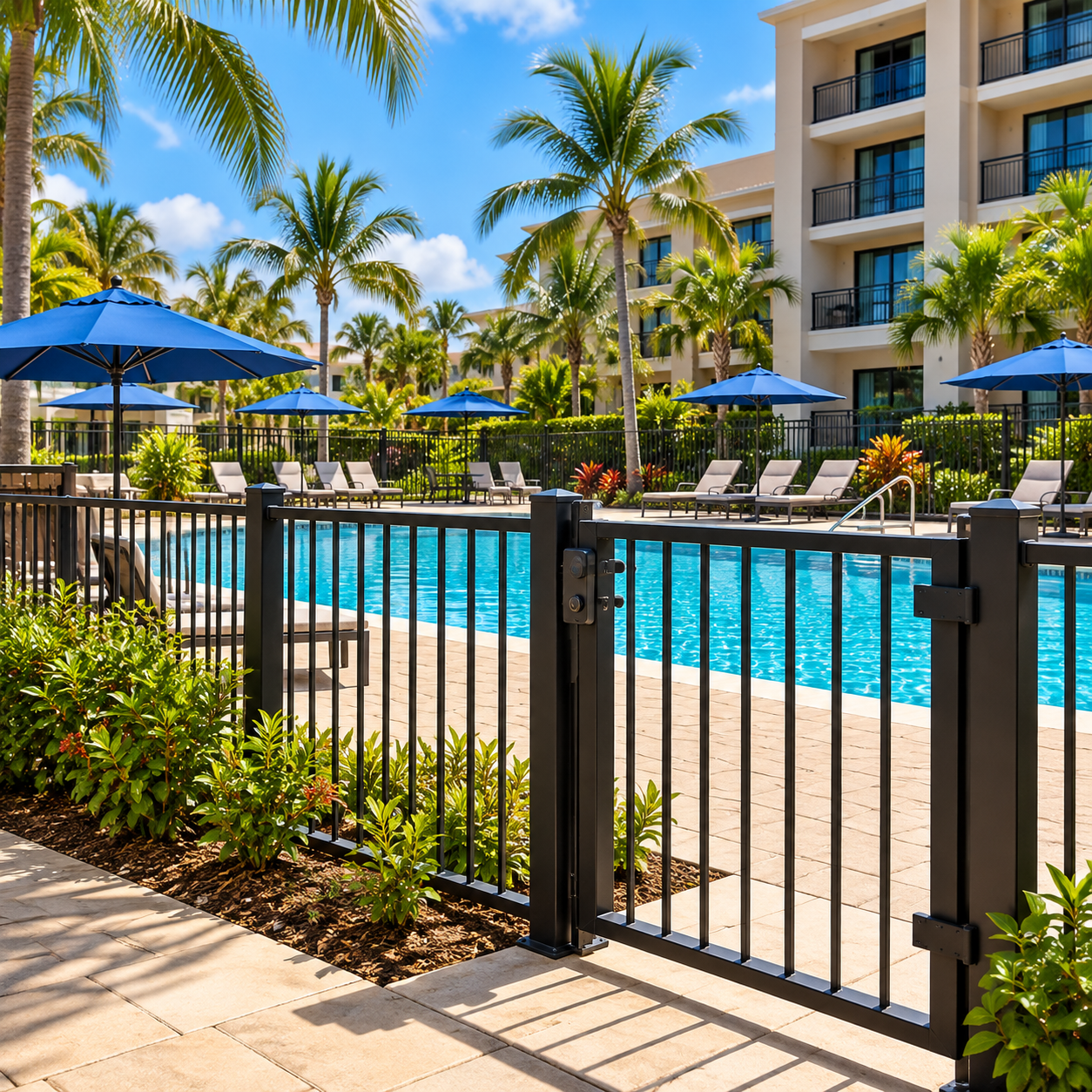
Once you arrive, locate the pool and identify the routes that lead to it, including elevators, stairways, hallways, and exterior doors. Remember that fencing and pool gates are only one layer of protection—a gate could be left open by another guest, a latch may not work as expected, or your loved one may learn how to operate it. Continue to use your family's water-safety rules, active adult supervision, and other appropriate safeguards even when the pool appears to be secured.
Vacation Rental Safety Check
Vacation rentals require careful consideration because the environment can be very different from home, and water may be much closer than you expect. Before booking, look carefully at listing photos, maps, and the property description for any accessible water not just a swimming pool. A home may be located directly on a lake, beach, river, canal, or pond even when waterfront access isn't the main feature being advertised. If there is a pool, look for fencing and barriers between the house and the water, and consider whether exterior or sliding doors provide direct access. If the photos don't clearly show the property layout, ask the host for additional information before booking.
When you arrive, conduct a safety check before your loved one has an opportunity to explore independently. Check exterior and sliding doors, locks, pool gates, fencing, hot tubs, decks, docks, and any paths that lead toward water. Determine whether the safeguards you expected from the listing are actually in place and working. If you brought portable door alarms or other temporary safety modifications, install them at the beginning of your stay. These environmental safeguards should be used along with active supervision and your family's established water-safety rules. For more strategies, see our Hotel & Vacation Rental Safety & Autism article.
Water Safety on a Cruise
Cruises require additional water-safety planning because pools and water attractions are combined with an unfamiliar ship environment surrounded by open water. Consider safety when choosing your cabin, not just once you board. Depending on your loved one's needs, an interior or ocean-view cabin may be preferable to a balcony cabin. If you choose a balcony, learn how the balcony door and locking system work and consider whether it provides an appropriate level of security. Cabin location can also matter, so review the ship's deck plans and consider how close your cabin is to pools, splash areas, exterior decks, and other areas your loved one may be motivated to reach.
Once onboard, become familiar with the ship and identify pools, splash areas, hot tubs, exterior decks, and routes leading to these locations. Continue using the same water-safety rules and active adult supervision you would use at a hotel or resort rather than relying on the ship's safety features alone. Remember that water safety continues when you leave the ship. Shore excursions may include beaches, boats, docks, snorkeling, swimming pools, or other unfamiliar water environments, so consider your loved one's skills, supervision needs, and access to appropriate life jackets when selecting excursions and planning each day.
Use Visual Supports and Practice
If your loved one benefits from visual supports, incorporate water safety into your travel preparation before you leave home. A social story, visual schedule, first-then board, or video model can help explain what to expect and reinforce the rules your family will use around water. For example, a visual sequence for a lake vacation might show: Put on swimsuit → Put on life jacket → Walk to lake with an adult → Swim → Leave the water → Return to the house. Visuals can also reinforce simple safety expectations such as, “I wait for an adult before going to the pool,” “I wear my life jacket at the lake,” or “I ask before going in the water.”
Whenever possible, practice these routines before the trip, especially if a rule, activity, or piece of safety equipment will be new. If your loved one will need to wear a life jacket, practice putting it on and wearing it for gradually longer periods so it isn't introduced for the first time at the lake or on a boat. You can also practice waiting for an adult, stopping at a pool gate, walking near the pool, or leaving the water when asked at a familiar location. Skills practiced in a familiar environment may be easier to reinforce when you arrive somewhere new, but continue using the same visuals, language, and expectations throughout the vacation.
Plan for Water Before You Travel
The best time to think about water safety isn't when you're standing beside the hotel pool. It begins when you're planning the trip. Consider your loved one's skills and individual risks. Build swimming and water-safety skills before traveling. Choose accommodations with the environment in mind. Look beyond obvious hazards such as pools and beaches. Prevent unsupervised access to water once you arrive. Establish clear adult supervision responsibilities. Use appropriate life jackets and environmental safeguards.
Most importantly, use multiple layers of protection rather than relying on any single safety strategy. Good planning doesn't have to mean avoiding the water. It means creating an environment where your loved one can enjoy that part of the vacation with appropriate supports and safeguards in place.