Travel Identification & Autism Safety
When traveling with a person with Autism who may wander, become separated, or have difficulty communicating personal information, identification can be an important part of the safety plan. In an unfamiliar environment, your loved one may not be able to provide their name, caregiver's phone number, hotel information, or other details particularly if they are frightened, overwhelmed, or unable to communicate verbally.
Travel identification does not have to look the same for everyone. Medical ID bracelets, shoe tags, wallet cards, temporary identification bands, temporary tattoos, information stored on a phone, and identification securely attached to clothing or belongings can all be options. The goal is to choose a form of identification your loved one will tolerate, that is likely to stay with them, and that provides someone with enough information to help reunite them with you.
Why Identification Matters When Traveling
Even someone who can usually communicate their name and phone number may have difficulty doing so during a stressful situation. Airports, theme parks, cruise terminals, beaches, public transportation, festivals, and other busy destinations can be loud, crowded, and overwhelming.
Identification provides another way for someone to help if your loved one becomes separated. It can be especially important for individuals who are nonspeaking, use AAC, have limited communication, may not respond when asked questions, or may leave an area quickly.
Identification should be considered one layer of a larger wandering and elopement safety plan. It does not replace appropriate supervision, practicing safety skills, GPS or location technology when appropriate, or having an emergency response plan.
What Information Should You Include?
Keep identification information useful and concise. A person who finds your loved one should be able to quickly determine whom to contact and, when necessary, how best to assist them.
Depending on your loved one's needs, consider including:
First and last name
Parent or caregiver's cell phone number
A second emergency contact
"I have Autism" or another brief statement when you want responders to know
Communication information, such as "I am nonspeaking," "I use an AAC device," or "I may not respond to questions"
Critical safety information, such as "May wander," "Attracted to water," or "May not recognize danger"
Essential medical information when relevant to an emergency
You do not need to put an entire medical history on an identification item. Prioritize the information someone would need immediately to keep your loved one safe and contact you.
Also think carefully about privacy. Information worn visibly in public is different from information stored inside a wallet card or accessed through a phone. Include enough information to help in an emergency without unnecessarily displaying sensitive personal information.
Medical ID Bracelets
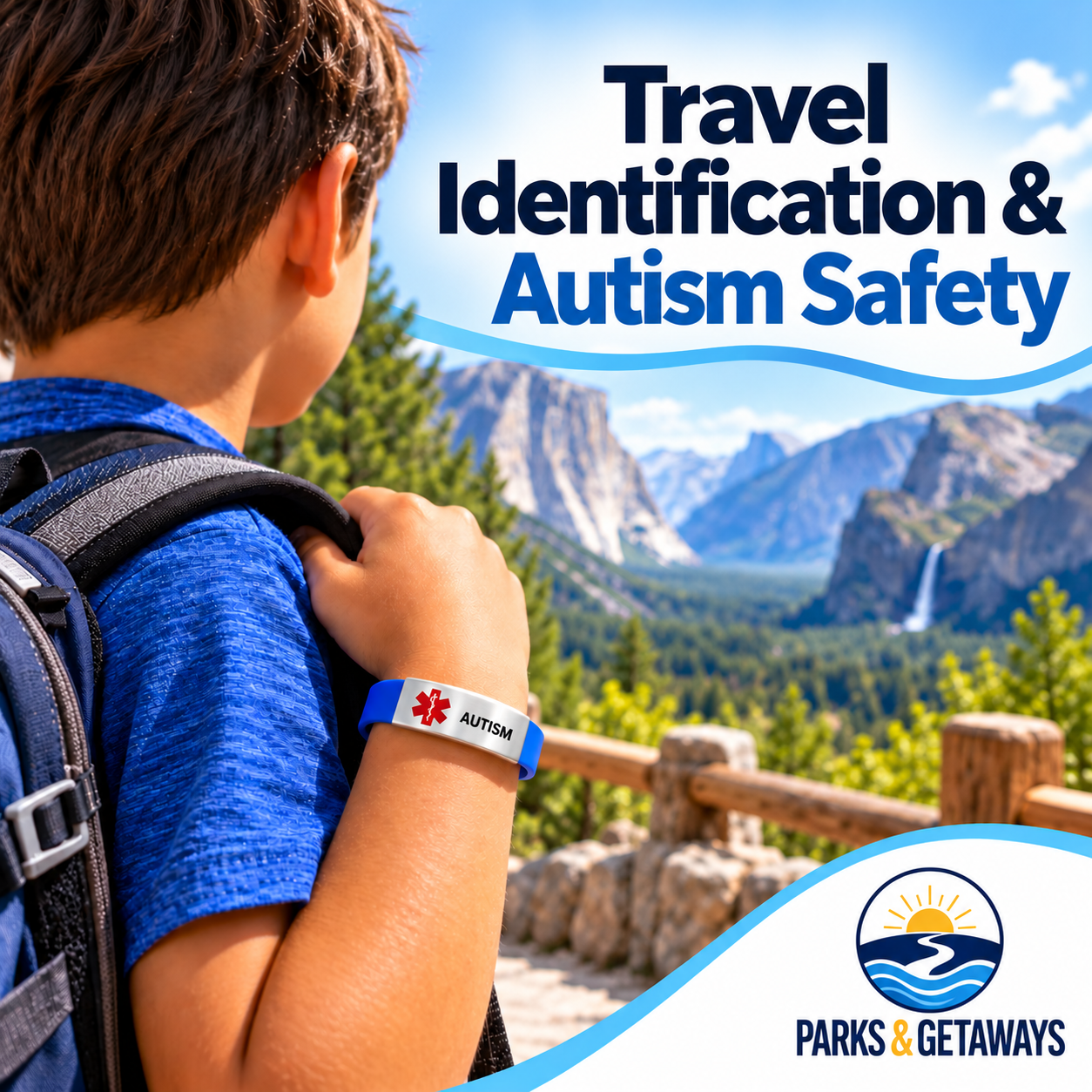
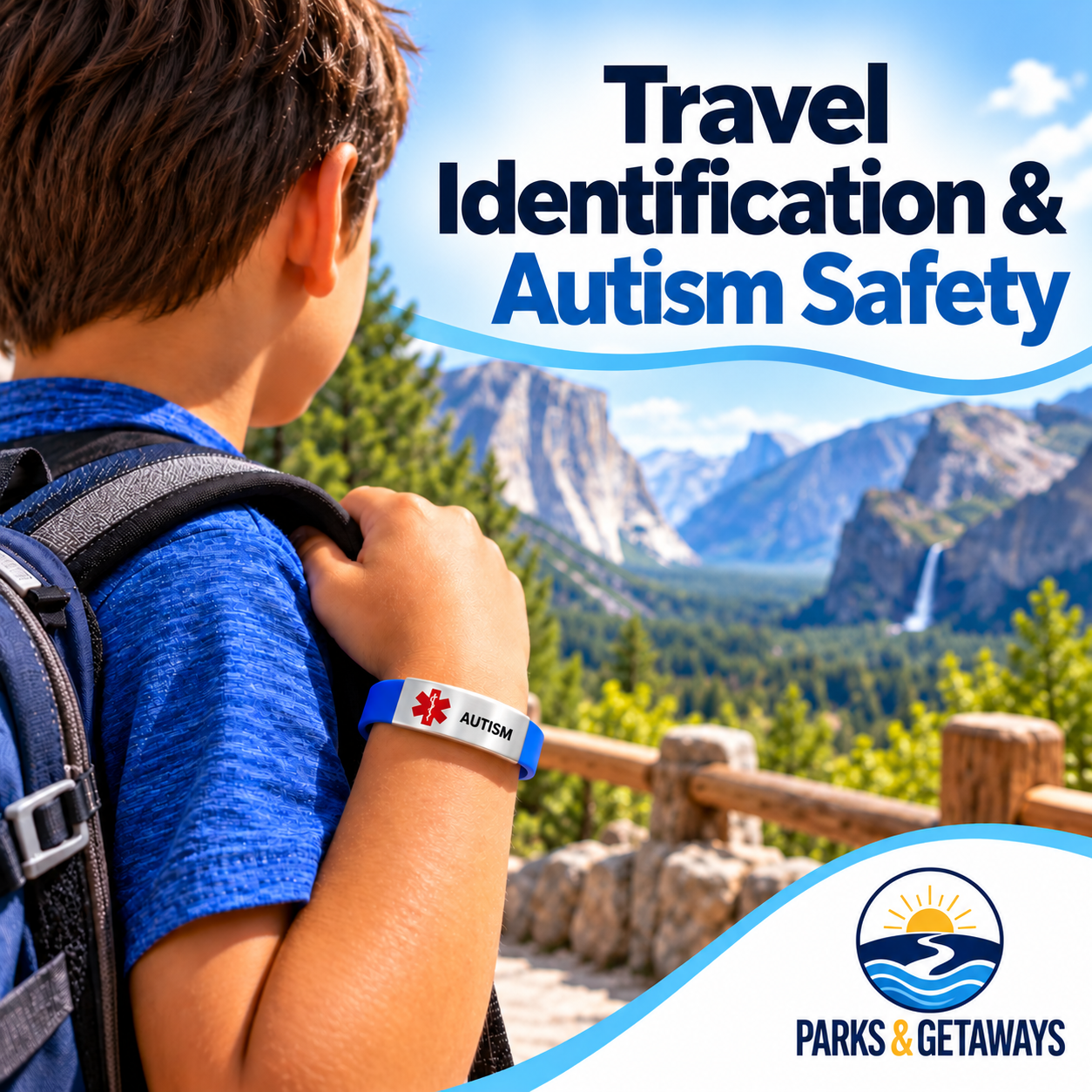
A medical ID bracelet is one of the most recognizable identification options. Bracelets can include a person's name, Autism or communication information, an emergency contact number, and other critical safety information. The biggest advantage is that the identification stays on the person rather than in a backpack or bag that could be left behind. A bracelet can also be relatively easy for police officers, medical professionals, security staff, or another adult to notice.
Before traveling, make sure the bracelet still fits comfortably and that all contact information is current. If your loved one does not typically wear one, introduce it well before the trip rather than expecting them to tolerate something unfamiliar on travel day.
If appropriate, practice teaching your loved one to point to or show the bracelet when someone asks their name or how to contact their family. Wearing identification is more useful when the person also knows how to direct someone to it.
Shoe Tags
Shoe tags can be a good alternative for someone who will not tolerate a bracelet. They can attach to shoelaces or another secure part of the shoe and provide basic identification and emergency contact information.
The advantage is that the tag remains attached to something the person is already wearing. However, it may not be immediately obvious to someone trying to help. It also useless if the person wanders without their shoes on. If you use a shoe tag, teach your loved one to point to or show the tag when possible. Caregivers should also know exactly where the identification is located so they can tell responders what to look for if the person becomes separated.
Wallet or ID Cards
A wallet-sized identification card allows you to include more information than will fit on a bracelet or shoe tag. It can include emergency contacts, communication information, important safety considerations, and instructions for someone assisting your loved one.
A card can be carried in a wallet, pocket, lanyard, phone case, or another secure location. The drawback is that the person helping needs to know the card exists. Consider practicing a simple response such as "Show your card" so your loved one learns to hand the card to a community helper when appropriate. For someone who uses AAC or another communication system, you could also include an easily accessible message directing a helper to the identification card.
Temporary Identification Bands
Temporary wristbands can be particularly useful for vacations, theme parks, cruises, resorts, festivals, and other short-term outings. Depending on the type, you can write a caregiver's phone number or other essential information directly on the band. These can be useful when you do not want to purchase permanent identification or when your regular ID does not contain travel-specific information. Check the band periodically throughout the day. Make sure writing remains legible, the band has not become loose, and your loved one is comfortable wearing it.
Temporary ID Tattoos
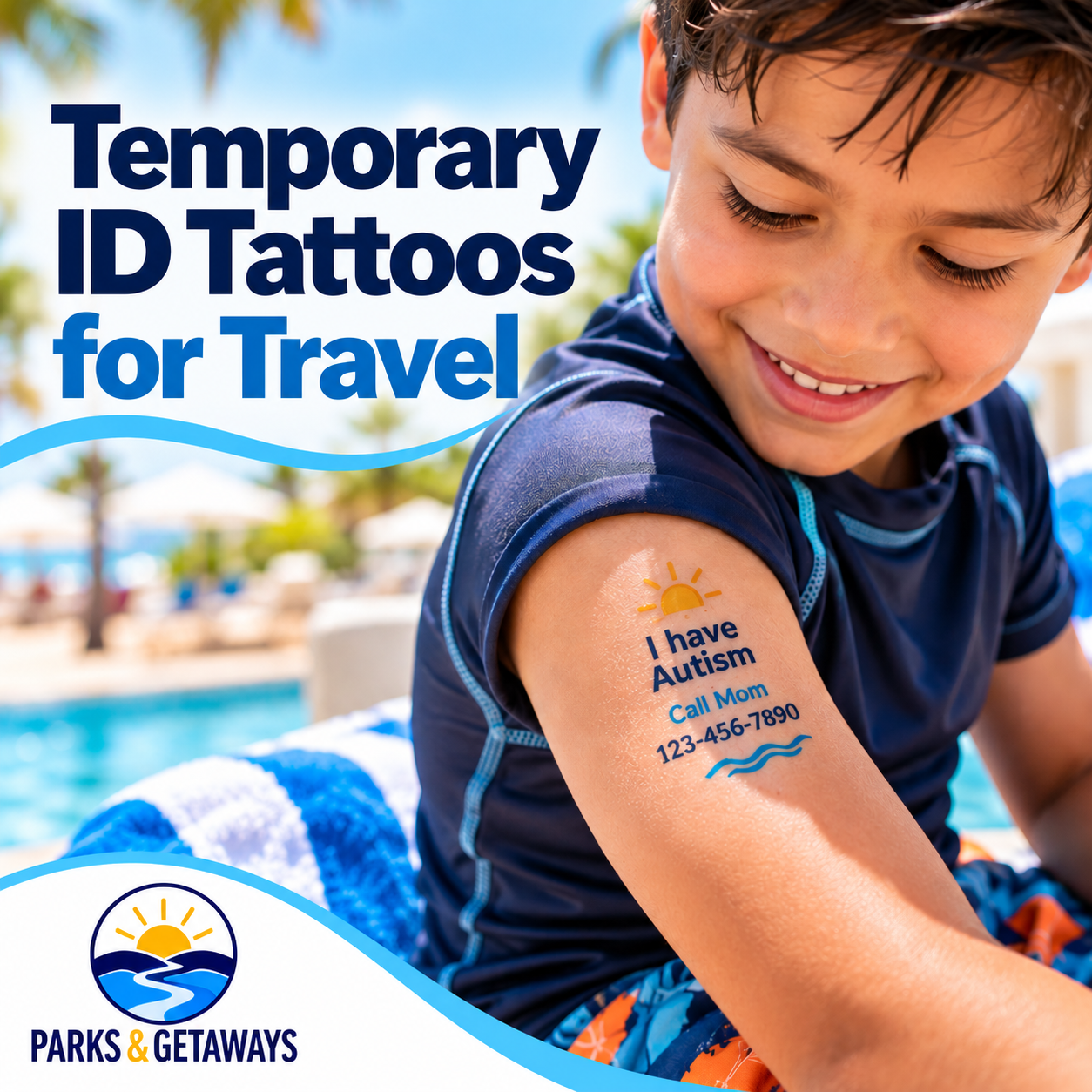
Temporary identification tattoos can be a good alternative for someone who will not wear a medical ID bracelet or carry another form of identification. There are many places to order customized ID tattoos, including Etsy, and they can be kept simple with your loved one's name, Autism diagnosis, and your phone number.
Depending on the product and activities, temporary tattoos can stay on the skin for a couple of days, although swimming, bathing, sunscreen, and other factors may affect how long they remain readable. Check the tattoo each day and replace it when the information begins to fade.
Identification on a Backpack or Belongings
A luggage tag, backpack tag, or identification card attached to a frequently carried item can provide another layer of protection. This may be particularly useful at airports, theme parks, museums, or other places where your loved one consistently carries a backpack.
However, do not make a backpack or bag the only form of identification for someone at significant risk of wandering. A person can easily become separated from their belongings. Instead, consider identification on belongings as an additional layer alongside something that remains directly with the person.
Store Emergency Information on a Phone
For someone who reliably carries a phone, emergency information stored on the device can be another useful option. Depending on the phone and settings, medical or emergency contact information may be accessible from the lock screen without someone needing to know the passcode. You can also create an easily accessible emergency contact card or image containing essential information.
Before traveling, test the setup yourself. Lock the phone and determine whether another person could actually find the information without knowing what you already know. Also consider the limitations. A phone can run out of battery, become lost, be damaged, or be left behind. For someone with a significant wandering risk, phone-based identification is better used as one layer rather than the only identification method.
Add Travel-Specific Information
Your regular identification does not necessarily need to contain your vacation details. Instead, consider carrying a separate temporary travel card with information that changes from trip to trip.
For example, you might include the name of your hotel or resort, cruise ship, travel companion's phone number, or another piece of information that could help during that particular trip. Avoid putting unnecessary details such as hotel room numbers on something that is publicly visible. A caregiver's mobile phone number is generally more useful because it travels with you. Update temporary information as you move between destinations.
Teach Your Loved One How to Use Their Identification
Simply wearing or carrying identification is only part of the plan.When appropriate for your loved one's abilities, practice what to do with it. You might teach:
"If you can't find me, find a helper and show them your ID."
Practice identifying community helpers such as police officers, firefighters, security personnel, airport or airline employees, theme park employees, hotel staff, lifeguards, or other designated staff members. Then role-play what happens next. Your loved one might point to a bracelet, hand over an ID card, show a shoe tag, or navigate to emergency information on their phone. For someone who cannot independently do this, identification can still be valuable. The goal may simply be ensuring that emergency information is attached somewhere responders are likely to find it.
Check Identification Every Morning
Make identification part of your daily travel routine. Before leaving the hotel, vacation rental, cruise cabin, or other lodging, take a few seconds to confirm that the identification is in place and that the information is readable. If you use several layers such as a bracelet plus a card in a backpack, check both.
This is also a good time to take a current full-body photograph of your loved one showing exactly what they are wearing that day. If separation occurs, you will have a recent photograph immediately available to show security or first responders.
Consider More Than One Layer
For someone with a higher wandering or elopement risk, using more than one form of identification can provide backup if something is lost or removed. For example, a traveler might wear a medical ID bracelet, carry an emergency card, and have emergency information stored on their phone. Another person might use a shoe tag along with temporary tattoo.
The combination should be individualized. Choose options that work with your loved one's sensory needs, communication abilities, independence, age, and wandering risk rather than adding identification simply for the sake of having more.
Make Identification Part of Your Travel Safety Plan
Identification is most useful when it is connected to the rest of your travel safety planning. Before leaving for your trip, ask yourself: If my loved one became separated from me right now, would the person who found them know whom to call? If the answer is no, add or update identification before you travel.
Then combine it with practiced safety skills, appropriate supervision, knowledge of high-risk locations, GPS or tracking technology when appropriate, a current photograph, and a clear response plan. Identification cannot prevent wandering or elopement, but it can provide a critical connection between your loved one and the people trying to reunite your family.