U.S. Airport Autism & Sensory Resource Directory
Air travel can involve a lot of uncertainty: unfamiliar spaces, crowds, security screening, waiting, announcements, changes in plans, and the sensory experience of being in an airport and on an airplane. For a person with Autism, those parts of travel may require additional preparation and support.
The good news is that airports across the United States are offering more resources for travelers with Autism, developmental disabilities, sensory needs, and other non-visible disabilities. The challenge is that every airport is different.
One airport may have a dedicated sensory room, social story, practice flight program, and trained assistance staff. Another may participate in the Hidden Disabilities Sunflower program but offer few other Autism-specific resources. Smaller airports may have very limited formal programming but can still provide accommodations or assistance when contacted in advance.
That is why we created the Parks & Getaways U.S. Airport Autism & Sensory Resource Directory.
Our directory includes 100 airports across all 50 states and is designed to help families quickly identify resources that may be available at their departure, connecting, and destination airports.
Understanding the Directory
We've organized airport resources into several categories. A Y means we identified that resource as being offered by the airport or through a program associated with the airport.
A blank space does not necessarily mean the resource doesn't exist. Airport services change, new programs are introduced, and some airports don't make every accommodation easy to find online. Always use the airport link provided in the directory to confirm current information before traveling.
Social Stories & Visual Guides
Social stories and visual guides can help a traveler understand what will happen before ever arriving at the airport.
Depending on the airport, these may walk through entering the terminal, checking luggage, going through security, finding the gate, waiting, boarding the airplane, and arriving at the destination.
For example, Seattle-Tacoma International Airport offers an airport-specific social story designed for travelers with Autism to review repeatedly with family or caregivers before a trip.
For someone who benefits from predictability, reviewing an airport-specific guide ahead of time can make the actual environment more familiar.
Airport Practice Programs
Practice programs are one of the best resources to look for if your loved one has never flown or you're unsure how they will respond to the airport experience.
Programs such as Wings for Autism/Wings for All allow participants to rehearse air travel without actually taking a flight. A typical event can include checking in, receiving a boarding pass, going through TSA security, waiting at the gate, and boarding an aircraft that does not take off.
These programs can be particularly valuable because they give you information, too. You may discover that security isn't a problem but waiting at the gate is difficult, or that boarding is manageable until the airplane becomes crowded.
Practice programs are often held only on certain dates, so check the airport and program websites well before your trip. Wings for Autism / Wings for All
Sensory Rooms
Sensory rooms provide a place to get away from some of the activity of the terminal.
The exact setup varies significantly between airports. Some provide simple quiet spaces with reduced stimulation. Others have adjustable lighting, sensory equipment, comfortable seating, tactile activities, or different areas based on sensory needs.
A few airports have gone considerably further. Some sensory spaces include simulated or replica airplane cabins that allow travelers to become familiar with airplane seats, seatbelts, overhead bins, and the physical environment of an aircraft.
Don't assume that a sensory room will be near your gate. Check its terminal and whether it is located before or after security. A sensory room in another terminal may not be practical during your particular trip.
Sensory Bags
Some airports offer sensory bags or kits that travelers can borrow or receive.
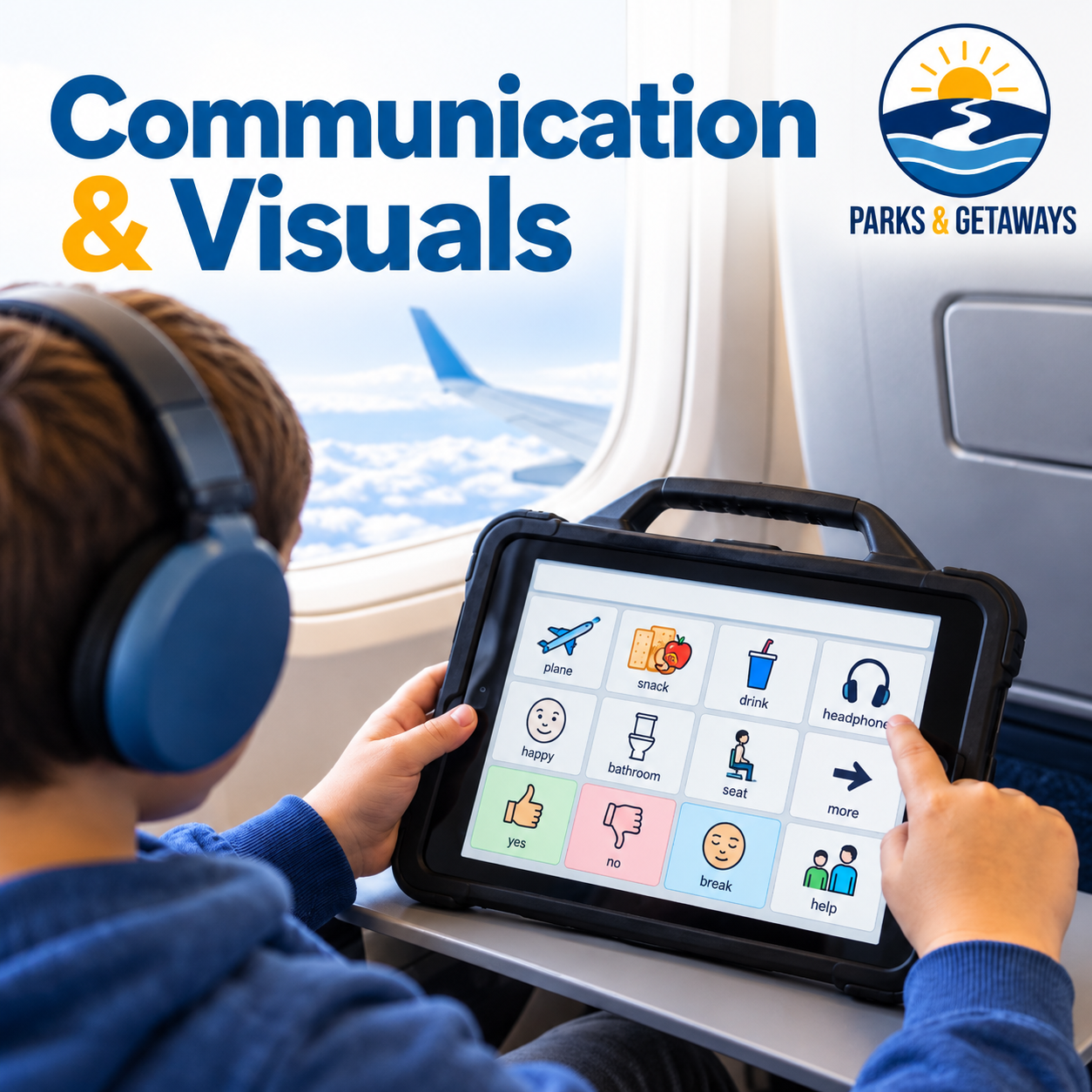
Contents vary but may include items such as fidgets, hearing protection, sunglasses, communication tools, visual supports, or other sensory items.
Even when an airport provides sensory bags, I still recommend traveling with the items you already know work for your loved one. Think of an airport sensory kit as an additional resource rather than your primary sensory plan.
Hidden Disabilities Sunflower Program
You'll see Sunflower frequently in our directory.
The Hidden Disabilities Sunflower (learn more here) is a voluntary way for someone with a non-visible disability to indicate that they may need additional assistance, understanding, patience, or time. It is increasingly being used by U.S. airports. For example, JFK provides free Sunflower lanyards at airport information centers, and DFW states that staff are trained to recognize the lanyard and provide support when needed.
There is an important distinction to understand: A Sunflower lanyard does not automatically provide expedited screening, priority boarding, or permission to skip lines. Its purpose is to discreetly communicate that the traveler has a non-visible disability and may need additional support. JFK, for example, specifically states that its lanyard does not provide priority or skip-the-line privileges.
Familiarization Tours
Some airports allow families to visit before their travel day. A familiarization tour may give your loved one an opportunity to see the terminal, find the airline check-in area, experience airport sounds, locate security, identify restrooms, and become familiar with the general environment. This can be different from a formal practice-flight program. You may not actually go through security or board an airplane, but simply seeing the airport beforehand can remove some of the unknowns. If your airport doesn't advertise a familiarization tour, it may still be worth contacting its accessibility or guest-services department and asking what options are available.
Personalized Assistance
Some airports have developed individualized assistance programs for travelers with disabilities or additional needs. The level of support varies. Depending on the airport and program, assistance may include helping a traveler navigate the terminal, locating services, understanding where to go, or providing additional support during parts of the airport experience.
Airport assistance is also separate from assistance provided by your airline and from TSA Cares, so consider all three when planning.
Airplane Simulators & Practice Cabins
This is one of the more interesting resources. A small number of airports have airplane cabin replicas or similar environments where travelers can become familiar with what being inside an aircraft feels like. These can be particularly helpful if you're unsure how your loved one will respond to sitting in an airplane seat, wearing a seatbelt, seeing overhead bins, or being in an enclosed aircraft environment. We've given this its own category so families can quickly identify airports offering this higher level of preparation.
Autism-Specific Programs
We also identify programs that are specifically designed for or explicitly include travelers with Autism or intellectual and developmental disabilities.
This distinction matters. A general accessibility service can certainly benefit a person with Autism, but a program developed specifically around Autism or developmental disabilities may include staff training, environmental considerations, communication supports, preparation materials, or practice opportunities that are particularly relevant to your family.
Don't Forget TSA Cares
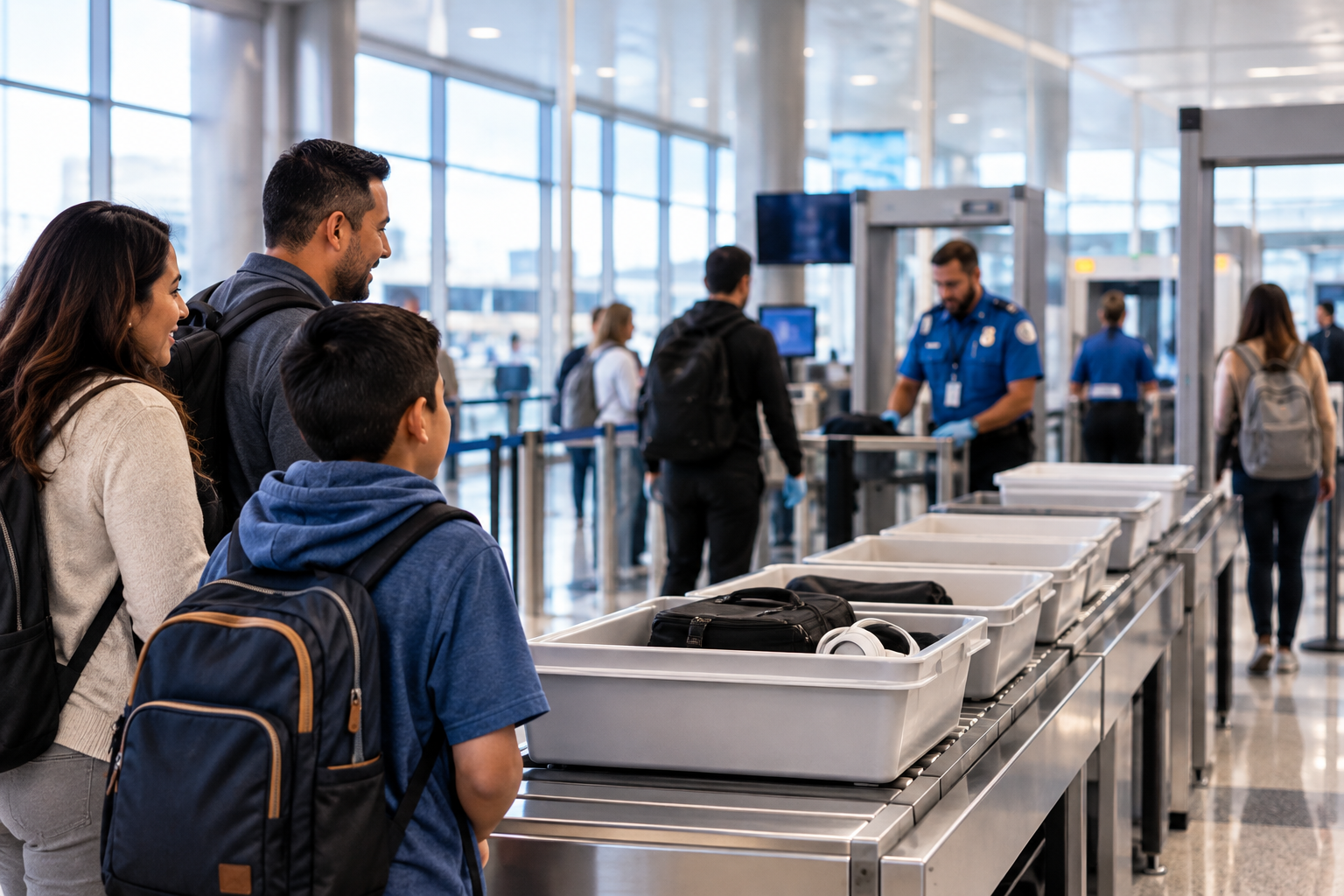
TSA is responsible for airport security screening, so TSA support is separate from the programs offered by an individual airport. TSA Cares provides assistance to travelers with disabilities, medical conditions, and other special circumstances. Travelers can contact TSA before a trip to ask questions about screening procedures and what to expect. A Passenger Support Specialist can also be requested to provide assistance through the screening process. TSA Cares does not mean that the traveler can bypass security screening. It provides additional assistance through the screening process. Learn more here.
Look at All of the Airports on Your Trip
Don't limit your research to your home airport. If you're flying from Boston to Orlando, for example, look at the resources available at both Boston Logan and Orlando International Airport. If you have a connection in another city, look at that airport as well.
Your needs on the return trip may also be different. You may know your home airport well, while the airport you're departing from at the end of your vacation is completely unfamiliar. We recommend researching each airport you'll travel through and identifying three things before leaving home: what resources are available, where they are located, and whether they require advance registration or a request.
Every Airport Is Different
One of the biggest things we learned while developing this directory is just how different airport accessibility programs are across the country. Some airports have invested heavily in Autism and sensory accessibility. They may offer several layers of support, including social stories, sensory rooms, practice programs, Sunflower lanyards, sensory kits, trained staff, and individual assistance. Other airports offer only one or two of these resources. And that's okay. The purpose of this directory isn't to rate airports as "Autism-friendly" or "not Autism-friendly." It is to give you information so you can decide what supports matter for your traveler.
A sensory room may be incredibly important to one family and completely unnecessary to another. One traveler may benefit enormously from an airport rehearsal, while another may need very little preparation but benefit from having extra assistance during security. There isn't one airport accommodation that every person with Autism needs. The goal is to know your options and build the travel plan around the individual.
Before You Fly
Use the directory as a starting point rather than your final check.
Airport programs, locations, hours, eligibility requirements, and registration procedures can change. Practice events such as Wings for Autism/Wings for All are also scheduled periodically rather than being available every day; The Arc currently lists individual upcoming events and advises families to check back as new locations and dates are announced.
Before your trip, click the airport website included in our directory and confirm the information directly with the airport. If you have questions, contact the airport's accessibility or guest-services department.
A little research before you leave can make a very complicated travel day much more predictable.
Travel your way, with confidence.