Autism Travel: Tips for Boarding & During the Flights
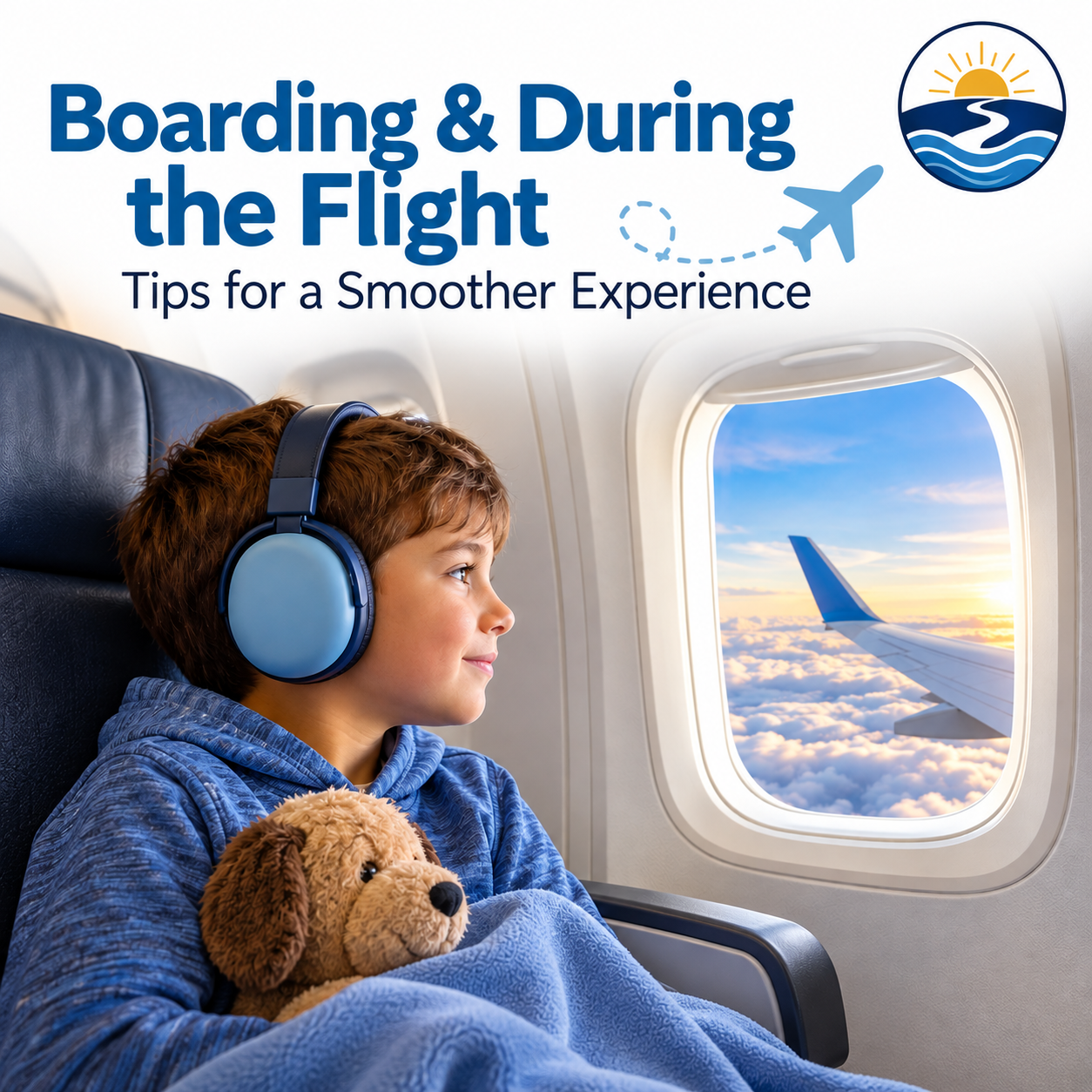
Boarding the plane and the flight itself can bring a completely different set of challenges than navigating the airport. There are unfamiliar sounds, close seating, changes in air pressure, periods when passengers must remain seated, new expectations, and very little control over what is happening around you. Preparation can make a significant difference.
Before traveling, think about the parts of flying that may be difficult for your traveler. Waiting may be the biggest challenge for one person, while another may struggle with noise, changes in routine, sitting for long periods, or not knowing what will happen next. There is no single "best" way to fly. The goal is to understand your traveler's needs and plan the experience around them as much as possible.
Prepare for the Flight Before You Leave Home
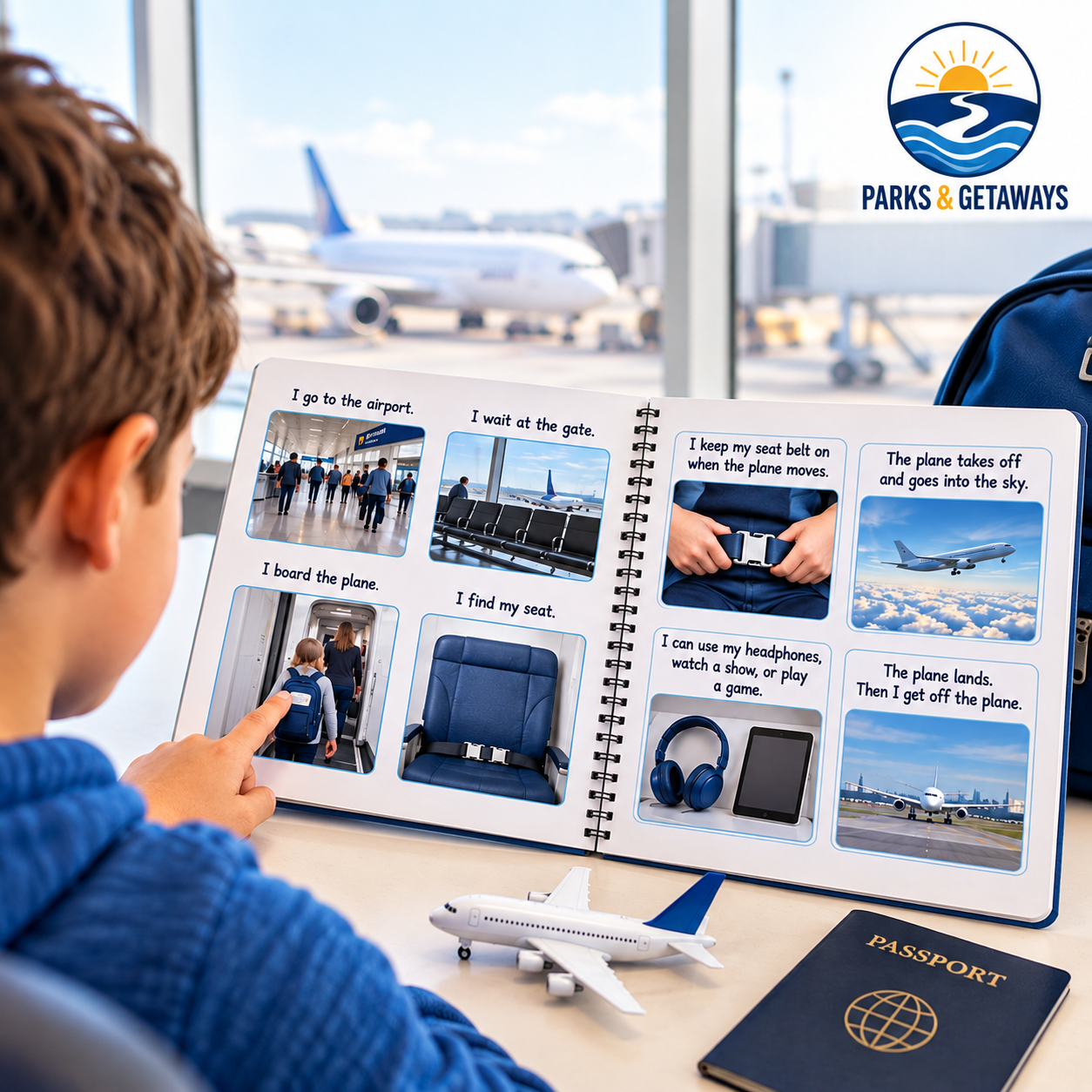
For someone who has never flown before, it can be difficult to understand what "going on an airplane" actually means. Even travelers who have flown previously may benefit from reviewing what to expect before another trip. Social stories and video modeling can be particularly helpful. Create a social story that walks through the experience of flying, including boarding the airplane, finding a seat, putting on a seat belt, hearing announcements, experiencing takeoff, staying seated during the flight, using the airplane bathroom if needed, landing, and getting off the plane.
Keep the story realistic. If there are parts of flying that may be uncomfortable, include them rather than presenting the entire experience as easy or fun. For example, explain that the airplane may be loud when it takes off, ears may feel funny, or passengers sometimes have to wait in their seats.
Video modeling is another great option. Watching videos of people boarding an airplane, sitting in an airplane cabin, experiencing takeoff, and landing can make an unfamiliar experience much more concrete. If your traveler benefits from repetition, watch the videos several times in the weeks leading up to the trip. You can also practice some of the skills that will be expected on the airplane at home. Practice sitting with a seat belt on, wearing headphones, keeping a tray table closed, waiting before getting up, or following directions such as "seat belt on" and "stay seated."
The goal isn't to recreate an entire flight at home. It is simply to make some of the unfamiliar parts a little more familiar.
Early Boarding or Late Boarding?
Many airlines allow passengers with disabilities who need additional time or assistance to preboard. For some travelers with Autism, preboarding can be extremely helpful. You may have additional time to find your row, put away luggage, organize the seating area, get out headphones or communication supports, and allow your traveler to become familiar with the airplane before the aisle fills with passengers. For a traveler who becomes overwhelmed by crowds, having dozens of people standing in the aisle beside them and putting luggage into overhead bins may be difficult. Preboarding can reduce some of that activity.
However, preboarding isn't necessarily the best choice for every traveler. If waiting is difficult, boarding first can mean spending an additional 20–30 minutes—or sometimes longer—sitting on the airplane before it even leaves the gate. For a traveler who struggles with remaining seated or being in confined spaces, that extra time may make the flight harder rather than easier. In that situation, consider boarding later.
Another option for families traveling with two adults is split boarding. One adult boards early with the carry-on luggage, installs or organizes anything needed, prepares the seating area, and places essential items within reach. The other adult stays in the terminal with the traveler and boards closer to departure.
Think about your traveler's needs rather than assuming preboarding is always preferable.
Make the Boarding Transition Predictable
Boarding can happen quickly and involves several changes in a short period of time. You leave the gate area, scan the boarding pass, enter the jet bridge, walk onto the aircraft, find the correct row, store your belongings, sit down, and buckle the seat belt. For someone who has difficulty with transitions, this can be a lot. Review the boarding process in your social story before the trip. Video modeling can also help your traveler see what a jet bridge and airplane cabin actually look like.
If your traveler uses a visual schedule, bring it with you and refer to it throughout the process. Try to have everything organized before boarding begins. Know your seat numbers, have boarding passes ready, and decide which adult will handle luggage and which will focus on supporting the traveler. Reducing the number of things you are trying to figure out while boarding allows you to focus more attention on your traveler.
Choose Your Seats Carefully
For families traveling with Autism, I strongly recommend selecting your seats in advance rather than leaving seat assignments to chance. Think about more than simply whether you want a window or aisle seat. A window seat may work well for a traveler who enjoys looking outside and benefits from having a defined space with fewer people passing nearby. It can also prevent other passengers from needing to climb over your traveler. An aisle seat may work better for someone who needs easier access to the restroom or who becomes uncomfortable feeling enclosed.
Think about where you are sitting on the aircraft as well. Seats near bathrooms and galleys tend to have more people walking by, more conversation, more lights, and more activity. Sitting farther from those areas may provide a quieter experience. At the same time, proximity to a restroom may be important for your traveler.
If you know that certain family members need to sit together, don't rely on the airline to arrange this at the airport. Select seats when booking whenever possible.
Prepare for the Sensory Experience
Airplanes are unusual sensory environments. There is constant background noise from the aircraft, along with announcements, conversations, crying children, carts moving through the aisle, overhead lights, people sitting close together, and changes in movement and pressure.
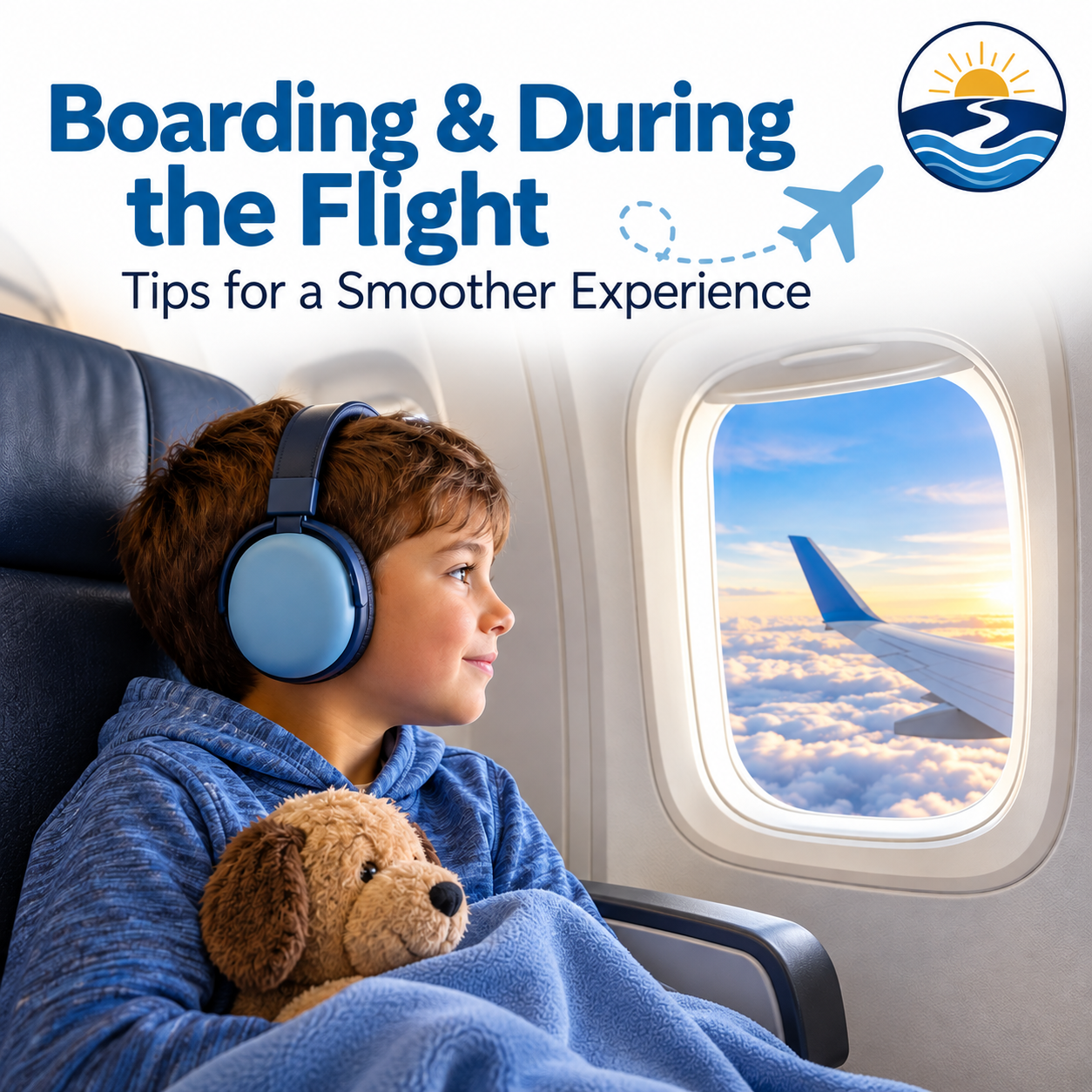
Takeoff can be particularly intense because the engine noise increases dramatically and the sensation of movement changes quickly. Bring sensory supports that your traveler already knows and uses successfully. Noise-reducing or noise-canceling headphones can be particularly helpful. Other travelers may benefit from sunglasses, a hat, a familiar blanket, fidgets, a favorite stuffed animal, or another comfort item.
Avoid making the airplane the first time your traveler tries an important sensory support. If you are planning to use headphones during the flight, for example, practice wearing them before your trip. And keep sensory items at your seat. Something that helps your traveler regulate isn't very useful if it is packed in a suitcase in the overhead compartment when the seat belt sign is on.
Prepare for Takeoff
Takeoff may be one of the most unfamiliar parts of the entire trip. The plane begins moving, stops and starts while taxiing, the engines become much louder, and then there is a noticeable sensation as the airplane accelerates and leaves the ground. Talk about this beforehand. Video modeling can be especially useful here because it allows your traveler to see and hear what takeoff is like before experiencing it. You can find videos filmed from inside airplane cabins that show taxiing, takeoff, cruising, and landing. Watch them together and point out what is happening. You might explain, "The engines are getting louder because the airplane is getting ready to go into the sky." Knowing that the loud noise and movement are expected and that they will change once the airplane reaches cruising altitude—may make the experience less surprising.
Plan for Ear Pressure
Changes in cabin pressure during takeoff and landing can cause ears to feel blocked, uncomfortable, or painful. This can be especially difficult for a traveler who cannot easily identify or communicate what they are feeling. A sudden behavior change during takeoff or landing may actually be related to ear discomfort. Swallowing can help equalize pressure in the ears.
Gum works well for some travelers who can safely chew it, but gum isn't the only option. Have a drink available and encourage your traveler to take frequent sips during takeoff and landing. A lollipop can encourage repeated swallowing and may work well for some travelers. Eating a favorite snack can accomplish the same thing. For younger children, drinking from a bottle or cup may help.
This is also a good time to use something highly preferred. If your traveler has a favorite snack that reliably gets them eating, save some for takeoff and landing. Pack these items where you can reach them easily. You don't want the lollipop, drink, or favorite snack in the overhead bin when the plane begins descending.
Bring Familiar Food and Plenty of Snacks
Don't count on finding your traveler's preferred foods at the airport or on the airplane. Airline food options can be limited, and even when something familiar is advertised, it may be unavailable. Bring foods you know your traveler will eat and pack more than you think you'll need.
A two-hour flight doesn't necessarily mean a two-hour travel experience. Weather, mechanical issues, delayed boarding, waiting on the runway, or a gate not being available after landing can turn a short flight into a much longer day. Preferred snacks can also serve another purpose. They can provide something familiar during an unfamiliar experience and can be useful during waiting periods or changes in plans. If your traveler has food allergies, dietary restrictions, or a very limited range of accepted foods, plan this part of the trip carefully before leaving home.
Plan Entertainment Before You Travel
Don't rely on airplane Wi-Fi or seatback entertainment. Download everything before leaving home. Download favorite movies, television shows, music, games, or videos onto a tablet or phone. Make sure apps work without an internet connection. Charge devices fully before leaving and bring an approved portable charger.
Consider having more than one type of activity available. A traveler may happily watch a movie for the first hour but need something different later. Depending on your traveler, your flight bag might include a tablet, headphones, favorite shows, coloring supplies, books, small toys, fidgets, puzzles, cards, or another preferred activity. This isn't the day to worry about normal screen-time rules. If a tablet helps your traveler successfully manage a five-hour flight, use the tablet.
Keep Important Items Under the Seat
Think carefully about what goes in your carry-on luggage and what goes in the overhead compartment. Once everyone is seated, you may not be able to get up immediately. During takeoff, landing, and turbulence, flight attendants may require everyone to remain seated. Keep the things you are most likely to need in a smaller bag under the seat in front of you. That may include headphones, communication supports or AAC, medication, snacks, drinks purchased after security, wipes, a change of clothing, sensory items, comfort objects, chargers, and entertainment. If your traveler has one particular item that is essential for regulation or communication, keep it with you throughout the flight.
Keep Communication Accessible
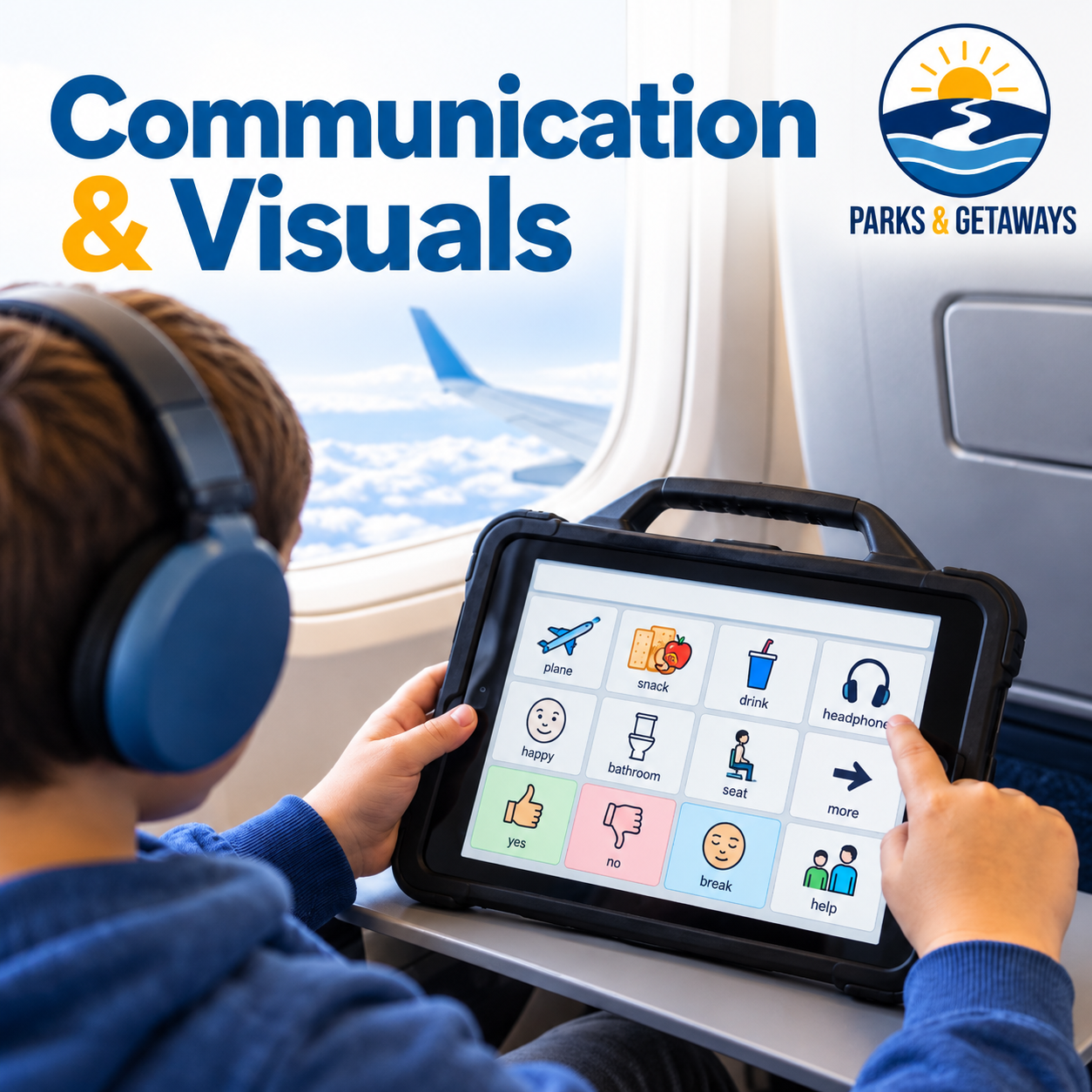
If your traveler uses AAC or another communication system, it needs to remain accessible during the flight. Don't put a communication device in the overhead compartment simply because electronic devices are being packed away. You may also want to prepare some travel-specific communication options before the trip. Consider whether your traveler needs an easy way to communicate. For travelers who use visual communication, creating a small airplane communication board before the trip can be useful.
Plan for Movement
One of the biggest challenges of flying is that there are times when passengers simply cannot get up. If your traveler has a high need for movement, build movement into the travel day before boarding. Walk through the terminal. Find an open area where your traveler can move safely. If the airport has a children's play area, sensory room, or other appropriate space, consider using it before heading to the gate. Once the plane reaches cruising altitude and the seat belt sign is off, your traveler may be able to stand or walk to the restroom, but don't depend on this. Turbulence can require passengers to remain seated for extended periods. Bring activities and sensory strategies that can be used while seated.
Prepare for Changes and Delays
Even the best-planned flight can change. Your gate may change. Boarding may be delayed. The airplane may sit on the runway. Turbulence may prevent passengers from getting up. Wi-Fi may not work. Your flight may arrive at a different gate than expected. For travelers who have difficulty with unexpected changes, this can be particularly challenging.
Social stories should acknowledge that changes can happen rather than describing one exact version of the trip. You might include something such as: "Sometimes our travel plan changes. An adult will tell me what is happening and what we are doing next."
If your traveler uses visual supports, consider bringing a "change" card that can be added to their schedule. And always have a backup plan for the things you can control: extra snacks, downloaded entertainment, additional activities, a charged device, and familiar comfort items.
Think About Safety Before the Flight
Consider your traveler's individual safety needs before you get on the airplane. Does your traveler understand that the seat belt needs to remain fastened at certain times? Are they likely to attempt to leave their seat? Could they become distressed if they are told they cannot get up? Do they have a history of wandering or bolting during transitions? These aren't reasons not to travel. They are things to plan for.
Practice airplane expectations before your trip when appropriate. Include them in your social story and video modeling. If you anticipate needing assistance during boarding or the flight, speak with the airline ahead of time and let the flight crew know what would be helpful when you board. You don't need to give the crew your traveler's entire history. Provide the practical information they need to support a safe flight. Identification is another important layer of travel safety. Consider a medical ID bracelet, identification card, or another form of identification with emergency contact information, particularly for a traveler who may not be able to independently provide this information.
Don't Forget to Prepare for Landing
Landing deserves just as much preparation as takeoff. The airplane begins descending, ears may experience pressure again, passengers need to return to their seats, tray tables must be put away, electronics may need to be secured, and the aircraft's movement and noise change. Then, almost immediately after landing, everyone around you may stand up. That sudden change from sitting quietly to a crowded aisle filled with people retrieving luggage can be overwhelming.
Use your social story or video modeling to prepare for this part of the flight too. There is also no requirement that you be the first person off the airplane. If crowds are difficult and you don't have a tight connection, remaining seated for a few extra minutes while other passengers leave may create a much calmer transition. On the other hand, a traveler who has reached their limit and needs to get off the aircraft as quickly as possible may do better leaving promptly. Once again, base the decision on the individual traveler.