Communication & Visuals: Supporting Communication Throughout Air Travel
Travel involves a lot of communication. From checking in and going through security to finding a gate, boarding the plane, ordering food, using the restroom, and responding to unexpected changes, travelers are constantly receiving information and being expected to communicate with others.
For a traveler with Autism, those communication demands can become more difficult in an unfamiliar or overwhelming environment.
A person who communicates very effectively at home may communicate differently when they are tired, anxious, overwhelmed, or experiencing sensory overload. A traveler who usually speaks may have difficulty finding words in a busy airport. Someone who uses AAC may need additional travel-specific vocabulary. Another traveler may understand spoken language but need visual information to make an unfamiliar experience easier to process.
Communication supports should be part of your travel planning from the beginning. The goal is not to introduce an entirely new communication system for vacation. Whenever possible, start with the tools and strategies your traveler already knows and adapt them for travel.
Communication & AAC During Travel
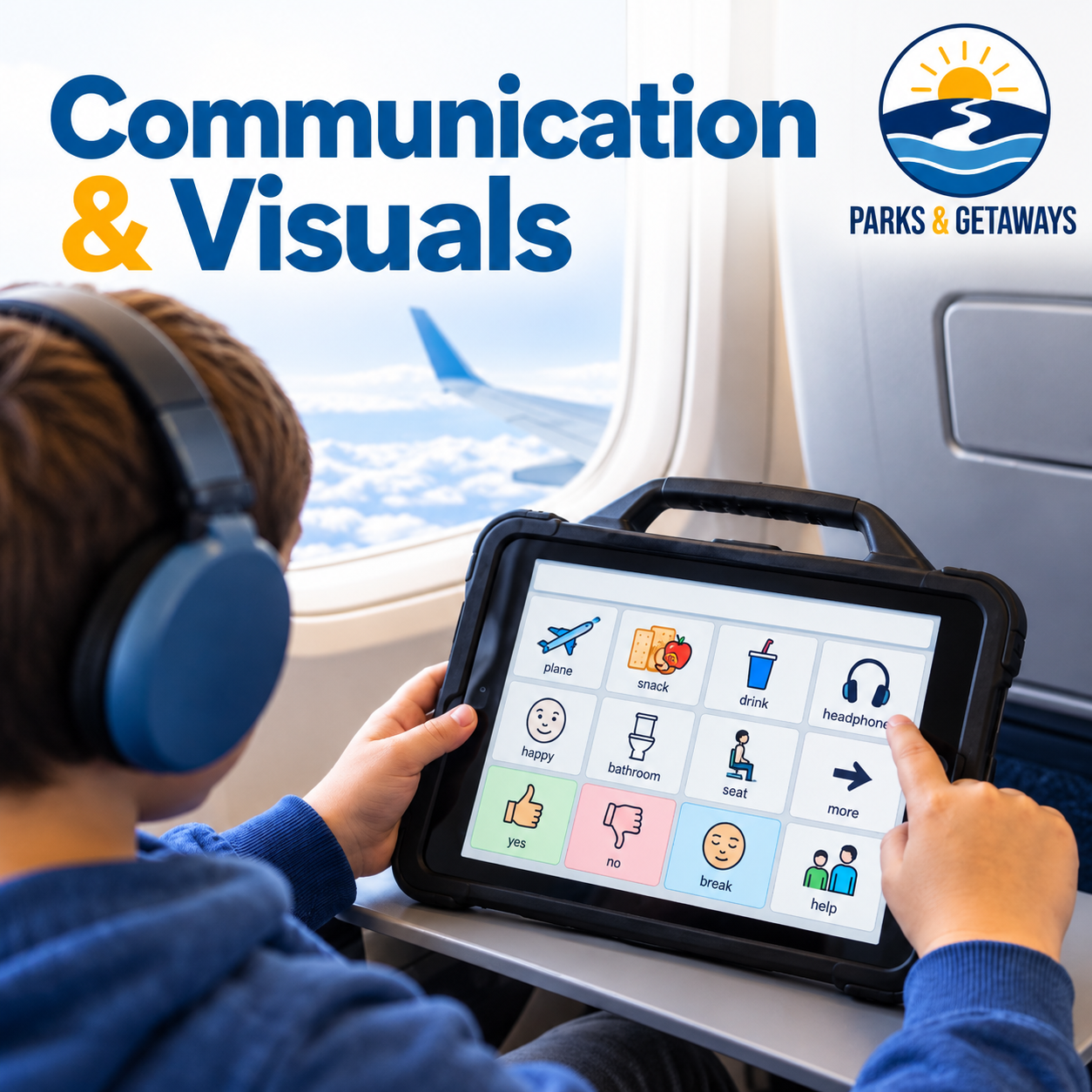
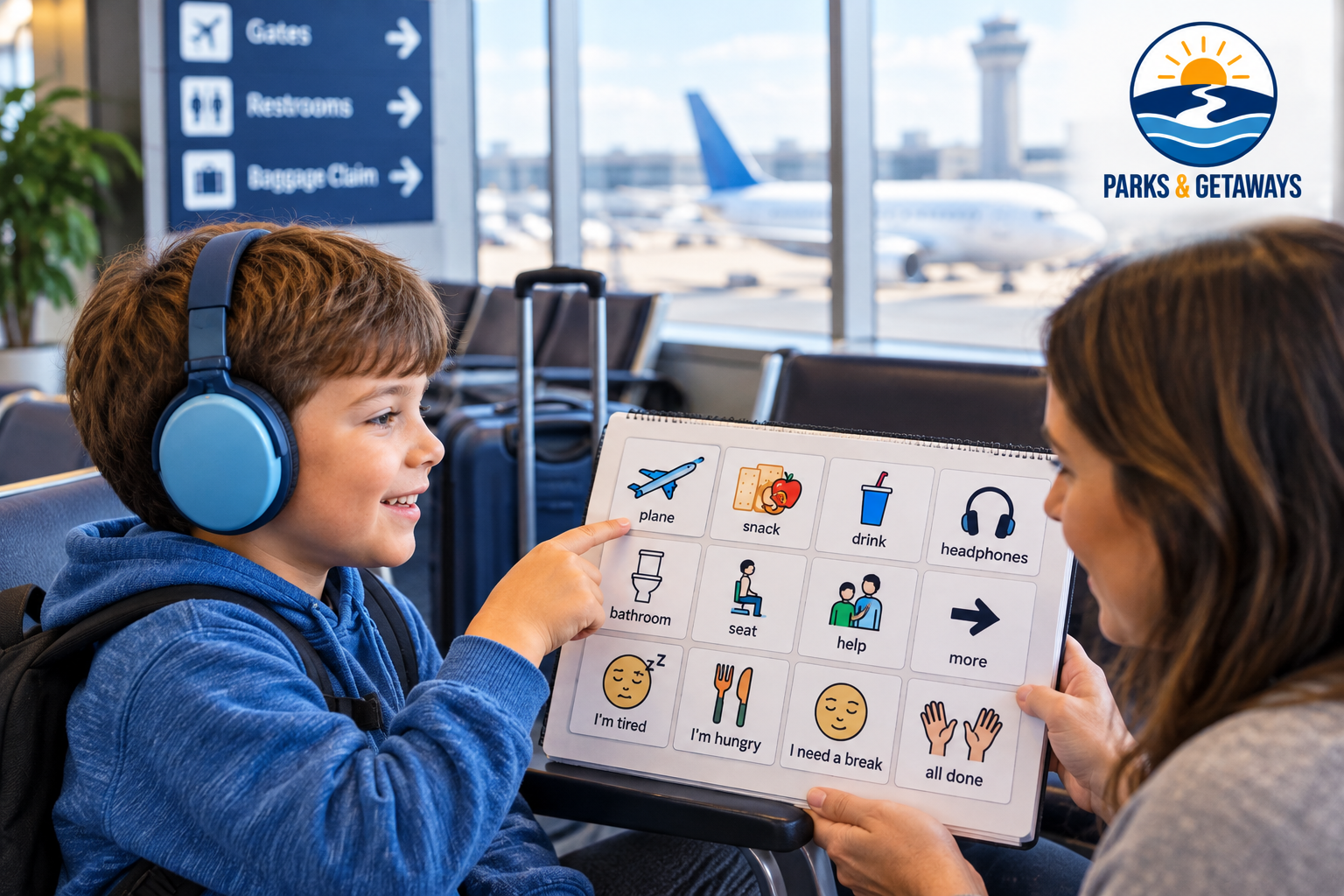
If your traveler uses an augmentative and alternative communication system, or AAC, it should remain available throughout the travel day.
That sounds obvious, but during travel it is easy for important items to end up packed in a carry-on, placed in an overhead compartment, or buried underneath everything else. A communication device should stay with the traveler.
Think ahead about the words and messages your traveler may need during the trip. Their everyday vocabulary may not include everything needed to communicate about an airport, airplane, hotel, cruise ship, theme park, or other unfamiliar environment.
Before leaving home, consider adding or making sure your traveler can access words or messages such as:
Bathroom
Hungry
Thirsty
Help
Break
Too loud
Too bright
My ears hurt
I don't feel well
I need space
I need my headphones
Where are we going?
When are we leaving?
I want to sit down
I need to move
I'm scared
I'm tired
All done
Also consider vocabulary specific to your trip, such as airplane, airport, security, hotel, pool, restaurant, rental car, train, or cruise ship. Don't assume that because a traveler knows how to request something at home, they will automatically be able to communicate the same need in a stressful environment. Make those messages as easy to access as possible.
Have a Backup Communication Plan
Technology can fail. Batteries die, devices can be dropped, chargers can be misplaced, and electronics sometimes need to be put away temporarily. If your traveler relies heavily on an electronic AAC device, have a backup. A small laminated communication board or printed page with the traveler's most important words and messages can fit easily into a backpack. You may never need it. But if the primary communication device becomes unavailable, you still have a way for your traveler to communicate important needs. Keep chargers and an approved portable battery accessible as well.
Alternatives to Verbal Communication
AAC isn't the only reason to plan for communication. Some travelers with Autism communicate verbally but may have greater difficulty doing so when overwhelmed. An airport can create exactly those conditions. There may be crowds, announcements, unfamiliar people asking questions, time pressure, unexpected changes, and significant sensory input happening simultaneously. A traveler who normally answers questions independently may suddenly need additional processing time. Someone who usually communicates wants and needs verbally may find it harder to explain what is wrong.
Try not to increase the communication demand at the exact moment your traveler is struggling. Use shorter language. Give additional processing time. Offer choices rather than asking broad, open-ended questions. Use familiar visual supports when appropriate. Most importantly, recognize changes in communication as information. If your traveler suddenly becomes quieter, repeats language, has difficulty responding, or relies more heavily on AAC or visual supports, the environment may simply be placing greater demands on them.
Use Visual Supports to Make Travel More Predictable
Visual supports can be extremely useful during travel because so much of the experience is unfamiliar. Even if your traveler doesn't regularly use a visual schedule at home or school, a simple travel schedule may help them understand what is happening and what comes next. A travel-day visual schedule might include pictures representing the major parts of the day: leaving home, driving to the airport, checking bags, going through security, finding the gate, waiting, boarding the airplane, flying, landing, collecting luggage, and traveling to the hotel.
You don't need to include every tiny detail. For some travelers, too many steps can actually make the schedule harder to use. Start with the amount of information your traveler can comfortably understand and adjust from there. You can use photographs, symbols, drawings, or written words depending on the person's communication and comprehension level.
Make Visuals Specific to Your Trip
One advantage of preparing ahead is that travel visuals can be personalized. Instead of using a generic picture of an airplane, you might use a picture of the airline you will be flying. Show a photograph of your actual hotel. Include a picture of Grandma's house if that is where you are going. If you know the airport, look at photographs online before your trip. Many airports provide maps, videos, accessibility information, or photographs of their terminals.
For some travelers, seeing the actual places they will encounter can make the experience much more concrete. This can be especially helpful when preparing for unfamiliar environments such as airport security, an airplane cabin, a hotel room, or a cruise ship stateroom.
Use First-Then Supports
Travel includes a lot of waiting and many situations where something less preferred needs to happen before something preferred.
A simple first-then visual can make that sequence clearer.
For example:
First security, then snack.
First wait at the gate, then airplane.
First seat belt, then tablet.
First luggage, then hotel.
The goal isn't to use a reward for every part of the trip. First-then language helps make the sequence of events concrete and shows the traveler that the current activity has an end.
Use the same type of first-then support your traveler is already familiar with whenever possible.
Build "Waiting" Into the Visual Plan
Waiting is part of travel. You wait to check in. You wait at security. You wait for transportation. You wait at the gate. You wait to board. You may sit on the airplane waiting for takeoff. After landing, you may wait for luggage. If your traveler has difficulty waiting, don't leave it out of the schedule. Represent waiting visually and practice it before the trip.
It can also help to pair waiting with information about what the traveler can do during that time. Waiting at the gate might mean headphones and a tablet. Waiting for luggage might mean sitting with a preferred activity. Waiting at a restaurant might mean using a favorite fidget. Making waiting visible helps establish that it is part of the travel plan rather than an unexpected interruption to it.
Include Changes in Your Visual Supports
One challenge with visual schedules is that travel rarely happens exactly as planned. Flights get delayed. Gates change. Restaurants close. Rides temporarily stop operating. Hotel rooms aren't ready. Weather changes plans. If a visual schedule is presented as something that can never change, an unexpected change may become even harder.
Consider creating a "change" card that can be added to the schedule. You can practice using it before your vacation. Change something small and familiar, show the change card, and then show the new plan. This teaches an important concept: the schedule helps us know the plan, but sometimes the plan changes. When something does change during the trip, update the visual rather than simply telling your traveler verbally whenever possible.
Social Narratives Can Prepare for New Experiences
A visual schedule explains what is happening. A social narrative can provide more information about what the experience may be like and what the traveler can expect. Social narratives can be particularly helpful for unfamiliar travel experiences. Before a first flight, for example, a social narrative might explain arriving at the airport, going through security, waiting at the gate, walking onto the airplane, finding a seat, wearing a seat belt, hearing loud engine sounds, feeling the airplane move, experiencing pressure in the ears, landing, and getting off the airplane.
For a hotel stay, it might show the hotel lobby, elevator, hotel room, where the traveler will sleep, and what the morning routine will look like. For a theme park, it might explain security, entering the park, waiting in lines, taking breaks, riding attractions, and leaving at the end of the day.
Keep Social Narratives Realistic
Avoid creating a story that promises everything will be easy or enjoyable. Instead of saying, "I will have fun on the airplane," explain what is likely to happen. The airplane may be loud during takeoff. The traveler may need to keep their seat belt on. Their ears may feel different. Other people will be sitting nearby. Sometimes the airplane may move or feel bumpy. Then include the strategies available to them. They can wear headphones. They can watch a familiar show. They can hold a comfort item. They can ask for a break when one is available. They can tell someone if something hurts or if they need help. A social narrative is most useful when it prepares, rather than promises.
Consider Video Modeling
Some travelers understand an experience better by seeing it happen than by looking at pictures or reading a story. Video modeling can be a great addition to your travel preparation. Before flying, watch videos showing what it looks like to walk through an airport, go through security, board an airplane, sit in the cabin, experience takeoff, use an airplane restroom, and land. You can also make your own short videos during familiar experiences.
If you travel regularly, consider recording parts of one trip that might help prepare for the next one. A short video showing the hotel elevator, airplane cabin, rental house, or boarding process may be more meaningful than a generic video because it connects directly to your family's experiences.
Create a Small Travel Communication Kit
You don't need an enormous binder of materials to use communication and visual supports effectively. A small travel communication kit can include the supports your traveler is most likely to need. Consider bringing a visual schedule, first-then card, change card, small communication board, social narrative, dry-erase marker, and a few commonly used picture symbols. Keep these items in an easily accessible part of your carry-on or backpack. If the supports are buried underneath clothes in a suitcase, they won't help when you suddenly need them in the security line.
Let Your Traveler Communicate Directly When Possible
Travel often involves unfamiliar adults speaking directly to your traveler, TSA officers, airline employees, flight attendants, hotel staff, restaurant servers, attraction employees, and others. When appropriate, give your traveler an opportunity to respond using their preferred communication method. That may mean speaking, using AAC, pointing to a communication card, gesturing, writing, or having additional time to process a question.
You can step in when assistance is needed, but you don't necessarily need to answer every question immediately on your traveler's behalf. At the same time, don't turn travel into a communication test. If your traveler is overwhelmed and needs you to help communicate, help them. The goal is successful communication, not proving independence.
Communication Supports Should Travel With You
Visual supports, AAC, social narratives, and communication cards aren't just preparation tools to use before vacation. They can be useful throughout the entire trip. Your traveler may need more communication support while traveling than they do at home—and that is okay.
Travel places people in unfamiliar environments where routines change, sensory demands increase, and expectations aren't always obvious. Providing additional information and additional ways to communicate can reduce some of that uncertainty. Start with the communication strategies your traveler already uses successfully. Then think about how those supports can be adapted for airports, airplanes, hotels, attractions, restaurants, and other parts of your trip.
The goal isn't to make the traveler fit the trip. It's to give them the information and communication tools they need to participate in the trip in a way that works for them.