
Navigating & Waiting at the Airport & Autism
Getting through security can feel like a major milestone on travel day. Once you are on the other side, the pace usually changes. There may be an hour, or several hours, before you actually board the plane.
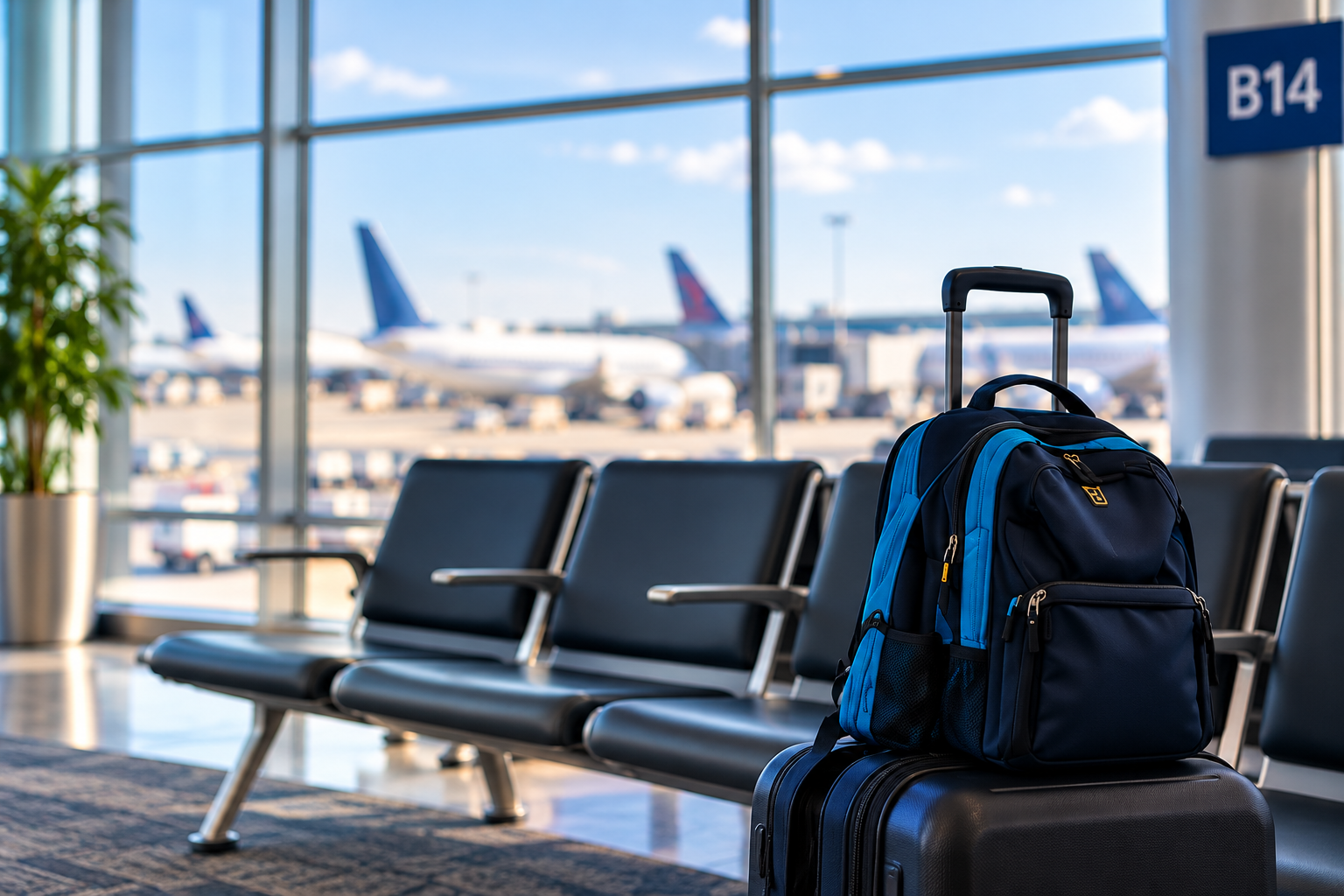
That waiting time deserves its own plan.
Airport terminals can be busy and unpredictable. There may be crowds, overlapping announcements, televisions, bright lights, rolling luggage, food smells, people moving in every direction, and long stretches where there is simply nothing to do. For a traveler with Autism, those factors can make the time between security and boarding just as important to plan for as the security checkpoint itself.
The goal isn't necessarily to find a perfectly quiet airport experience. Instead, think ahead about where you will wait, what your traveler will need, and how you will respond if the plan changes.
First Stop: Find Your Gate
Once you are through security, find your gate before doing anything else. Even if you have plenty of time, knowing exactly where you need to be removes one more unknown from the day.
Check the monitors and confirm your gate because assignments can change. Once you know where you are going, you can decide whether staying directly at the gate makes sense or whether another part of the terminal may work better for your family.
You don't necessarily need to spend the entire wait sitting in the gate area. For some travelers, being near the gate provides reassurance because they can see the airplane and know what is happening next. For others, sitting in the middle of a crowded gate for an hour may add unnecessary sensory stress before the flight has even begun. Find the balance that works for your traveler.
Crowds & Noise
Gate areas can become particularly busy as boarding approaches. Passengers gather around the boarding lanes, announcements become more frequent, and multiple nearby gates may be boarding at the same time.
Think about how your traveler typically responds to environments like this. If noise is difficult, have headphones or other familiar sensory supports easily accessible, not buried in a carry-on. If crowds are challenging, consider waiting slightly outside the main gate seating area until closer to boarding.
You may also want to identify a quieter section of the terminal where your traveler can take a break while another adult remains closer to the gate. This is one reason traveling with accessible carry-on organization matters. The items you are most likely to need in the airport should be the easiest ones to reach.
Look for Sensory and Quiet Spaces
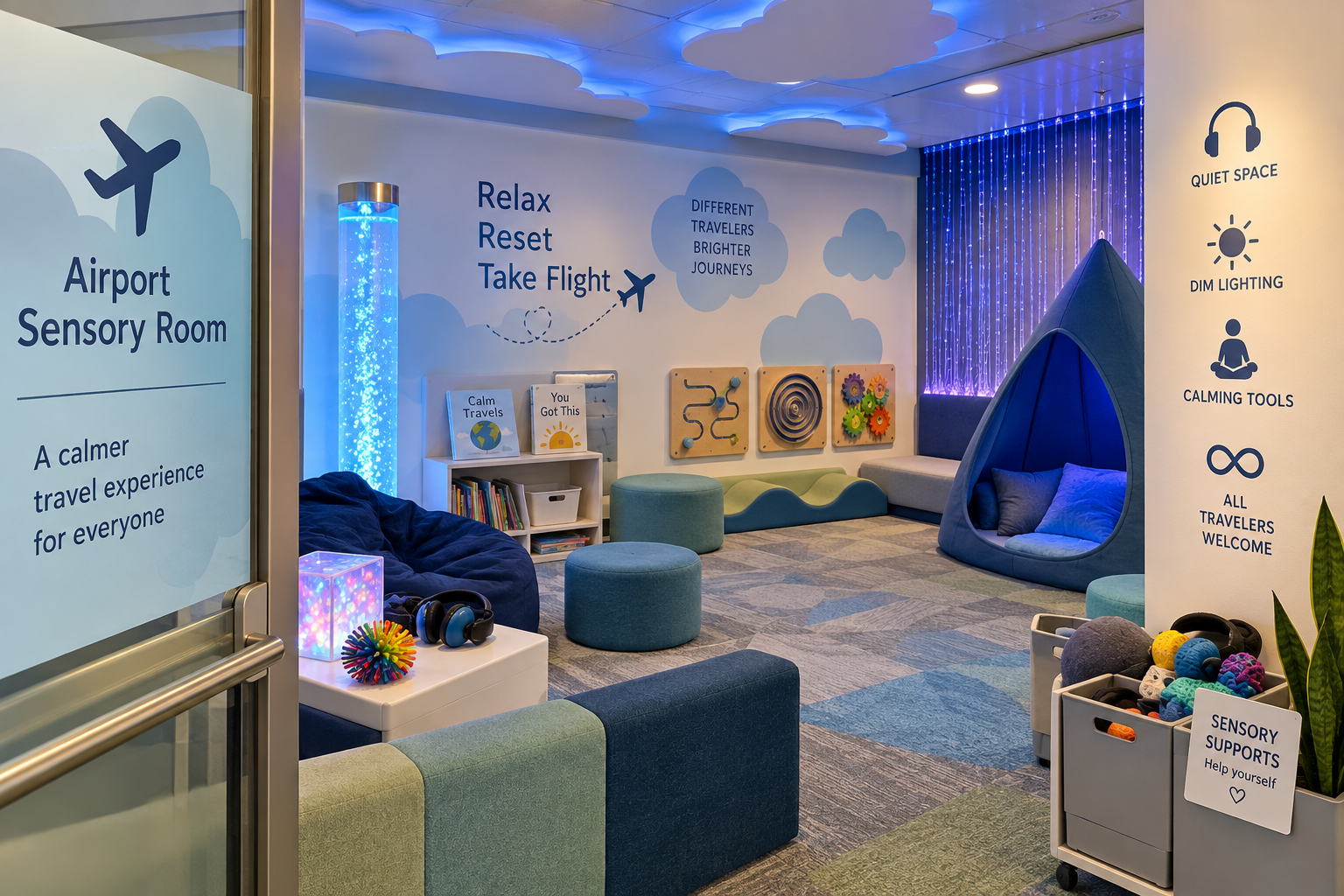
Airport accessibility has improved considerably, and some airports now have dedicated sensory rooms, quiet spaces, or other areas designed for travelers who need a break from the terminal environment. Research these before travel day rather than trying to find them when your traveler is already overwhelmed. Check the airport's accessibility page and terminal map. Pay attention to whether a sensory room is before or after security, which terminal or concourse it is located in, its hours, and whether you need a reservation.
There are some excellent examples around the country.
At Pittsburgh International Airport, Presley's Place is located post-security in Concourse A. It includes private soundproof spaces, adjustable lighting, calming activities, comfortable seating, a sensory-friendly restroom, and even a realistic airplane cabin experience that can help travelers become familiar with the aircraft environment.
Miami International Airport has post-security Multi-Sensory Rooms for travelers with cognitive and developmental disabilities, including Autism. They provide a calmer environment away from the activity of the terminal and are currently available in Concourse D and near Concourse J.
These are just examples. Airports vary significantly, so research both your departure and connecting airports before your trip. Airport accessibility pages can also point you toward family restrooms, adult changing facilities, accessible waiting areas, assistance desks, and other resources you may need.
Travel Tip: Save a screenshot of the airport map showing the location of the sensory or quiet space before leaving home. You don't want to be searching the airport website when you actually need the space.
Planning for the Wait
Waiting is hard for many people with Autism and airport waiting is particularly difficult because the amount of time isn't always predictable. Instead of thinking of this as "extra time at the airport," make waiting an actual part of your travel plan.
Include it in a visual schedule or social story:
Security → Find our gate → Snack → Wait → Bathroom → Board airplane
That communicates something important: waiting is part of what is supposed to happen.
Bring activities you already know work for your traveler. Travel day probably isn't the best time to rely entirely on something new. Tablets, downloaded movies, games, books, preferred toys, sensory items, or other familiar activities can make a long wait much more manageable.
And don't forget food. Hunger can quickly make an already challenging environment harder. Bring familiar snacks when possible rather than assuming you will find something your traveler will eat in the terminal.
Movement Can Be Part of the Plan
After sitting in a car, waiting in security lines, and anticipating several more hours sitting on an airplane, remaining in a chair at the gate may not be realistic. If movement helps your traveler regulate, build it into your airport time.
After locating your gate, you might walk through a quieter section of the terminal, look at airplanes through the windows, visit a store, or simply walk between two predetermined points. This is also a good opportunity to practice the travel safety skills you worked on before the trip—such as staying with an adult, stopping when asked, waiting at designated locations, or following the visual schedule. Just keep track of the time and stay close enough to return before boarding begins.
Changes & Delays
Even a carefully planned travel day can change. A flight might be delayed. Your gate may change. Boarding might begin later than expected. Your aircraft could change. A sensory room you planned to use may be unavailable. For someone who relies heavily on predictability, the change itself may be more difficult than the additional waiting.
Before the trip, consider how you will communicate a change. If you use a visual schedule, make it flexible enough that you can adjust it. You might have a simple "change" card or another familiar way to show that something will be different. Be careful about making promises based on times you cannot control. Instead of saying, "We are getting on the airplane at 2:15," it may be more helpful to connect boarding to the sequence of events: "After we wait, they will tell us when it is time to get on the airplane."
The more flexible the travel plan is from the beginning, the easier it can be to explain when something changes.
Early Boarding: Does It Help Your Traveler?
Early boarding can be an excellent accommodation for travelers with Autism but it isn't automatically the best choice for everyone.
Airlines generally have procedures for passengers with disabilities who need additional time or assistance boarding. Check your airline's specific accessibility and preboarding procedures before traveling and speak with the gate agent when you arrive. For many families, preboarding provides valuable extra time. You can find your seats without navigating a crowded aisle, organize your belongings, put frequently needed items within reach, get headphones or electronics ready, and allow your traveler to become familiar with the airplane before the cabin fills.
It also removes the pressure of having a line of passengers waiting behind you while you are trying to get settled. But there is another side to consider.
Early boarding means more time sitting on the airplane. For a traveler who has difficulty waiting in a confined space, boarding first may mean spending an additional 20 or 30 minutes in the seat while everyone else boards. In that situation, waiting in the terminal and boarding later may work better.
This is a good example of why there is rarely one "right" Autism travel strategy. Choose the option based on the needs of your traveler not simply because an accommodation is available.
Use the Time Before Boarding Intentionally
As boarding gets closer, think through immediate needs.
Use the restroom. Get a drink. Have a snack if needed. Give your traveler an opportunity to move. Make sure headphones, communication supports, comfort items, medications, electronics, and anything else you may need during boarding are within easy reach.
Then take a moment to explain what happens next. "Next we're getting on the airplane." For some travelers, showing the plane through the terminal window can help make that transition more concrete. For others, reviewing the next few steps on their visual schedule may be enough.
You have already made it through check-in and security. Now the goal is to use the quieter portion of the airport experience to regulate, prepare, and get ready for the next transition: boarding the airplane.