
Preparing for Air Travel & Autism
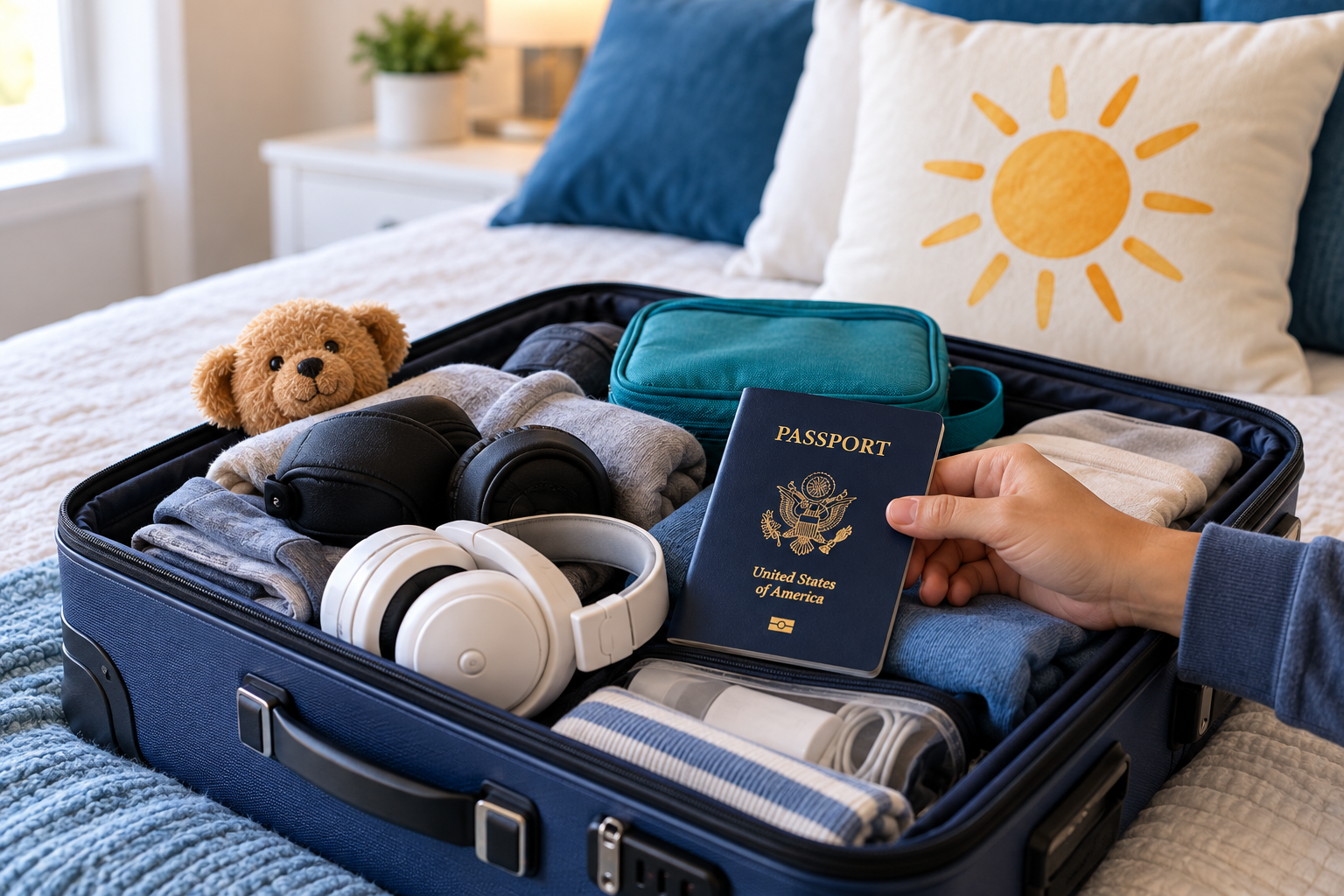
A successful travel day often starts well before you arrive at the airport. For a traveler with Autism, preparation may include choosing a flight that works with their routine, thinking about how long they will be traveling, selecting the right seats, becoming familiar with the airport and flight experience, and identifying skills that may be helpful before the trip.
There isn’t one flight, seat, schedule, or preparation strategy that works for every traveler. The goal is to think about the individual person and make travel decisions around their needs, preferences, communication, sensory considerations, and existing supports.
Choose When to Fly
When you fly can have a significant impact on the travel day. Before automatically choosing the least expensive flight, think about when your traveler typically does best.
An early morning flight may mean a quieter airport, fewer delays that have accumulated throughout the day, and arriving at your destination earlier. But it can also mean waking up much earlier than usual, disrupting a morning routine, or traveling before a person has had enough sleep. A midday flight may allow you to follow more of your usual morning routine, eat breakfast at home, and avoid a very early wake-up. The tradeoff is that airports may be busier and more of the day is spent traveling.
An evening flight can give you plenty of time to get ready, but it may extend the travel day into a traveler's usual dinner or bedtime routine. If your traveler becomes tired later in the day or relies on a consistent evening schedule, that may be an important consideration.
There isn't a universally "best" time to fly. Look at your traveler's typical day. When are they generally most comfortable with transitions, waiting, changes in routine, and unfamiliar environments? Use that information when comparing flights. And remember to look at the arrival time, not just the departure time. A flight that leaves at a convenient hour but lands well after your traveler's usual bedtime may not be the best option for your family.
Consider the Length of the Flight and Connections
A nonstop flight is often appealing because it eliminates an additional airport, boarding process, and transition. But that doesn't automatically make it the right choice for every traveler. Consider how long your traveler will be comfortable on the airplane and what the total travel day will look like.
For a shorter trip, a nonstop flight may make the decision fairly simple. For longer trips, think about whether your traveler would do better remaining on one airplane for an extended period or having a break between flights.
Connections introduce additional variables. You may need to get off the plane, navigate an unfamiliar airport, find another gate, wait again, and board another aircraft. A delay on the first flight can also affect the second.
Food is another consideration, especially on longer travel days. Don't assume that a preferred or appropriate meal will be available when you need it. Airport restaurants may have long lines, options may be limited, and some food service may be closed during very early or late travel. Airline food options also vary. If your traveler has preferred foods or a limited range of foods they reliably eat, think about meals and snacks when you're choosing the flight—not just when you're packing for it.
Choose Your Seats When You Book
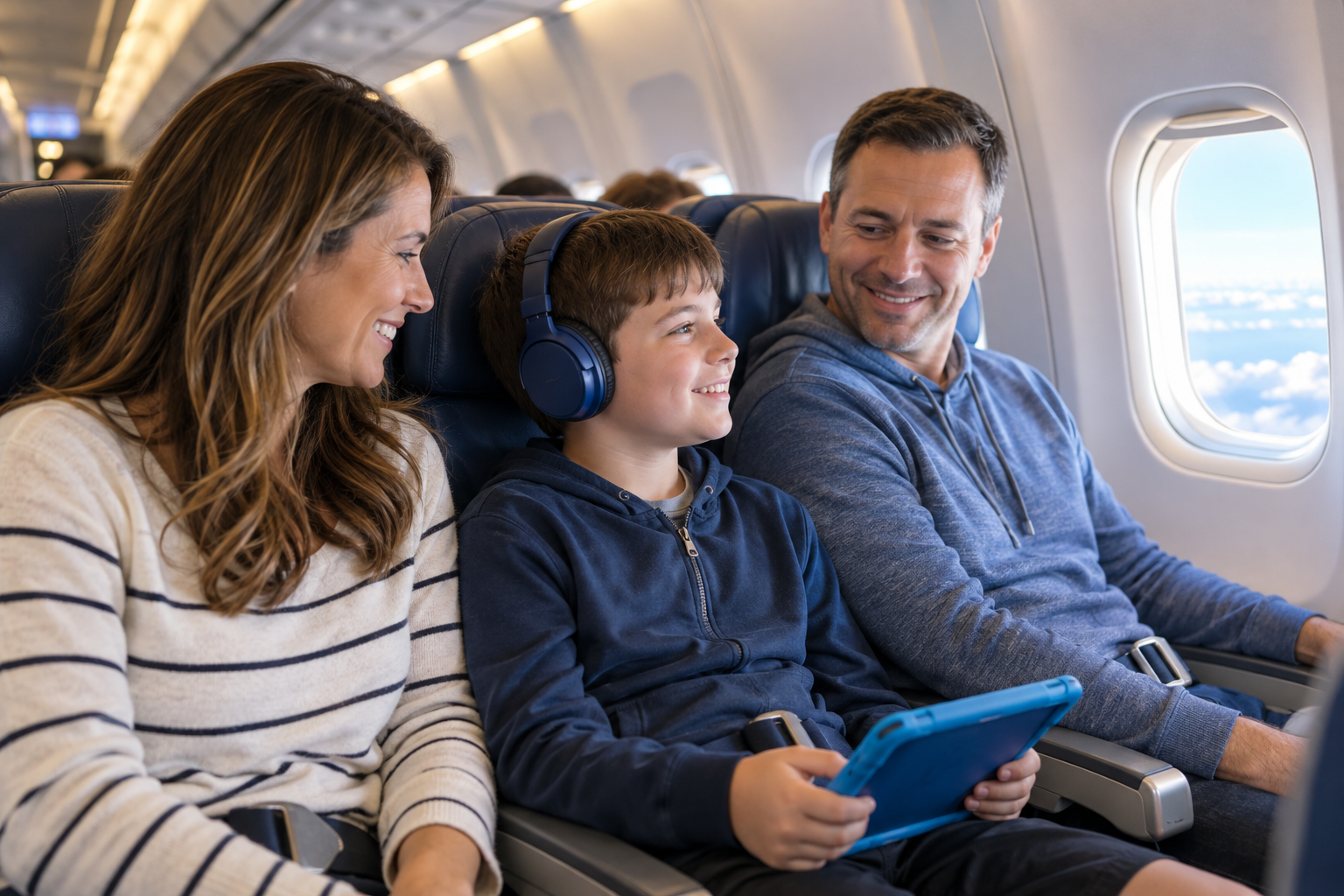
If your traveler needs to sit next to you or another specific support person, pay to select your seats when you book the flight. This a non-negotiable part of planning when sitting together is necessary. Don't leave important seating arrangements to chance. Don't assume the airline will automatically seat your family together exactly as you need, and don't plan around another passenger agreeing to switch seats once you board.
Look at the aircraft's seating chart before making your selection. Consider whether your traveler would prefer the window, middle, or aisle and who should sit beside them.
A window seat may provide something interesting to look at and can mean less interaction with people moving through the aisle. An aisle seat provides easier access to the restroom and allows someone to get up without asking other passengers to move. Other travelers may be most comfortable between two familiar people. Also consider proximity to the restroom, the amount of foot traffic in different parts of the cabin, and how your family should be arranged if several people are traveling together. Your traveler's needs should drive the decision.
Prepare for the Airport and the Flight
Airports and airplanes include many experiences that may be unfamiliar: check-in counters, baggage drop, security screening, escalators, moving walkways, announcements, crowds, waiting at the gate, boarding, finding a seat, safety demonstrations, takeoff, changes in air pressure, airplane sounds, turbulence and landing.
You don't need to prepare your traveler for every possible thing that could happen. Instead, think about which parts of the experience will be new or may benefit from some familiarity beforehand.
Start with the airports you'll actually be using. Visit their websites. Look at terminal maps and photos. Find your airline's terminal and see whether the airport provides information about accessibility services, sensory spaces, quiet areas, family restrooms, or other resources that could be useful. Videos can also help make unfamiliar parts of travel more recognizable. You can watch videos of airport security, walking through an airport, boarding an airplane, takeoff, the inside of an aircraft, and landing.
For some travelers, a visual schedule or social narrative may be helpful. For others, too much information in advance may increase anxiety. Preparation should be individualized rather than automatically assuming that more preparation is always better.
Look for Airport Practice Programs
Some families may want more than pictures and videos.
Airport rehearsal programs allow travelers to experience portions of air travel before taking an actual trip. One example is Wings for Autism®/Wings for All®, a program from The Arc that works with participating airports, airlines, TSA personnel, and local partners. At Wings events, participants may practice checking in, receiving a boarding pass, going through TSA security, waiting at the gate, and boarding an aircraft that does not take off. The Arc holds events at participating locations, so families can check whether an event is scheduled near them. Check upcoming Wings for Autism/Wings for All events
Your airport may also offer its own accessibility programs, tours, practice events, videos, or preparation resources. Check the airport's accessibility section before your trip. Even if a rehearsal program isn't available, you can still build familiarity at home by using photos, videos, maps, visual supports, and conversations that match the way your traveler learns best. The Nashville Airport has a detailed social story you can review before your trip. Even if this isn’t your airport, it is a great resource.
Think About Skills Before You Travel
Preparation isn't only about learning what an airport looks like. Think about the skills your traveler may use during the travel day and whether any would be helpful to practice beforehand.
For example, an airport may require staying with an adult while walking through crowded areas, waiting in line, sitting at a gate for an extended period, following a direction from airport personnel, wearing headphones, carrying a backpack, using a public restroom, or transitioning away from a preferred activity when it is time to board. You don't need to suddenly teach a long list of "travel skills." Instead, identify the few skills that matter most for your traveler and your upcoming trip.
If headphones are likely to be important on the plane but your traveler doesn't currently tolerate them, the airport is probably not the ideal place to introduce them for the first time. The same is true for waiting strategies, communication supports, identification tools, or other items you hope to use during travel. Whenever possible, introduce and practice useful supports in familiar environments first.
Keep Important Items Accessible
Your checked suitcase isn't helpful when you're sitting at the gate and realize the item your traveler needs is somewhere underneath the airplane.
Think carefully about what belongs in your carry-on.
Communication devices and AAC should remain accessible. The same applies to medications, identification, headphones or other sensory supports, preferred activities, chargers, comfort items, visual supports, and anything your traveler may need during the flight.
Pack food and snacks with your traveler's preferences in mind, while checking current TSA requirements for anything you're bringing through security. TSA advises travelers to organize carry-on bags to facilitate screening, and its TSA Cares service can provide information and assistance related to the screening process for travelers with disabilities and medical conditions.
Then think beyond the scheduled travel time. What would you need if you sat at the gate for an extra two hours? What if your flight were delayed? What if you landed late and restaurants were closed? You don't need to pack for every possible scenario, but your carry-on should contain the essentials needed to support your traveler through a longer-than-planned travel day.
Plan for Communication
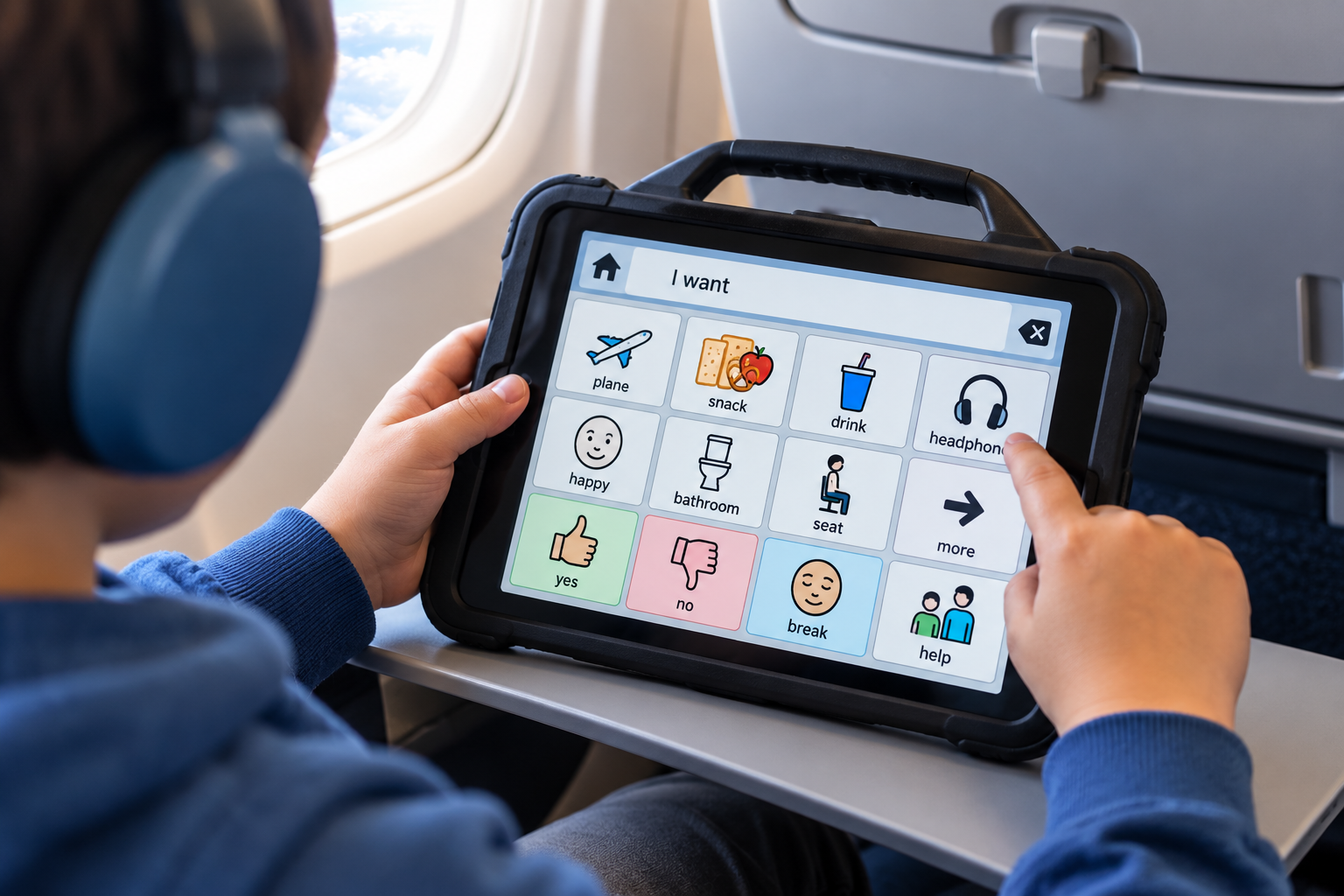
Travel puts people in situations where they may need to communicate with unfamiliar people in unfamiliar environments. That makes it important to think about communication before the trip.
A traveler should continue to have access to the communication methods they use in everyday life. If someone uses an AAC device, communication board, pictures, written language, gestures, or another system, don't replace that simply because you're traveling.
Keep AAC and other essential communication tools accessible rather than in checked luggage. If a device requires power, plan for charging and consider what you would use if the device became unavailable.
Also think about what your traveler may need to communicate during the trip. They may need a way to indicate that they need the restroom, are hungry, need a break, are uncomfortable, need help, don't understand what is happening, or want to know what comes next. Visual supports can also be useful for understanding the sequence of the day or preparing for transitions.
Prepare but Keep the Plan Individualized
It can be tempting to search for the perfect Autism travel checklist and follow every recommendation. That's not the goal.
One traveler may benefit from seeing the airport weeks ahead of time. Another may only need to review the plan the morning of the trip. One person may want headphones throughout the airport. Another may dislike wearing them. One traveler may do best on the first flight of the morning, while another needs their normal morning routine before leaving home.
Start with the person you are traveling with.
Choose your flight intentionally. Select your seats. Learn about the airports you'll be using. Think about food, waiting, sensory needs, communication, and the skills that may be useful during the trip. Keep important supports accessible.
You cannot control everything that will happen on a travel day. You can arrive with a plan built around your traveler's individual needs and that is much more useful than trying to make your traveler fit someone else's idea of the "right" way to fly.